
https://archive.triblive.com/news/blueberries-run-thick-and-thin/
Blueberries run thick and thin

• |
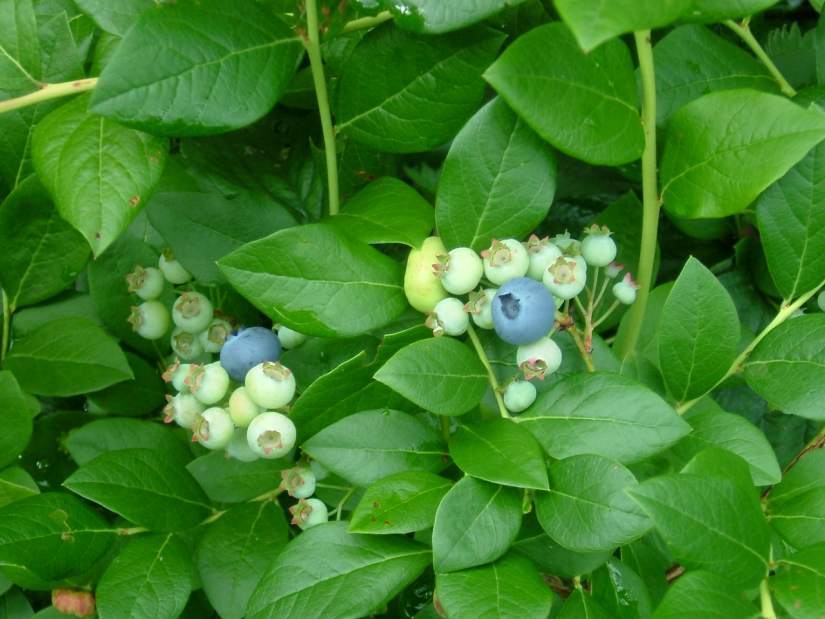
Blueberries sometimes ripen at different rates. Credit: Jessica Walliser
Q: I have six blueberry bushes (three different varieties). They are more than 30 years old, and I have received bountiful harvests from them every year without fail. However, the past four to five years I have had a problem that has become progressively worse.
About the second week in June, I begin picking ripe berries, and by the last week of June I’m able to pick a couple quarts a day. Then, after the first week of July, the berries remaining on the bushes begin to ripen very slowly. By mid-July, I’m barely able to pick half of a handful — and these are only semi-ripe because if I wait any longer the birds get them. By the third week of July, I still have hundreds of green berries which aren’t ripening.
This year in spite of the extremely hot weather and abundant sunshine the berries are still not ripening. They receive plenty of sun, and I have watered them a few times very deeply. I prune them each year and fertilize with aluminum sulfate and some 5-10-5.
I can’t understand why this is happening. Typically over the many years I’ve had them, they would slow up about mid-July, but I could still pick ripe berries every other day until late August. Two of the six bushes ripen almost completely, two others have about 20 to 30 percent remaining green, the other two about 30 to 40 percent.
I would appreciate any ideas you can give me.
A: I think you have a few different things going on. First and foremost, I believe the inconsistency in ripening is because of varietal differences. In my own garden, I grow six different blueberry varieties and, though my trees are only 6 years old, I see significant differences in their ripening rates. Like you, I have two bushes whose fruits are small, hard, and extremely slow to ripen. On one hand, I like that they mature later as it extends the harvest, but, on the other hand, its difficult to wait to pick them because, as you noted, the birds have found them by the time they decide to fully color up.
However, varietal differences may not be completely responsible for your issues, especially because the ripening pattern has changed so much over the past few years. Water-stress can definitely cause delayed, or non-existent, fruit ripening, especially during years where a wet spring is followed by an extremely dry summer. Be sure your plants receive an inch or more of water per week if there is no rain. This is especially important once the fruit has set.
You also mention that you are pruning them, which is good. Be sure to remove a third of the oldest branches clear back to the ground every two years. This promotes new branch development from the ground level — increasing fruit production and rejuvenating the bushes. I also think your fertilization pattern may be playing a role in all this. Before you add any more fertilizer or aluminum sulfate (to acidify the soil — blueberries are an acid-loving crop), have your soil tested by the Penn State Extension Service (contact them for a testing kit). If you have been adding both these products every year, you are probably overdoing it. The pH may now be too acidic, and this will affect the availability of certain nutrients — which also can effect ripening.
Horticulturist Jessica Walliser co-hosts “The Organic Gardeners” at 7 a.m. Sundays on KDKA Radio. She is the author of several gardening books, including “Grow Organic” and “Good Bug, Bad Bug.” Her website is www.jessicawalliser.com.
Send your gardening or landscaping questions to tribliving@tribweb.com or The Good Earth, 503 Martindale St., 3rd Floor, D.L. Clark Building, Pittsburgh, PA 15212.
Copyright ©2026— Trib Total Media, LLC (TribLIVE.com)