
California University of Pa. program aims to help dropouts earn degrees

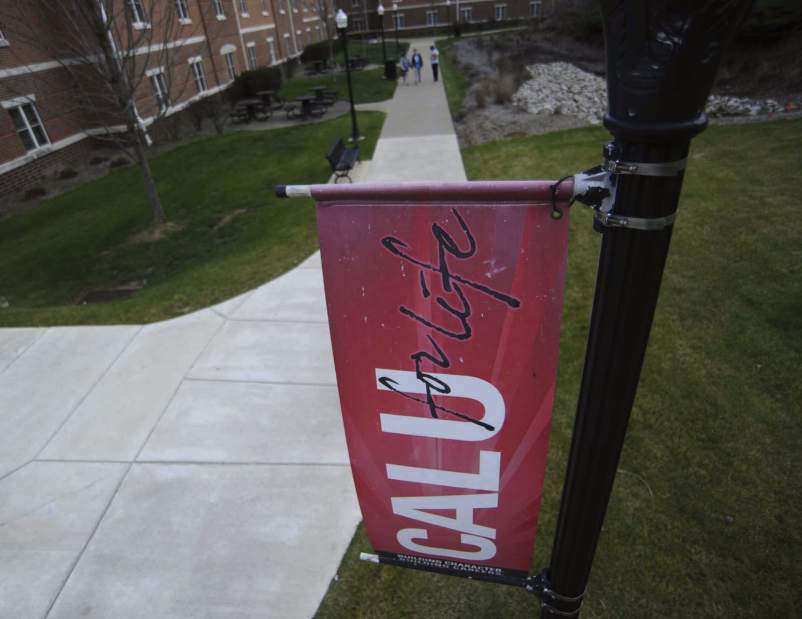
Eric Miller of McDonald was three credits short of graduation when he left California University of Pennsylvania in spring 2014.
As he neared graduation, Miller, 25, struggled to balance studying with spending time with his father, who was dying of cancer. When his father died, Miller said, the crush of closing his estate and trying to study was more than he could handle.
Miller left school without a degree and joined an estimated 1.2 million Pennsylvanians, among more than 40 million Americans, who completed some college but never earned a degree or certificate.
Experts say that's a problem that needs to be solved because the looming retirement of millions of baby boomers will create a need for skilled workers with degrees. Billionaire Bill Gates, one of America's most famous college dropouts, is among those who warn that the United States could fall behind in the global economy if it doesn't produce more college graduates.
This winter, Cal U is starting a degree completion program, The Finish Line, to meet that challenge. It is structured to help college dropouts enroll and expedite their degree work through online and on-campus classes.
“We saw this as a way to invest in our region,” said Stephanie Franks-Helwich, the university's executive director of graduate admissions and global online programs. “We built a portfolio of degree completion programs that could be offered online and on campus to complement the needs of our students and workforce in the region.”
The state-owned university is promoting the program by mail and email blasts to 20,000 former students who left without degrees over the past three decades.
Several states, including Connecticut, Colorado, New Jersey and New Hampshire, began attacking the issue four decades ago through completion colleges aimed at the needs of adult students with some college education. Pennsylvania is a relative newcomer to the market, but it is catching up.
Many of the state's public and private colleges have deals with community colleges to accept their credits and permit the transfer of students into degree programs.
In 2012, the Pennsylvania State System of Higher Education established a multi-university site — at a cost of $1.1 million — in Center City, Philadelphia, along its mass transit lines, to make access to college easier and less costly for the estimated 70,000 dropouts who live in that area.
East Stroudsburg University, one of the first schools to offer access there, had 23 former dropouts complete degrees at the site. No figures were available for Bloomsburg, Cheyney, Millersville and West Chester, the other universities that have since signed on in Center City.
Cal U officials said they spent two years preparing The Finish Line with a budget of about $130,000. Though the program initially targeted former Cal U students, the school will market The Finish Line more widely throughout the region in the spring.
The school is directing prospective students to staffers trained to assist applicants in enrollment, financial aid and the assessment of credits earned years ago. Courses no longer listed in the university catalog might be eligible for credit under a different name.
“We're able to accept credit from whenever,” said Finish Line staffer Ryan Barnhart. “Right now, I am working with a student who attended between 1979 and 1983. She's not going to lose any of her credits, and she is about a semester away from her degree.”
Miller, who is married and working as a golf instructor at Golftec in Bridgeville, learned about the program this fall.
He inquired and learned he could earn the credits needed for graduation by taking a “Management 311 — organizational theory” course online. He enrolled and plans to pick up his degree in sports management in the spring.
“I saw the email and thought, ‘Now was as good a time as any,' ” Miller said. “It was really convenient. I can do it online, get the same understanding, and still be effective in the workplace without having to take days or time off.”
Researchers at the Lumina Foundation, a think tank that focuses on education issues, say those are critical issues for adults in the workforce.
Miller is singing the praises of the Cal U program.
“I have a couple of friends who left early,” Miller said. “I don't know how many classes they have left, but I'm going to talk to them about doing the program as well.”
Debra Erdley is a Trib Total Media staff writer. Reach her at 412-320-7996.
