

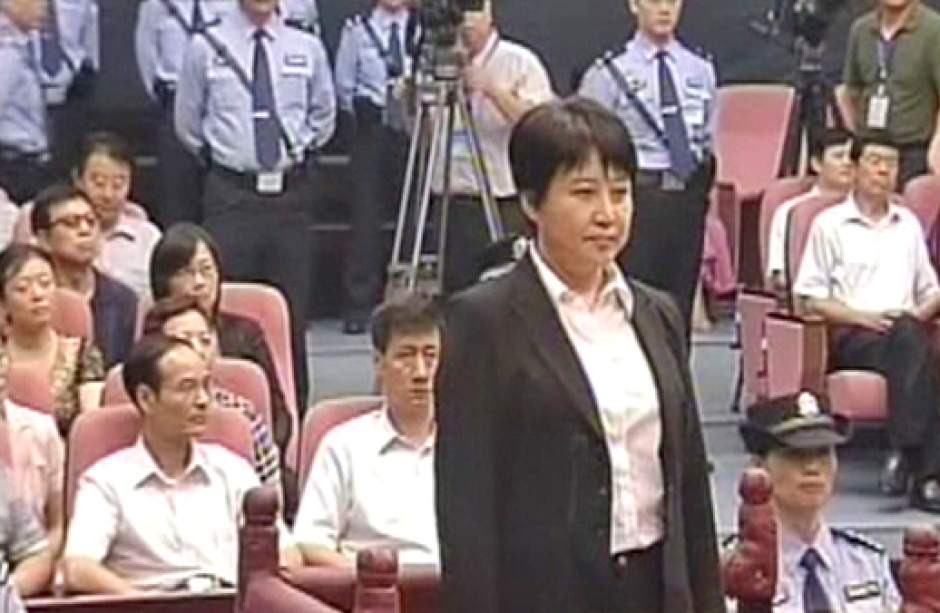
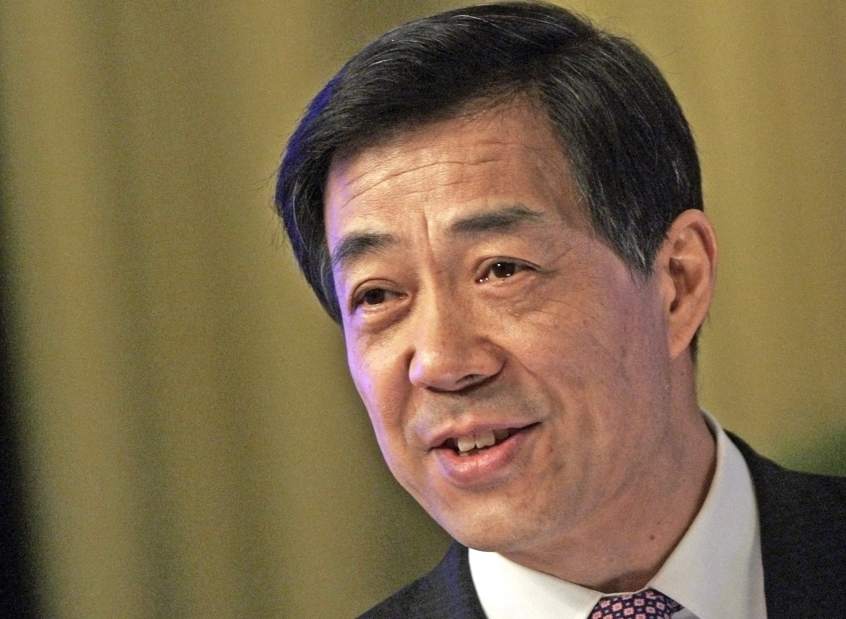
The recent publicized trial of a woman once called the Jackie Kennedy of China dramatically altered the true picture of what brought down her husband, a charismatic politician who sought one of the highest positions in the communist country, a Tribune-Review investigation found.
Playing down “economic crimes” that were the origins of the scandal, a Chinese court on Aug. 9 heard Gu Kailai confess that she poisoned British businessman Neil Heywood in November in Room 1605 of Lucky Holiday Hotel in China's largest city, Chongqing.
The official Chinese government account omitted an alleged billion-dollar money laundering racket and a trail of corruption that leads back to an obscure town in a province that borders North Korea.
Gu was sentenced Monday to a suspended death sentence, which could be commuted to a life sentence after two years. Her husband, former Chongqing party boss Bo Xilai, remains hidden from public view and is believed to be in government custody. Others in the case have disappeared.
“Chinese politics can be very brutal,” said Asia expert Jonathan Pollack of the Washington-based Brookings Institution. “Physically brutal. And there are many, many layers to this story.”
Bo Xilai was a charismatic politician, “so powerful he would have made it all the way to the top” had more powerful forces not stepped in the way, Pollack said.
Stopping Bo's expected ascension this fall from China's 25-member Politburo to the nine-member Standing Committee was the real reason behind the whole affair, and not the murder of Heywood, said Derek Scissors, a China expert with the Heritage Foundation, another Washington policy group.
“The Chinese leadership was looking for a way to get rid of Bo,” Scissors said. “They were seeking to nail him on corruption. And this wife stuff was just a surprise to them.”
Bo Xilai's fall does not begin with his wife giving Heywood a drink spiked with cyanide and leaving a “Do Not Disturb” sign on the hotel room door as she left, Trib research showed. It began in the city of Tieling, 1,600 miles to the northeast of his party base in Chongqing.
An unexpected visitor
On Feb. 6, four days after Bo dismissed his longtime associate as Chongqing police chief, Wang Lijun walked into an American consulate in Chengdu. He reportedly was dressed as a woman and carrying a cache of still undisclosed secrets involving his former boss.
Wang once was police chief in Tieling when Bo was governor of Liaoning province. After Bo was assigned to Chongqing, Wang followed.
Wang's attempted defection at the American consulate set off a firestorm among Chinese leaders and on the web. This happened well before the colorful tale of Heywood's murder emerged as official media took over the story.
In those early days, Hong Kong news media and a Western foundation traced Wang's trouble to the “Tieling Corruption Case.” The China Media Project, part of the University of Hong Kong, reported Wang was linked to an unclear corruption case involving his replacement in Tieling, Gu Fengjie.
The Project quoted Chinese academic Wu Jiaxiang: “Wang's misfortunes arrived back on May 12, 2011. On that day, his former partner, Gu Fengjie, the head of the Public Security Bureau in Liaoning's Tieling City, was detained pending an investigation. We can be quite sure that ever since that time, both Wang and Bo have been performing a song and dance duet. The latter knows only too well that this comes with evil intent, and he has wanted to cut off all connection with Wang, knowing it's best to let this continue in eternal silence.”
Willy Lam, a senior fellow at The Jamestown Foundation, whose mission is to provide nonpartisan information about China, Eurasia and terrorism, cited reports that Chinese President Hu Jintao endorsed the corruption investigation.
Quoting a “well-informed Chongqing official,” Hong Kong's South China Morning Post said Bo was summoned to a meeting in Beijing with “a top leader” during January's Chinese Lunar New Year.
“Bo has been told to deal with Wang's case, as there is tangible evidence showing that he was corru pt when he was police chief in Tieling,” the official told the Post.
That official most likely was Zhou Yongkang of the Standing Committee, the country's most powerful body, Scissors said. Bo and Zhou are widely reported to be politically aligned.
Shortly after the meeting, Chinese news media reported that Fengjie was sentenced to 12 years in prison.
When Bo removed Wang as police chief on Feb. 2, he reassigned him to a lower administrative post. Four days later, Wang appeared at the American consulate 167 miles to the west of Chongqing and, on Feb. 8, two things happened.
First, reports surfaced in official Chinese media that an overworked Wang was undergoing “vacation therapy.” Actually, he left the U.S. consulate in custody of Chinese security forces. Second, Zhou, the head of those security forces, traveled to Bo's city of Chongqing for the first time in nine years, according to China Vitae, an independent website that tracks the travels of China's leaders.
“That trip is pivotal,” Scissors said. “Zhou would have played the enforcer” and no doubt carried a message for Bo from the top, he said. Scissors, who met Bo last year, said the mercurial and headstrong leader was seen as a loose cannon by Communist Party leaders.
The fallout
In the days following Wang's arrest, unconfirmed reports surfaced in the South Korean press and elsewhere online that a showdown occurred in Beijing between Zhou's armed police and members of the People's Liberation Army supporting President Hu.
The police and army argued on March 15 over who would detain Liaoning billionaire Xu Ming, a football club owner who was a close ally to Bo. Xu was detained around the same time Bo was removed as Communist Party chief in Chongqing and has not been heard from since.
The alleged crimes by police chief Gu Fengjie are unclear. The Oriental Morning Post of Shanghai mentioned “gossip” pinning it to “possessing a large amount of property.” The China Media Project translated an article from Shenzhen Commercial News that quoted an Internet report saying Gu was involved in “bribery and possession of huge unaccountable assets.”
Scissors said he suspects the investigation of Fengjie was an attempt to find compromising information on Wang, who in turn might implicate Bo. He believes it was part of a Standing Committee power play.
Yet, the attempt to bring down Bo opened up an area experts believe Chinese leaders preferred to keep hidden.
Citing an Internet account from a university student who said he atte nded Gu's trial, The New York Times said it was reported in court that Heywood demanded $22 million — a 1 0 perc ent commission — from Bo's wife for an undefined project. That would put an alleged deal at $220 million.
That's a lot of money for Bo, whose government salary was around $20,000 a year. And the figure could have been higher. Several recent estimates placed the amount of money that Gu sent out of China at more than $1 billion.
China leads the world in illicit outflows of money by a wide margin, with an estimated $2.74 trillion over a decade, according to Global Financial Integrity, a Washington-based nonprofit that attempts to track secret money.
Another motive for the entire Bo Xilai affair becomes apparent in reports connected to the Chinese spiritual group Falun Gong, which China outlawed in 1999 and whose members routinely were imprisoned or disappeared.
In the English-language newspaper, which is affiliated with the group, Wang reportedly headed the On-Site Psychology Research Center in Liaoning, Falun Gong maintains that some of its members were killed at the center — part of the prison system — so that officials could harvest their organs and implant them in paying customers.
That, the group contends, is the real crime that the trial of Bo's wife was meant to obscure.
Lou Kilzer and Andrew Conte are staff writers for Trib Total Media. Kilzer can be reached at 412-380-5628 or lkilzer@tribweb.com . Conte can be reached at 412-320-7835 or andrewconte@tribweb.com. The Associated Press contributed to this story.
