

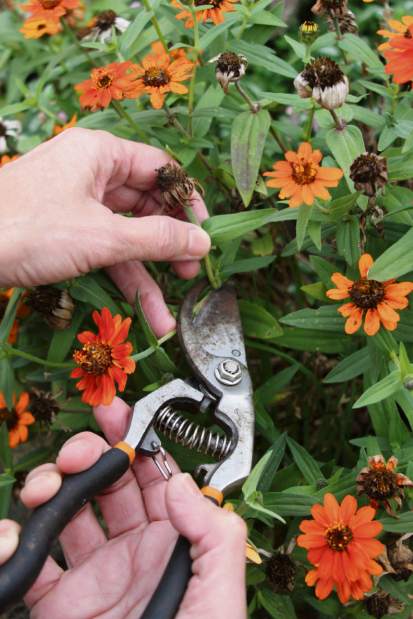
Deadheading is an oft-performed summer chore for gardeners, especially for those who want to see blooms for many weeks to come.
Deadheading is the act of removing flower heads once they're spent. Though it might seem like a simple task, it's an incredibly valuable way to ensure continued bloom production from many different flowering plants.
Because a plant's primary mission is to ensure its genes are passed on to future generations, once a flower dies and goes to seed, the mother plant often slows the production of more blooms and instead puts its energy into making sure the seeds reach maturity and are properly dispersed. When you regularly deadhead your garden, you “trick” the mother plant into putting energy into producing more flowers, instead of seeds.
Deadheading also keeps the garden looking fresh and it can help cut down on certain fungal diseases, including botrytis and bud blights, which are sometimes encouraged by the decay of spent flowers.
While not all perennials and annuals respond to deadheading, those that do, will go on to produce many flushes of blooms from now until the arrival of fall's first frost.
Deadheading should be performed every two to three weeks, though many gardeners walk through their garden on a near-daily basis with a pair of pruners or scissors in hand, snipping off spent blooms whenever they're spotted.
Though it sounds easy, there are a few tricks to properly deadheading flowering plants without leaving the garden looking like it's been decapitated. Here are some tips for properly deadheading some common perennials and annuals.
• For perennials that produce flowers on top of a single, leafless flower stalk, such as daylilies, iris, hosta and coral bells, the entire flower stalk should be removed all the way down to the base of the plant during the deadheading process.
• Perennials with many flowers on a branched stalk with leaves, such as yarrow, veronica, bee balm, garden phlox, coneflowers, Shasta daisies, black-eyed Susans and the like, are best initially deadheaded by just removing the individual spent blossoms. But, when all the flowers on any given flower stalk are finished blooming, the entire stalk can be cut down to the ground.
• For annuals with upright flowering stems, such as gerbera daisies, salvias, agastache, statice, zinnias, cosmos, geraniums and similar plants, simply follow the tip of the flower stalk down to a place where side-buds occur and cut the flower stalk off just above the branching point.
• Annuals that trail or tumble, such as hanging begonias, petunias, diasica, fuchsia and others, you can either just tug off individual spent blooms or trim the entire plant back a few inches every few weeks to stimulate new stem growth and more flower production.
• Keep in mind that there are also many annuals that don't require any deadheading at all. These plants are often touted as being “self-cleaning,” and they require very little care from the gardener. Annuals like million bells, bacopa, impatiens, scaevola and potulaca simply shed their spent blooms naturally.
Though deadheading is an important task for the summer garden, it's not a requirement, especially if you'd like your plants to self sow and return to the garden the following year. There are many plants in my own garden that, come August, I stop deadheading because I want them to drop seed. I also let some plants go to seed because the birds and other wildlife enjoy consuming the seeds throughout the fall and winter months.
Horticulturist Jessica Walliser co-hosts “The Organic Gardeners” at 7 a.m. Sundays on KDKA Radio with Doug Oster. She is the author of several gardening books, including “Attracting Beneficial Bugs to Your Garden: A Natural Approach to Pest Control” and “Good Bug, Bad Bug.” Her website is jessicawalliser.com. Send your gardening or landscaping questions to tribliving@tribweb.com or The Good Earth, 622 Cabin Hill Drive, Greensburg, PA 15601.
