



Some humble inventors in a Hunker garage are processing junk-yard plastic into fuel that takes the place of costly gasoline.
They have been using the fuel since spring in yard equipment and are preparing to seek a patent on their invention, said John Ustazewski Jr., 41, of Herminie.
“I actually have a smile on my face now when I'm cutting grass. I'm not spending any money.” said Ustazewski, who maintains five different sites.
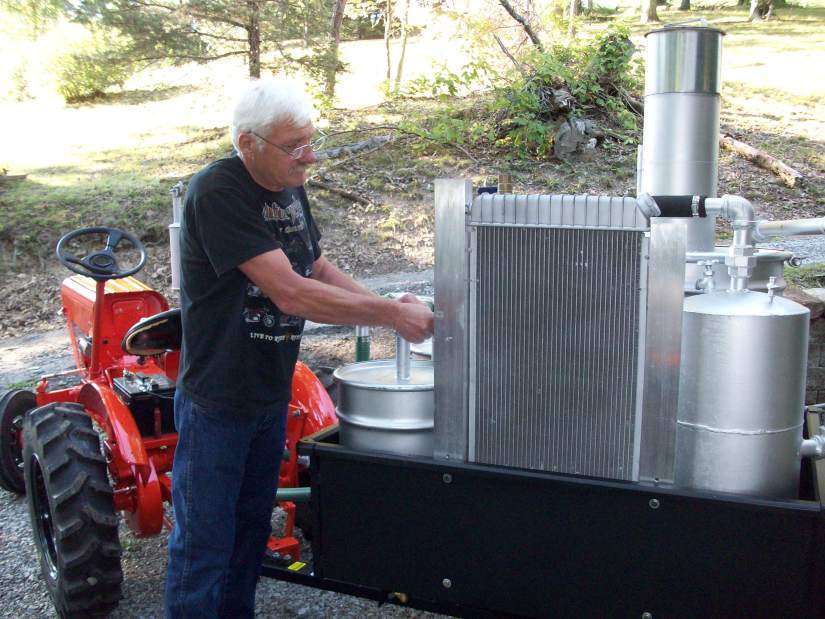
It began in the garage of Dave Ramsay, 60, the mayor of the tiny borough of Hunker. He built a wood gasification engine that turns any cellulose product into on-demand fuel.
Fellow workers at Penn State Tool & Die came over to see his alternative fuel project.
That visit led to the birth of the plastic-to-fuel conversion process.
The group included Tim Mehallick of Mt. Pleasant and Rich Wagner of New Stanton.
“It is pretty exciting,” said Wagner, 40, who now works in Donora at Eastern Alloy Inc. “I got involved with those guys and we started tinkering and put it together.
“I don't like to see all the plastic going into the landfills,” said Wagner, a manufacturing engineer journeyman for 12 years. Ustazewski is a journeyman machinist and a group leader in quality control and inspection.
Ramsay, who said chemistry comes easily to him, said he was involved with research projects when he worked at Westinghouse at Waltz Mill. His idea of fun is taking classes in chemistry and other topics.
“I call them the Einstein Group,” said Mary Ramsay, the mayor's wife, who seems to take the experimentation in stride.
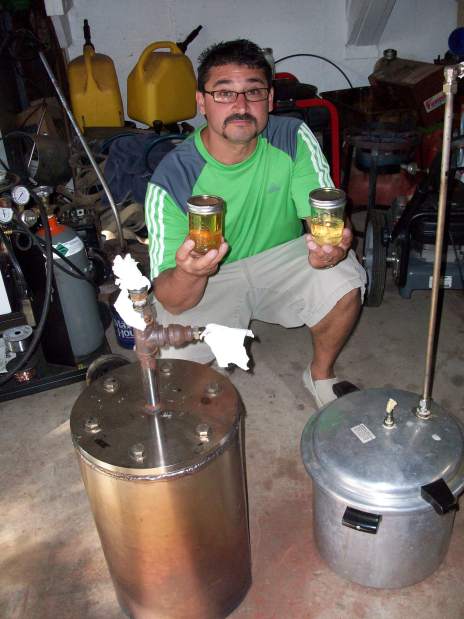
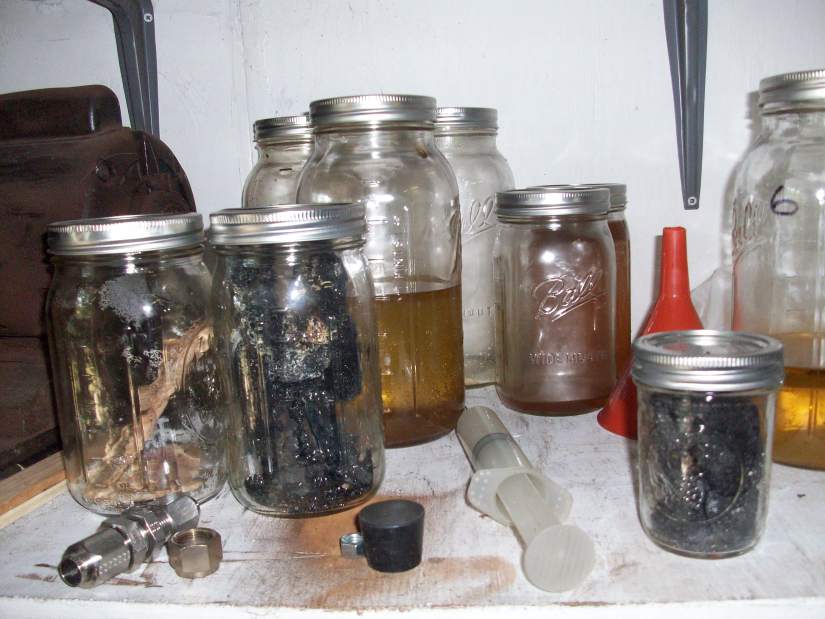
Glass jars lining the edge of the garage are evidence of failed experiments. But eventually, the fellows found the correct process to melt and distill heavy plastics — like that found inside car door panels or fan shrouds in the engine compartment — into a gasoline-like fuel.
The fuel's smell is different than that of gasoline, but it works.
There are two fuels. One is darker and more like a diesel fuel.
And no modifications are needed for either the weed trimmer — a two-stroke engine that no longer needs an oil additive — or the lawn mower. Both have been running on the alternative fuels since spring.
A very fine, powdered carbon is the byproduct of the heavy-duty plastics they are cutting up to melt and distill for fuel. This black carbon can be reused.
“We designed a process to break down the long-chain molecules (of plastic) with a catalyst,” Ramsay said.
Ustazewski said he learned a lot about plastics through trial and error.
“It all came together. We stumbled upon a lot of things,” he said.
And they are careful to safeguard their process. When showing the prototype, Ustazewski left out key elements that he says are proprietary.
Right now propane is being used to get the plastic fuel conversion distillation process going.
The size of the unit will depend on the customer's need, Ustazewski said.
The fuel is free, because junk yards are glad to be rid of the plastic, and the process, no matter the size of the unit, takes 30 to 40 minutes. Ten pounds of plastic converts into one gallon of fuel.
Ustazewski said they are not interested in selling the fuel, but manufacturing and selling the machines to companies that have their own scrap to burn to fuel their own equipment, including a fleet of vehicles.
Neither men knew of anyone using their method of converting plastics into fuel.
Ramsay brought home from Ohio a rusting mid-1960s Power King 14 HP tractor he refurbished for the sole purpose of having a running demonstration for his cellulose gasifier.
The tractor starts on gasoline, but switches smoothly to the fuel produced by the equipment mounted in the trailer. It takes 20 pounds of cellulose products, which includes newspaper, to make one gallon of fuel.
Burning a variety of items such as wood, leaves and corn, Ramsay plans on using this equipment to run a generator for his house.
“If people had an understanding, they could easily do it themselves,” Ramsay said. “This here's pretty easy.”
Rose Domenick is a freelance writer.
