


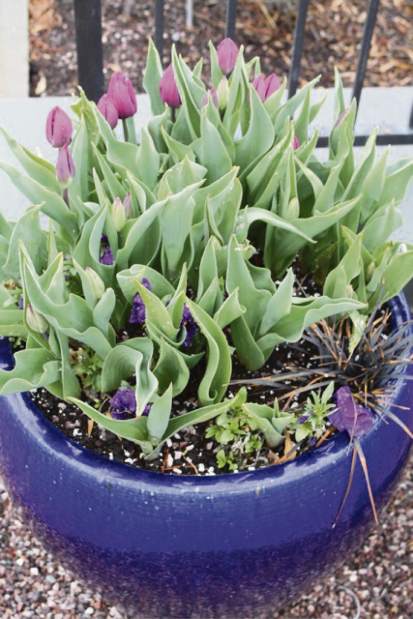
Question: I bought some tulip bulbs in September, but I never got around to planting them. Now that winter has arrived, I'm not interested in going outside to plant them. If I plant the bulbs in a pot, will they bloom? If so, how many bulbs should I put in each pot?
Answer: Up until our recent cold snap, I would have suggested you plant your tulip bulbs out in the garden, even if it meant you had to wear mittens to do it. Spring-flowering bulbs — such as tulips, daffodils, crocus and hyacinth — can be planted up until the ground freezes solid. September and October are the ideal planting time, but I've settled bulbs into the ground as late as early January in years with warmer weather and have had success.
However, now that we've had some very cold weather, you're best bet is, in fact, to pot those tulip bulbs in containers and enjoy their blooms that way, instead of in the garden. But, you can't just plunk the bulbs into a pot and expect success. There are a few things you'll need to do to ensure they'll produce flowers.
Tulips and many other spring-blooming bulbs, require a period of cold in order for the bulb to develop a flower.
The exact length of time and critical temperature they need to be exposed to depends on the type and variety of bulb you're growing. Without knowing the exact variety of tulip you have, I suggest you expose them to temperatures of around 40 degrees F for a period of 10 weeks. Essentially, you need to mimic winter for the bulbs to flower.
To do this, fill some 8- to 10-inch wide plastic pots halfway with a high-quality potting soil. Don't use very deep pots. Instead, pick ones that are only about 8 inches deep. If you buy the pots online or at a local nursery, you can ask for a special pot called a “bulb pan.” These are the perfect shape and size for growing bulbs.
Once the containers are filled halfway with potting soil, place the bulbs on the soil, rounded side down and about an inch apart. The top point of the tulip bulb should sit anywhere between one and three inches beneath the upper rim of the pot.
After the bulbs are positioned in the pot, fill it the rest of the way with more potting mix. Leave headspace of about a half-inch between the top of the soil and the top of the pot's rim. This headspace will channel irrigation water and keep it from running over the sides of the pot. After planting, water the pot well.
There are three different ways you can expose your newly potted tulip bulbs to the temperatures required to initiate blooms.
The first choice is to wrap the entire pot in a clear plastic bag (I find dry cleaning bags work well for this job) and place the pot in the back of the fridge or in the crisper drawer for 10 weeks.
The second option is to take the potted bulbs outside and sink them, pot and all, into the garden or compost pile somewhere. The bulbs will freeze out and turn to mush if you just let the pot sit out exposed to the elements, but if you insulate the pot by burying it in the ground or compost pile up to the top rim, the bulbs will be protected. If you use this method, you do not have to wrap the pot in plastic before sinking it into the ground.
Your third option is to put the pots in an unheated, attached garage. Cover them with plastic as you would if you were overwintering them in the fridge, and then place them in a garage that gets cold, but not freezing.
No matter which method you choose, you'll want to check the containers every two weeks to check for mold or rot and water them as necessary. If the pots are in the fridge or garage, remove them from the plastic and put them in the sink to water them. After watering, cover them with the plastic and put them back where they were. Pots left outdoors can be watered in the garden, though they'll require far less water than those overwintered in the fridge or garage.
After the 10-week period has passed, remove the pots from the garage or fridge, or pull them out of the garden soil. Bring them indoors into a cool, bright room. Keep them regularly watered. Within a few days, the bulbs will begin to sprout.
Anywhere from one to three weeks later, your tulips should bloom. After flowering, it's up to you if you'd like to try to plant the bulbs out into the garden. Sometimes bulbs that are forced into flower like this do not do well once transplanted out into the garden. Plus, many tulip varieties will not return year after year and need to be treated as annuals. Without knowing which variety you're growing, it's a shot in the dark as to whether or not they'll return to the garden in subsequent seasons.
Horticulturist Jessica Walliser co-hosts “The Organic Gardeners” at 7 a.m. Sundays on KDKA Radio with Doug Oster. She is the author of several gardening books, including “Attracting Beneficial Bugs to Your Garden,” “Good Bug, Bad Bug” and her latest “Container Gardening Complete.” Her website is jessicawalliser.com. Send your gardening or landscaping questions to tribliving@tribweb.com or The Good Earth, 622 Cabin Hill Drive, Greensburg, PA 15601.
