

Question: We dug the potatoes out of our garden last week and discovered that many of the potatoes had green blotches on them. The green was not just on the skin; it was also within the flesh of the potato. My mother always told me not to eat green potatoes because they would make you sick. Is this true? Should we avoid eating the potatoes with green on them?
Answer: Potatoes that are exposed to sunlight produce both chlorophyll and solanine, a glycoalkaloid poison found in differing amounts in many members of the tomato family, including potatoes, eggplants, tomatoes, and others.
Solanine can be found in any part of a plant, including the leaves, stems, fruits and tubers.
Plants in the tomato family produce solanine and other glycoalkaloids as part of their defensive system because it helps protect the plant from certain insects, diseases, and other predators.
The solanine produced when potatoes are exposed to light, is thought to prevent mammals from eating the exposed tubers.
The green color is harmless, but the solanine produced along with it is indeed capable of making you sick. Diarrhea, vomiting, and stomach cramps are symptoms of solanine poisoning.
Though deaths are very rare, solanine poisoning from eating green potatoes can land you in the hospital in severe cases.
A more common reason for solanine poisoning is the accidental ingestion of the berries of several other, uncultivated, members of the tomato family, including woody nightshade and poisonous nightshade. Symptoms usually occur a few hours to a day after ingestion.
Tomatoes also contain solanine, though it is found in much lower amounts, primarily in the leaves. There are other, more benign, glycoalkaloids in the fruits of tomato plants that don't bother the human digestive system.
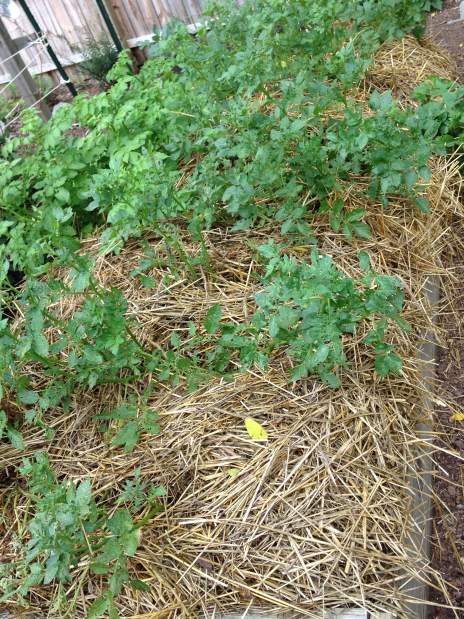
To prevent green potatoes from forming in the future, be sure to “hill” your potato plants mid-season by mounding soil up over the developing plants and keeping the growing tubers fully covered. Some gardeners add a thick layer of straw or hay mulch around the plants when they are about a foot tall, which serves to keep the potatoes away from sunlight.
Always store harvested potatoes in complete darkness to prevent the green from forming post-harvest.
You can still eat your potatoes, as long as you completely cut away any and all green skin and flesh. Because solanine is water soluble, boiling the potatoes then draining off the water is the best method of further reducing solanine levels before eating.
Horticulturist Jessica Walliser co-hosts “The Organic Gardeners” at 7 a.m. Sundays on KDKA Radio. She is the author of several gardening books, including “Attracting Beneficial Bugs to Your Garden: A Natural Approach to Pest Control” and “Good Bug, Bad Bug.” Her website is www.jessicawalliser.com.
Send your gardening or landscaping questions to tribliving@tribweb.com or The Good Earth, 503 Martindale St., 3rd Floor, D.L. Clark Building, Pittsburgh, PA 15212.
