

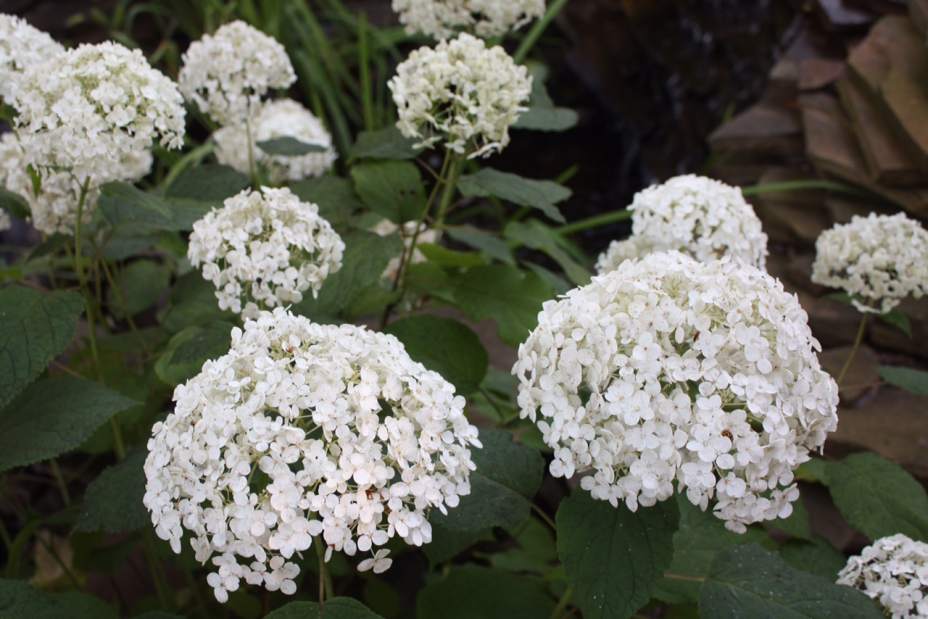
Question: I have an ‘Annabelle' hydrangea, and I recently noticed that several of the new leaves are curled closed. When I peeled them open, there was a single green caterpillar inside of each one. What are they, and should I do something about them?
Answer: Your smooth hydrangea (Hydrangea arborescens ‘Annabelle') is suffering from leaf tier caterpillars (Olethreutes ferriferana). In spring, adult moths lay eggs on the shoot tips of this particular species of hydrangea. The eggs hatch a short time later, and the resulting half-inch caterpillars “sew” two or more leaves together with silk to create a pocket and shield themselves from predators.
As you discovered, peeling the leaves apart reveals a smooth, pale green caterpillar with a dark head. There are usually dark green pellets of excrement in there as well.
The caterpillar feeds on the developing flower bud and any leaf surfaces within their cozy little home. Eventually, they'll drop and tunnel into the ground to pupate in mid-summer. The following spring, they'll emerge as adult moths. There is only one generation per year.
Adult moths are small with white and brown markings. During the day, when they're at rest, they look a bit like bird droppings and are difficult to spot. Nighttime is when they locate the hydrangeas and get to work laying their eggs.
Hydrangea leaf tiers are found in the northeastern U.S., south to the Carolinas.
Hydrangea leaf tiers aren't a common pest, but they are one you'll want to control. If left unchecked, they'll destroy the developing flower buds and limit this season's blooms.
When you spot their telltale homes on the tips of your hydrangeas, simply snip the curled leaf tips off the plant down to the next leaf node. Toss them in the garbage or squish the caterpillar inside and throw them into the compost. Another option is to open the fused leaves by hand and seek out and squish the caterpillar inside.
However, depending on how long the caterpillars have been feeding, the flower bud may already be damaged beyond repair.
Removing the damaged tips as soon as they are spotted encourages side-shoot production. These side-shoots often will go on to produce a second set of buds and, eventually, flowers.
Because the caterpillar is so sheltered, most pesticides are ineffective. Hand removal is the best option.
Horticulturist Jessica Walliser co-hosts “The Organic Gardeners” at 7 a.m. Sundays on KDKA Radio. She is the author of several gardening books, including “Attracting Beneficial Bugs to Your Garden: A Natural Approach to Pest Control” and “Good Bug, Bad Bug.” Her website is www.jessicawalliser.com.
Send your gardening or landscaping questions to tribliving@tribweb.com or The Good Earth, 503 Martindale St., 3rd Floor, D.L. Clark Building, Pittsburgh, PA 15212.
