



WASHINGTON
After two years of stonewalling about its theft of Gerardo Serrano's 2014 Ford F-250 pickup, our mistake-prone government suddenly returned it — detailed bumper to bumper, with four new tires and a new battery. It probably hoped that Serrano, mollified by the truck's sprucing-up, would let bygones be bygones and go back to Kentucky. Assisted by Institute for Justice (IJ) litigators, whose appearance on the West Texas horizon probably panicked the government into pretending to be law-abiding, he wants to make the government less larcenous and more constitutional when enriching itself through civil forfeiture.
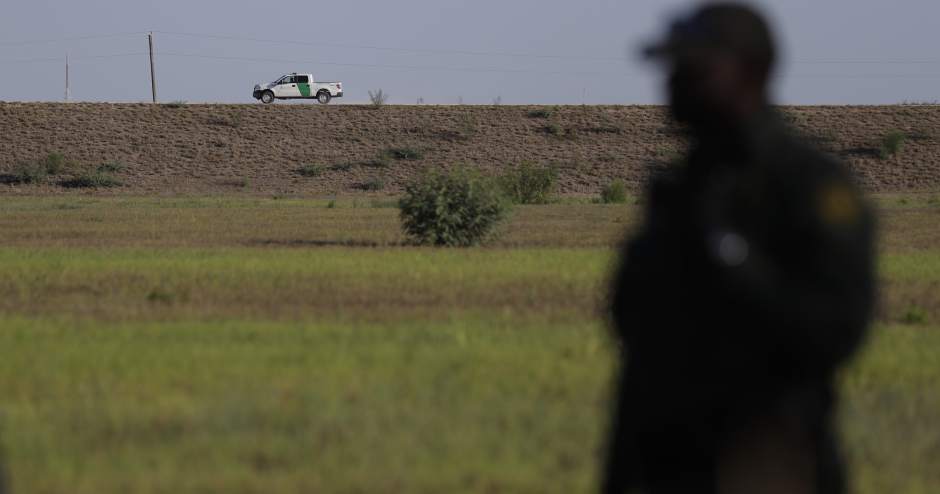
On Sept. 21, 2015, Serrano drove to the Eagle Pass, Texas, border crossing, intending to interest a Mexican cousin in expanding his business in the United States. As mementos of his trip, he took some pictures of the border with his cellphone camera, annoying two U.S. Customs and Border Protection (CBP) agents, who demanded his phone's password. Serrano, who is what an American ought to be regarding his rights — prickly — refused to submit to such an unwarranted invasion of his privacy. One agent said, “You have no rights here.” They searched his truck — unusual for a vehicle leaving the country — and one agent exclaimed, “We got him!”
Having found five .380-caliber bullets in the truck's center console — Serrano has a concealed-carry permit but had no weapon with him — they handcuffed him and seized his truck under civil forfeiture, saying it had been used to transport “munitions of war.” Civil forfeiture is the power to seize property suspected of being produced by, or involved in, crime. In this “Through the Looking-Glass,” guilty-until-proven-innocent inversion, the property's owners bear the costly, protracted burden of proving they were not involved in such activity. Law-enforcement agencies get to keep the profits from forfeited property, which gives them an incentive to abuse the process. But then, punishment before a crime is proven is inherently abusive.
The government seems mystified that Serrano will not leave bad enough alone. It says he got his truck back after a mere 25 months, so “there is no longer any case or controversy.” But before it would deign to promise due process — to allow him to request a judicial hearing — it extorted from Serrano a bond of 10 percent of the truck's value. The hearing never happened. During Serrano's two years without the truck, he had to continue making monthly payments on it and had to pay to insure it, to register it in Kentucky and for rental cars.
Serrano is suing for restitution, but also seeking a class-action judgment on behalf of others similarly mistreated. Just at Eagle Pass, one of 73 U.S.-Mexico border crossings, the CBP seizes, on average, 100-plus Americans' vehicles a year. Serrano seeks to establish a right to prompt post-seizure judicial hearings — improvements of a process that requires radical revision, if not abolition. What happened to Serrano happened at the hands of a government — the one north of the border — that felt free to say, “You have no rights here.”
George F. Will is a columnist for Newsweek and The Washington Post.
