

Eating a wide variety of colorful fruits and veggies helps you consume all the nutrients your body needs. Some of my favorite vegetable varieties are yellow and orange. Veggies in the yellow/orange category are naturally pigmented by carotenoids, which are converted into vitamin A.
Carotenoid-rich foods may help improve the functioning of our immune system, and the Stanford University Cancer Center says that eating foods rich in beta-carotene is recommended to reduce the risk of developing stomach, lung, prostate, head, neck and breast cancers.
Though it is possible to overdo the beta-carotene (your skin will turn a yellow-orange color if you do), it's also not likely, especially if that beta-carotene comes from a variety of fruits and veggies rather than just a single source. Filling your personal quota of yellow- and orange-colored fruits and veggies is easier than you think. With so many gorgeous, tasty, and prolific choices, it's easy to expand your garden's color palette. Here are some of my favorite carotenoid-rich and delicious favorites to grow in your garden.
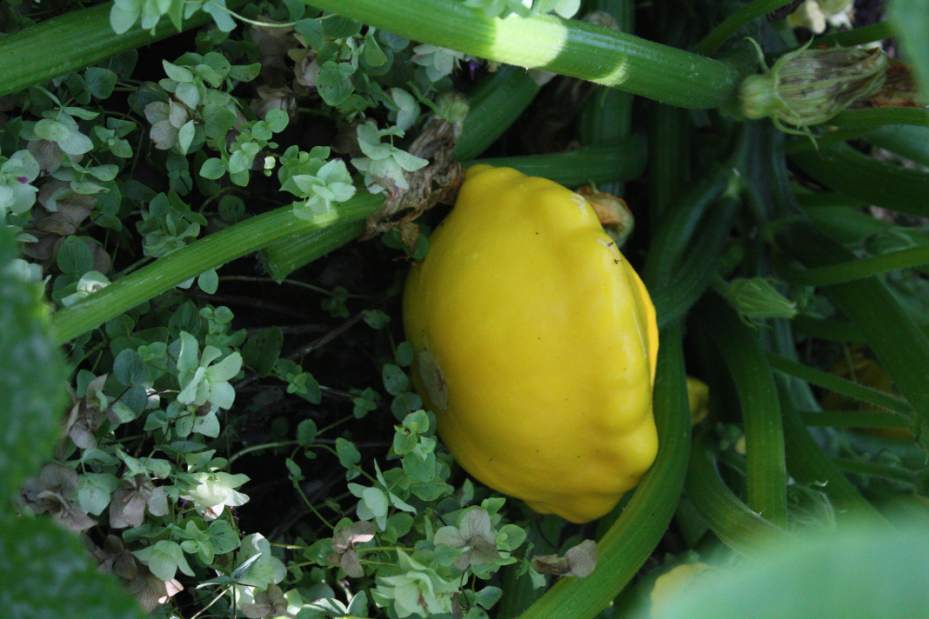
‘Sunburst' squash: This yellow, patty pan-type summer squash is super-tasty, and it has a different flavor than zucchini. ‘Sunburst' seems to resist cucumber beetles a bit better than some of the other summer squashes I grow, and the yield is definitely better than most other patty pans. ‘Sunburst' is best harvested young, when each fruit measures 3 to 5 inches across the middle. The white flesh of this hybrid variety is soft yet firm, and the rounded, scalloped fruits look beautiful in the garden and on the plate. Seeds are planted 1-inch-deep after the danger of frost has passed and are ready to harvest a mere 50 days later.
‘Cheddar' cauliflower: With 25 times more beta-carotene than white-cauliflower varieties, ‘Cheddar' is a real standout. The flower heads are a bright yellow-orange that turns even deeper-orange when cooked. The flavor and texture are on par with white varieties and, it is delicious raw and cooked. Cauliflower is a cool-season crop requiring 40 to 50 days to mature after four- to six-week-old seedlings are transplanted out into the garden in early April. Like all cauliflower varieties, ‘Cheddar' is not heat-tolerant and is best grown as an early-spring or fall crop.
‘Yellowstone' carrots: The flashy yellow of ‘Yellowstone' carrots is not only beautiful but also tasty. Everyone I serve them to wants to know more about them. There are many different yellow carrots on the market, but I like ‘Yellowstone' best, finding its flavor to be mild and sweet. Seeds are sown every few weeks from late March through mid-August. Till the soil deeply before planting to ensure long, straight roots.
‘Golden' beets: A personal favorite for its mild, sweet, golden flesh and bright-yellow skin, ‘Golden' does not have the ‘dirty' aftertaste of red-beet varieties. Introduced by Burpee Seeds in the 1940s, this heirloom is perfect for direct sowing into the garden and is ready to harvest 55 days later.
In my experience, ‘Golden's' germination can be spotty, so, be sure to plant more than you think you'll need.
‘Golden Marconi' pepper: Though they take a full 90 days to mature, this beautiful, yellow pepper is worth the wait. With sweet, dense flesh and a 7-inch-long tapering shape, ‘Golden Marconi' is a star among the pepper clan. An Italian heirloom with thick walls, this pepper is perfect for fresh eating in salads, or for stuffing, grilling or stir-frying. Starting peppers indoors under lights about eight to 10 weeks before that last expected frost is a good idea. Harden them off and transplant the seedlings outdoors after the danger of frost has passed.
Of course, there are hundreds of other varieties of golden fruits and veggies. The possibilities are truly endless. Try ‘Lemon' cucumbers, ‘Sun Gold' tomatoes, ‘Golden Globe' turnips and more. Then watch your garden, and your diet, shine.
Horticulturist Jessica Walliser co-hosts “The Organic Gardeners” at 7 a.m. Sundays on KDKA Radio. She is the author of several gardening books, including “Attracting Beneficial Bugs to Your Garden: A Natural Approach to Pest Control” and “Good Bug, Bad Bug.” Her website is www.jessicawalliser.com.
Send your gardening or landscaping questions to tribliving@tribweb.com or The Good Earth, 503 Martindale St., 3rd Floor, D.L. Clark Building, Pittsburgh, PA 15212.
