

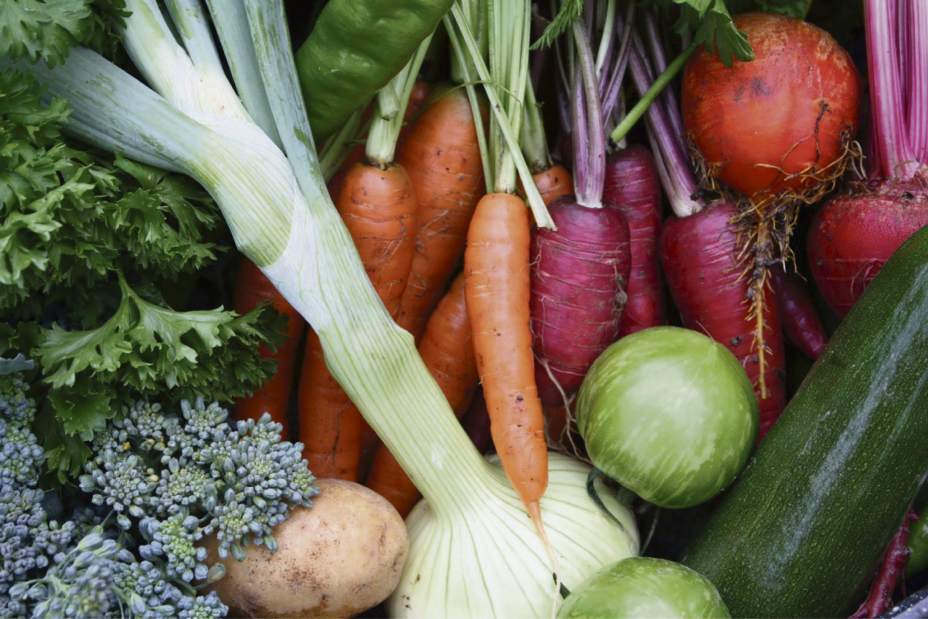
As I walk the paths of my vegetable garden in late summer, I'm always struck by all the beautiful colors and shapes I find there. I grow dozens of different vegetable varieties in my garden, many of which are heirlooms.
An heirloom vegetable is one that's been in cultivation for many years, with seeds often handed down from generation to generation. An heirloom vegetable is not the result of plant hybridization, where the genes of two parent varieties are intentionally crossed to come up with the new hybrid variety. Instead, heirlooms carry their genetics from one generation to the next via open pollination.
Seeds saved from hybrid plants will not be true to type, meaning that the offspring of hybrid plants will not look (or taste!) like their parent. With hybrid varieties, you need to buy new hybrid seeds every year. In other words, if you save the seeds from a popular hybrid tomato, such as “Early Girl,” and you grow those seeds next season, the resulting plants will not be “Early Girl,” but rather they'll revert back to some of their original genetics or be a new hybrid all their own.
Heirloom varieties, on the other hand, have seeds that can be saved for many years because they always return true to type, as long as cross-pollination does not occur (more on this later).
Though heirloom vegetables fell out of vogue with the advent of industrialized agriculture when the focus shifted to a few hybrid varieties that were easier to grow and harvest on a large scale, many gardeners are returning to these tried-and-true heirloom favorites. Their flavor, good looks and nutritional value make heirloom vegetables the perfect fit for the home garden.
But that doesn't mean that all heirloom vegetable seeds are easy to save. As I mentioned earlier, with certain open-pollinated heirlooms, there's a good possibility that the plant will cross-pollinate, introducing the genes of their pollination partner and leading to a naturally produced hybrid. When this occurs, rather than having seeds that return true to type, these seeds will result in natural hybrids. These natural hybrids may be a great hit, or they can be a big flop. Because of this, gardeners who plan to save the seeds of heirloom varieties need to ensure the plants don't get cross-pollinated.
Thankfully, there are a handful of heirloom vegetables with an extremely small chance of cross-pollination. Due to their inclination to self-pollinate, tomatoes are among the easiest heirloom seeds to save. The chance of varietal contamination through cross-pollination is minimal to non-existent with tomatoes. Seeds saved from an heirloom “Boxcar Willie” tomato will always grow into another generation of “Boxcar Willie” plants.
Other heirloom vegetables that seldom cross-pollinate are peas and beans. Like tomatoes, these plants are self-pollinating, and saving seeds from them is easy. The same is true for heirloom lettuce varieties. I collect and save seeds from my open-pollinated, heirloom lettuce plants every summer and plant them again the next year.
On the other hand, there are many crops that are prone to cross-pollinating and even though you may be growing heirloom varieties, their saved seeds won't be true to type due to cross-pollination. In order for these heirloom varieties to produce “true” seeds, each variety needs to be separated by several hundred feet of space to ensure no cross-pollination takes place. Crops in this category include corn, squash, cucumbers, peppers and broccoli, to name a few. Though it's possible to separate each variety and save its seeds like commercial seed producers do, it isn't always practical for the home gardener. For this reason, I suggest purchasing new seed each year, even if you're growing heirloom selections of these vegetables.
Horticulturist Jessica Walliser co-hosts “The Organic Gardeners” at 7 a.m. Sundays on KDKA Radio with Doug Oster. She is the author of several gardening books, including “Attracting Beneficial Bugs to Your Garden: A Natural Approach to Pest Control” and “Good Bug, Bad Bug.” Her website is jessicawalliser.com.
Send your gardening or landscaping questions to tribliving@tribweb.com or The Good Earth, 622 Cabin Hill Drive, Greensburg, PA 15601.
