



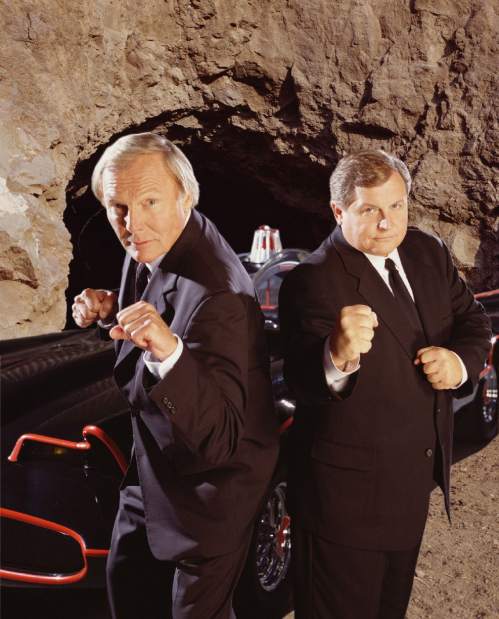


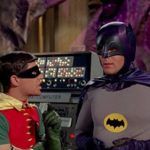


The television version of “Batman” debuted Jan. 12, 1966, with few expectations.
Originally scheduled to join ABC-TV's lineup for the 1966-67 season, it was rushed on air because of a hole in the network's schedule. And this was even after the show received, at the time, the worst audience test score for an ABC pilot.
Little did ABC executives realize they were on the cusp of a cultural phenomenon.
Adam West, who played the Caped Crusader, would eventually say the '60s consisted of three big B's that made an impact: The Beatles, (James) Bond, and “Batman.”
Hyperbole?
Perhaps, but the series did have an enormous influence on pop culture. There were Batman fan clubs, lunch boxes and other trinkets (although there was no officially licensed merchandise until 2013).
Here's some assorted “Batman” trivia in honor of its 50th anniversary:
Short, dense run
There were 120 episodes featuring Batman and Robin (Burt Ward) saving Gotham City from the treachery of the Joker, the Riddler, the Penguin and other assorted rogues between 1966 and '68. For kids growing up in the '60s, “Batman” — which aired Wednesday (with a cliffhanger) and Thursday nights its first 1 1⁄2 seasons — was appointment television.
Save Batman!
The Bat-Man comic-book hero first appeared in 1939, created by Bob Kane and Bill Finger. According to Kane, the popularity of the TV series saved the comic book series from being canceled. But diehard comic-book fans weren't thrilled about the tongue-in-cheek series, which they viewed as a betrayal of Kane's vision.
Making of a hero
It can be argued that West set the standard for those would follow. Conan O'Brien, Howard Stern, Drew Carey and Bill Maher are among the many who have cited West as their childhood hero. Nor is West finished with his iconic role. He and Ward are scheduled to voice the characters in a new, animated 90-minute feature, set to be released sometime in 2016, to mark the TV series' 50th anniversary.
Long, serious history
The series paved the way for a series of Batman movies. Starting with “Batman: The Movie,” in 1966 with West and Ward reprising their roles from the TV series, the franchise has seen some of Hollywood's biggest names donning the iconic garb of the Caped Crusader. Michael Keaton, Val Kilmer, George Clooney and Christian Bale all took turns as Batman, as will Ben Affleck in “Batman v. Superman: Dawn of Justice” in March.
High-powered talent
Cliff Robertson, Eli Wallach, Tallulah Bankhead, Otto Preminger, Zsa Zsa Gabor, Shelley Winters, Liberace, Bruce Lee, Ethel Merman and Vincent Price made guest appearances on the show. And Julie Newmar, Cesar Romero, Burgess Meredith and Frank Gorshin made multiple appearances as Catwoman, the Joker, the Penguin and the Riddler, respectively.
Career opportunities
Mickey Rooney turned down the chance to play the Penguin. Spencer Tracy would have accepted the role, but only if he could kill Batman.
No room at the inn
Frank Sinatra, Natalie Wood and Cary Grant were fans of “Batman” and wanted to appear on the show. But producers, unfathomably, could not find any roles that fit them.
Run cut short
When ABC canceled the series in 1968, the Batcave set was demolished. Two weeks later, NBC decided to pick up “Batman,” only to change its mind once executives realized they'd have to foot the bill for another Batcave.
Holy pseudonym
Robin used 352 “holy” phrases during the course of the series, including “Holy Bill of Rights,” “Holy Knit One, Purl Two,” “Holy Non Sequiturs” and “Holy Uncanny Photographic Mental Processes.”
Safety first
The Batmobile was a tricked-out 1955 Lincoln Futura originally used in the movie “It Started With a Kiss.” The vehicle wasn't without controversy: The National Safety Council questioned why the Batmobile didn't have seat belts. Producers soon added the feature so Batman and Robin could “buckle up for safety” when leaving the Batcave.
Hello, kitty
When black actress Eartha Kitt replaced Julie Newmar as Catwoman for Batman's final season, some of ABC's Southern affiliates objected because of her race. But the producers refused to bow to pressure, and Kitt filmed three episodes.
Rege Behe is a Tribune-Review contributing writer.
