




Dexter is a member of the Monteleone family who happens to walk on four legs.
When the orange-and-white tabby disappeared from the family's Brighton Heights home on April 19, 2011, the three Monteleone children were devastated, said their mother, Sarah, 33.
“He's not the average cat. We call him the cat-dog. He would walk the kids down to the bus stop. He would know when they came home. He's super affectionate,” she said.
The family searched for Dexter to no avail — until a call came from a veterinarian's office in Monroeville 10 months later saying that the family had been tracked using the cat's implanted microchip, Monteleone said.
The family traveled to Monroeville to pick up Dexter on Feb. 25, 2012, she said.
“And my kids knew instantly as soon as they opened the cage and he popped out. Their eyes were just filled with tears, and they were so happy,” said Monteleone, who owns Doggie Do's Hair Salon in West Deer.
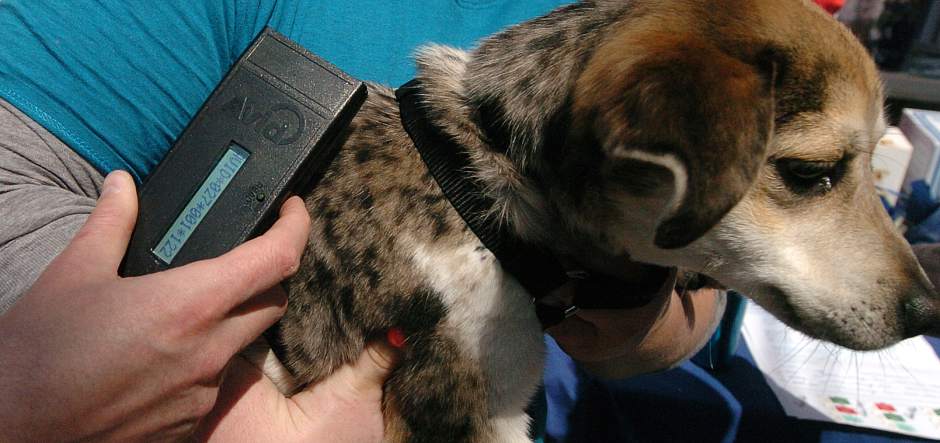
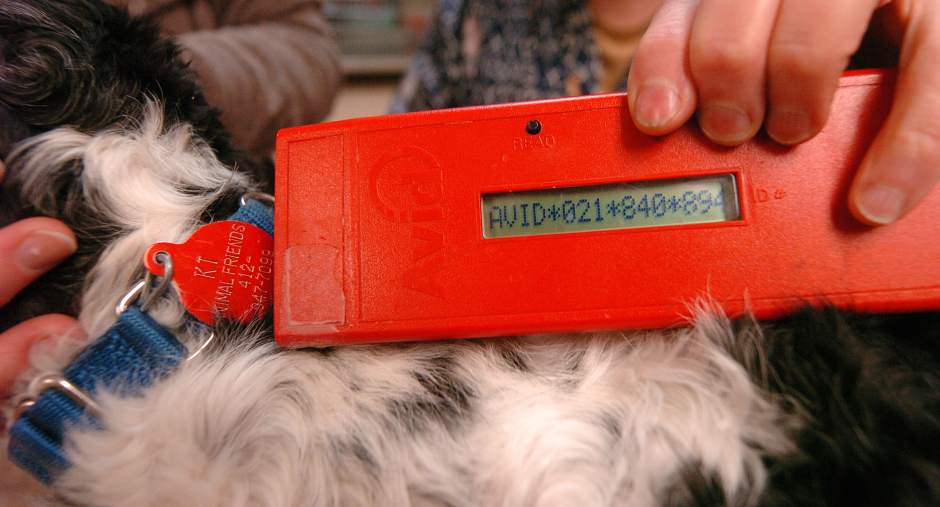
The family is among a growing number of pet owners whose pets are microchipped. The process implants tiny chips into household pets, generally between the shoulder blades.
When a veterinarian or animal shelter scans an animal with a reading device, numbers are presented that the microchip manufacturer can use to identify the owner of the lost pet.
In 2008, 17 percent of dog owners reported that their animals had implanted or microchip devices, according to a survey by the American Pet Products Association in Greenwich, Conn. In last year's survey, 33 percent reported that their dogs had such devices.
“The most important part is to get these animals reunited as quickly as possible, and to keep the pets out of the shelter system,” said Kirsten C. Theisen, director of pet care issues for The Humane Society of the United States in Washington, which recommends microchipping.
All major animal shelters in the Pittsburgh area microchip animals before they are adopted, said Dan Rossi, executive director of the Animal Rescue League of Western Pennsylvania.
The league microchipped more than 6,000 animals last year, but traditional identification methods still are necessary, he said.
“The big thing is having multiple levels of protection for lost animals. Make sure they have the microchip. Make sure they have identification (tags) on them. People should have photos of their animals in place,” Rossi said.
A 2009 study co-authored by the Department of Veterinary Preventive Medicine at The Ohio State University found that microchipping significantly increases the chance of lost pets being reunited with their owners.
Animal shelters were able to find the owners of microchipped pets in almost three out of four cases, according to the study.
There was an issue, however, with pets not being able to reunite with their owners because the owners had not updated microchip companies with their addresses after relocating, the study said.
This is a big issue for the Humane Society of Western Pennsylvania, spokeswoman Kristen Lane said.
Of all the stray animals that arrive at the humane society, only about 25 percent have identification in the form of tags or microchips, she said.
“Of those, we probably return 75 percent who have the rabies tag or microchip. We can't find the owners of the remaining 25 percent because the chip information is not current,” she said. “If the info is current, sometimes the person no longer owns the dog and the new owner didn't update the chip information.”
Microchip injections typically are safe for animals, said Dr. Donna Hughes, a veterinarian and medical director at the Rescue League.
“I have not seen any medical issues or heard of any medical issues coming up. It's like an injection like a vaccination, so it's a larger needle. So sometimes, (the animals) don't like the injection,” she said.
Animal Friends in Ohio Township advises pet adopters not to register their own contact information with the microchip company but to use Animal Friends' contact information instead, which makes locating owners easier, said Ann Ensminger, director of animal wellness.
Tory N. Parrish is a staff writer for Trib Total Media. She can be reached at 412-380-5662 or tparrish@tribweb.com.
