

The last time a census made news was when Joseph and Mary, who was carrying the unborn Christ child, made the trip from Nazareth to Bethlehem to register during the reign of Caesar Augustus. Ancient emperors were mostly concerned with collecting the maximum amount of taxes, and Joseph took to the road to do his part.
Today, in the United States, an accurate census count is essential to every basic function of government. It still helps set tax rates, but it is also used to determine a fair spending plan and the distribution of federal funding to the states, for everything from highways to social services.
And in our representative form of government, each state's number of electoral votes and Congress members, and where congressional district lines are drawn, are determined by the census. Use of census data for setting district lines even extends to state legislatures and local governing bodies.
An honest count is essential for government to be run fairly. And the decennial census sets the stage for the ensuing 10 years.
That is why the upcoming 2020 U.S. Census is suddenly big news, now that the Justice Department has convinced the Commerce Department to add a question regarding citizenship.
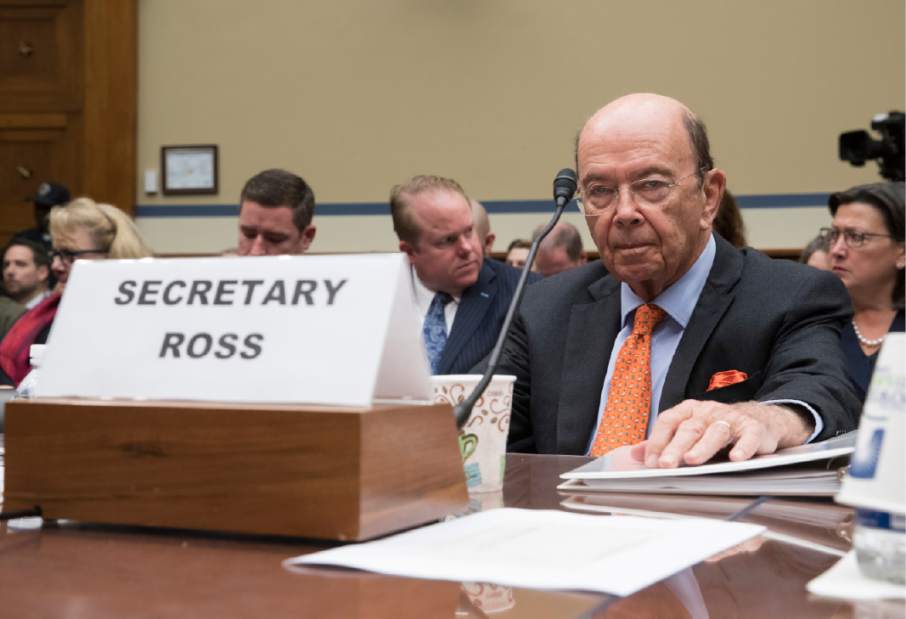
Commerce Secretary Wilbur Ross has said that collecting citizenship data at the census block level “will permit more effective enforcement” of the Voting Rights Act.
If you think that sounds like baloney, you are not alone. The Census Bureau's minimal standard for a proposed question is that it “must not adversely affect survey cooperation.” Ross refused to test for that.
And according to ProPublica, his decision “came in the face of opposition from career officials at the Census Bureau who fear it will depress response rates, especially from immigrants.”
Pittsburgh and Philadelphia, and other urban centers, are sure to see a drop in census responses. Cities are draws for immigrants, and considering the saber-rattling over immigration, even those who have become citizens will likely be reluctant to participate.
Not coincidentally, urban centers often vote for Democrats. And coming on the heels of court rulings that are finally outlawing unfair partisan gerrymandering, any move to cut into an accurate census count may just be the next big battleground.
Led by California and New York, a number of states are suing to block the citizenship question. Short of legislative action or a reversal by the Commerce Department, the courts will make the call, as with so many big issues these days.
Our nation's Founders knew the value of an honest count. Article I, Section 2 of our Constitution calls for a census of all “persons” to be taken every 10 years, without limiting that count to citizens.
The need for an honest count is not new. Livy credits Servius Tullius, sixth king of Rome, with creating the first Roman census, in Etruscan times. It was a way to curb the power of the aristocracy and strengthen the role of the people.
That was a good idea then, and it is a good idea now.
Joseph Sabino Mistick is a Pittsburgh lawyer (joemistick.com).
