
https://archive.triblive.com/news/knowing-plants-helps-you-save-seeds/
Knowing plants helps you save seeds

• |
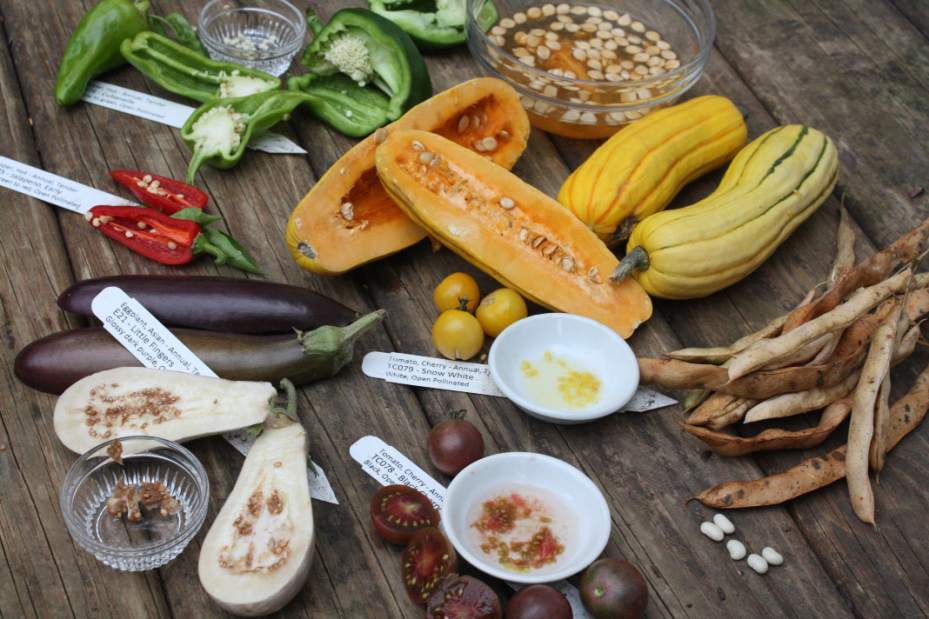
This is the first in a two-part column on saving seeds.
Harvesting and saving seeds is an important part of gardening. Generations of gardeners have handed down seeds of their favorite fruits and vegetables, preserving many heritage varieties.
The ability to save seeds starts, of course, with pollination. Plant reproduction is a complicated affair, and if you want to be a successful seed-saver, it’s important to know as much as you can about the plants from which you plan to collect seeds.
Plants fall into two general categories: hybrid plants and open-pollinated plants.
Hybrid plants are created by the controlled, intentional pollination of two varieties of the same species. Two varieties are crossed to combine one or more positive traits into a single plant. Man-made hybrids are touted as being more vigorous and, often, more disease-resistant. However, planting seeds that were collected from a hybrid crop is a shot in the dark.
Because the seeds contained in the fruit of a hybrid plant have a combination of genetic information from either one or both of the parents, the resulting seedlings often revert back to one of the parents or become something completely different. For most gardeners, saving the seeds of a hybrid variety isn’t worth the gamble.
Open-pollinated plants, however, are those whose pollination occurs naturally. The genes of two plants within the same species are brought together as pollen is shared openly among different plants. With some thoughtfulness and management, open-pollinated plants can produce seed that is a near-perfect varietal match with the parent. These are the plants from which you want to collect seeds.
To further define the nuances of this latter group of plants — the open-pollinated ones from which we intend to save seeds — it’s important to separate them into two more groups: Open-pollinated plant species that self-pollinate and those that are capable of cross-pollinating among their varieties.
There is a small population of plant species that are strictly self-pollinating. Self-pollination takes place when a flower sheds pollen onto its own stigma, fertilizing itself and guaranteeing genetic purity. Self-pollination may take place in a completely closed flower, in which case self-pollination is assured and the resulting seed will have the exact same genes as the parent plant.
Plants that are pollinated largely through self-pollination are the most reliable when it comes to seed saving. Plants that fit into this group include beans, peas and tomatoes. Among non-hybrid varieties of these plants, there is little chance of cross-pollination between varieties and seed almost always come true-to-type. The same goes for peas, peanuts and many other legumes. This makes it easy to save seeds from crops like these.
Other plant species that are largely self-pollinated, but have slightly higher rates of cross-pollination, are peppers, lettuce, and eggplant. But you can ensure these plants will come true by just separating the varieties you grow by just a few feet.
The vast majority of plants are pollinated by insects or wind. When this occurs, there is an open exchange of pollen among plants within the same species. Because of the free exchange of pollen among cross-pollinated plants, there’s a strong chance of mixing genetic material and creating natural hybrids, and when it comes to saving seeds, this isn’t necessarily a good thing.
If you grow a particular variety of squash for its flavor and vigor, chances are you’ll want to guarantee that the squash seeds you save will be true to the original variety. To do this, you’ll have to isolate each variety by several hundred feet or hand-pollinate each flower with a paintbrush then tape the blossom closed to prevent contamination from foreign pollen.
Next week’s column will discuss collecting and storing seeds.
Horticulturist Jessica Walliser co-hosts “The Organic Gardeners” at 7 a.m. Sundays on KDKA Radio. She is the author of several gardening books. Her website is www.jessicawalliser.com. Send your gardening or landscaping questions to tribliving@tribweb.com or The Good Earth, 503 Martindale St., 3rd Floor, D.L. Clark Building, Pittsburgh, PA 15212.