
LaBar: Memorable experience at 'Lucha Underground'

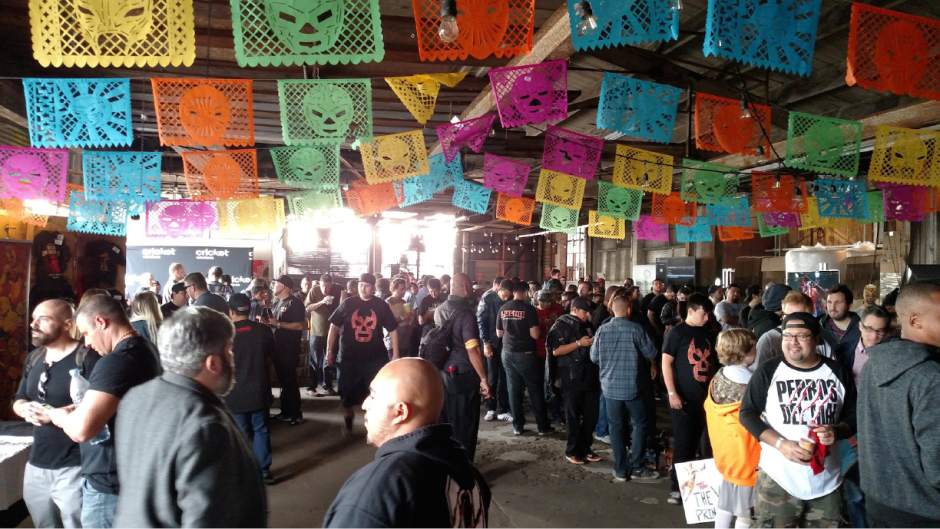

LOS ANGELES — Attending “Lucha Underground” live was the closest thing to me getting to experience professional wrestling as if I were a kid seeing it for the first time.
The journey started by walking along a side street lined with street cones, fencing and old buildings in Boyle Heights in East Los Angeles. The area's gritty reputation is as real as the hundreds of people, most local, who are standing in line hours before the doors open to ensure they get a spot inside The Temple.
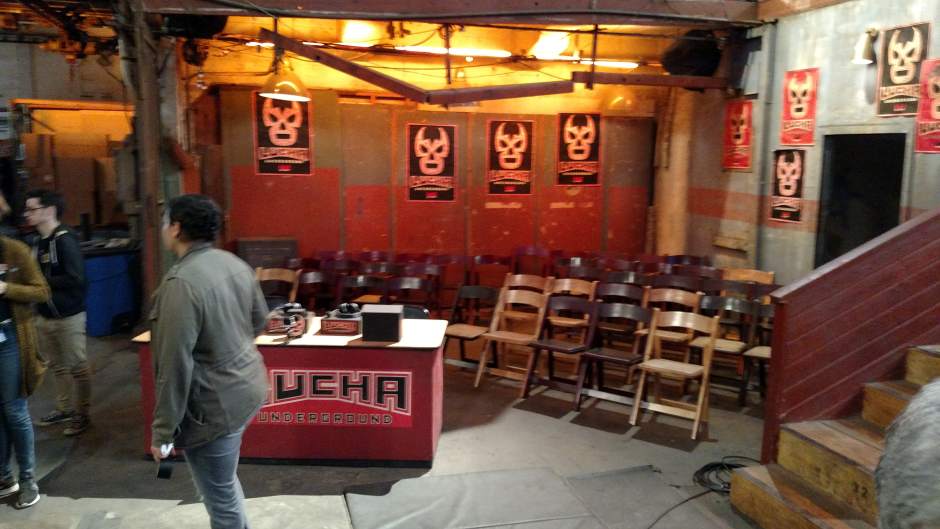
The Temple, the plot setting for “Lucha Underground,” is an old warehouse building commonly used for Hollywood filming. Every stereotypical fight and action scene you've watched in a movie, there's a good chance it was filmed here or one of the nearby warehouses.
If you need to go to the bathroom, use the portable ones outside. If you need something to eat, take your pick from the food truck outside. Inside The Temple, it's all business. It's a one-stop shop of creating this product that's reinvented a way to present professional wrestling.
I get graciously checked in as a VIP and escorted to a lounge area. It was a VIP lounge appropriate for an underground fight club. It was partitioned off with curtains and had a flat screen television showing “Lucha Underground” episodes, along with an assortment of chairs, couches and tables. A small buffet with a few hot dishes and some party snacks. A small bar with a range of free choices to enjoy. Outdoor garden string lights suspended above us to light up our special corner of gathering. Morale was high by the other guests, many of whom are close friends or family of someone working with “Lucha Underground.” It felt like a college dorm party where everyone knew everyone and was happy to be there.
I then toured The Temple and realize just how efficient it was. Normally when you see things on television, they look smaller in person. This was the opposite. The space being used was much bigger than television allowed it to look.
The center set was the ring surrounded by folding chairs on the floor and bleacher seats behind. Beyond the arena of in-ring action created by the circular seating arrangement are other sets used for filming.
The gym, which actually serves as a space for the talent to workout, is also used to film locker room vignettes showing the talent preparing for their next fight. The same with a broken-down old bathroom that's no longer in service but looks like something out of the movie “Saw” and has been the setting for some fight scenes. A separate training ring, the office of the “owner” of “Lucha Underground” and narrow corridors of wardrobe rooms and storage complete the rustic floor plan.
It then came time for the wrestling and the crew let the 500 rabid fans to their seats, many of which are first-come, first-served allowing a stampede of die-hard fans moving their quickest to be the closest to the action. Many of the same fans who come every weekend — just as if they were part of a social club or sports league — catch up and joke in anticipation for the start of the matches.
A female member from the El Rey network legal department gets on the mic standing at ringside and her announcements officially signal the beginning of the fun to the loyal spectators.
She warns “you could be exposed to intense use of lights, smoke, live music, bodily harm and (pause) bodily fluids.”
The crowd erupts with a barbaric excitement. The matches and performers make the most of their surroundings where there's no guard rails separating the ring and floor seating. More than once I was party to a wrestler pointing at my general direction and waving his hand in a motion, that screams “quickly move” in any language. We all scatter as bodies go flying into our direction and seats.
“Lucha Underground” live is a unique experience and presentation for a wrestling fan. After each match was a roughly five-minute break which would be occupied by the live band playing music. This is where “Lucha Underground” being more of a television show than WWE comes into play. WWE is having to stay in a live format with their shows. With “Lucha Underground,” they have the luxury of taking time to clean the ring area and reset camera angles.
There's also no music being played over the PA system when the wrestlers come out; this is added in the post-production before airing. I thought this would bother me, given music traditionally drive so much emotion in a live wrestling show for a performer's entrance. However, I found it forced a more organic energy to come about for the performers from the regular crowd. The biggest pop was never wasted on an entrance but remained for what was to be seen in the ring.
Then came the two biggest aspects to watching “Lucha Underground” that broke me down to basics while viewing.
The first was the fact I'm attending the Season Two finale filming. As of that weekend, only one episode had aired on television for Season Two. Which meant I didn't have the backstory for much of what was going on because I hadn't seen it yet, unlike many others in the audience there every week.
If not having the background context wasn't enough, the second aspect was the amount of Spanish being spoken by the performers if cutting any live promos in the ring. I don't speak Spanish. Beyond a few well-known universal words, my years of taking French left me as virtually the only one in the middle of this Latino neighborhood who doesn't understand Spanish.
What was great about all of this is the moment I got over feeling inadequate about that, I had such a natural, innocent viewing experience. One that I thought I could never have to this degree watching professional wrestling again in my life. It didn't matter if I couldn't translate word for word, the body language, inflection in the voice and of course the physicality that took place told me the story. It told me the story in the moment and with a certain amount of context clues, the story of how the characters got to where they were.
No backstage politics I was aware of dictating outcomes. No popular spoilers making the rounds to tip me off on the ending or any other distractions in interpretation. It was a sterile environment of viewing I never thought possible in 2016.
“Lucha Underground” is reinventing professional wrestling and knocking down walls of new presentations of it. Mark Burnett, executive producer, confirmed to me plans to get more eyes on the product via digital expansion as well as some touring to different cities.
Whatever it takes, find “Lucha Underground” and watch it. You deserve it, and you will thank me.
Justin LaBar is a Tribune-Review staff writer. He can be reached at jlabar@tribweb.com or via Twitter @JustinLaBar
