
Living History: Uniontown man aboard USS San Diego duing Japan's WWII surrender

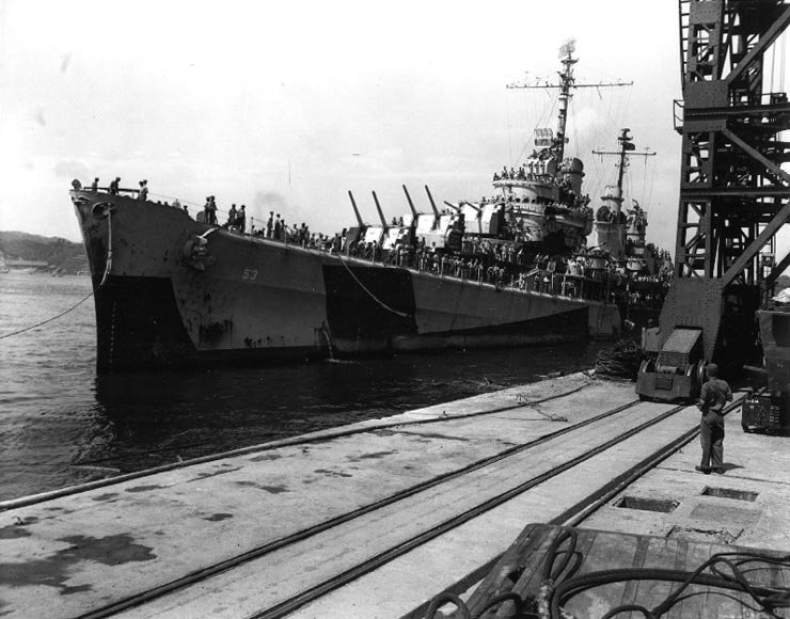
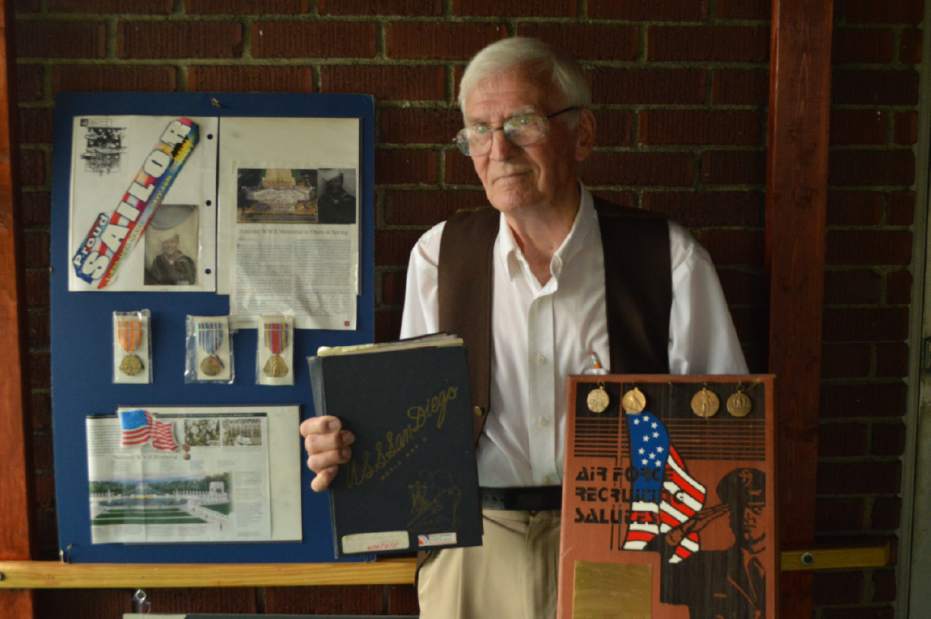
Harry Soblotney of Uniontown was just 17 when he enlisted in the Navy in 1943. After training, he spent the rest of World War II aboard the light anti-aircraft cruiser USS San Diego (CL 53) as the ship, locked in combat in the Pacific many times, protected the fleet's aircraft carriers from enemy aircraft.
“I got seasick when we first put out to sea each time,” Soblotney said.
By the end of the war, the USS San Diego earned 18 battle stars to become the second-most decorated ship in the history of the Navy, behind the USS Enterprise. Soblotney received eight battle stars for his service.
While his regular job was handling the mail on the ship, his battle station was as a pointer on one of the 5-inch, .38-caliber main guns. The ship had 16 of the guns in eight twin mounts. He remembered that a good crew could fire many rounds per minute of the 59-pound projectiles propelled by 65 pounds of powder.
The ship was an Atlanta class cruiser. Even though the ship saw plenty of combat, it survived the war with little damage and never lost a crew member. The two preceding ships in its class, Atlanta and Juneau, were sunk in the naval battle of Guadalcanal in 1942.
On Sept. 2, 1945, the Japanese officially surrendered on the deck of the battleship USS Missouri in Tokyo Bay.
But Soblotney remembers Aug. 30, 1945 better. The USS San Diego docked in Yokosuka, Japan, on that day.
“They were going to sign the surrender on the USS Missouri, but the water got so rough, they were going to do it on the San Diego (at the dock,)” said Soblotney.
But the water in the bay settled down and the signing took place on the Missouri.
He worried that he had suffered residual effects from the atomic bombs dropped on Hiroshima and Nagasaki. He said his ship had traveled down the coast past the sites just a few weeks after the bombs were dropped.
Soblotney remembered one incident while the ship was docked and he was assigned to pull guard duty on shore.
“When I walked off the ship to go on duty, I saw a huge crane,” said Soblotney. “On it was a sign that said it was built by Bethlehem Steel, Pittsburgh Division.”
He said it was hard to believe the Japanese were using equipment to fix ships to fight against the United States that was made right here.
That was not the only thing he saw that made him wonder. He was assigned to guard a cave.
“When I went up to the cave, a Japanese was guarding the entrance,” Soblotney said. “We couldn't understand each other, but I made him aware with hand signals that I wanted him to go into the cave. He put his rifle down and we went in.
“In the cave was a big gun that looked like a 5-inch, .38(-caliber) that looked like exactly the same U.S. guns on the San Diego.”
Soblotney saw ammunition that looked exactly like that carried on his ship. The gun was mounted on a railroad carriage that could be wheeled out of the cave to fire, then be brought back in for protection. He wondered if the Japanese had bought the gun and ammunition from a U.S. company before the war.
Soblotney had switched his enlistment to regular Navy while most of the crew kept their Navy reserve status. When the war ended, he had to finish out his four-year enlistment. But he enjoyed the military, except for the bouts of being seasick every time his ship left port. So he switched to the Army. While he was at a fort in New York state, where those who had switched from Navy to Army were sent, President Truman signed the bill that established the Air Force.
He decided to join the Air Force and was sent to Texas for training as a pilot on non-jet aircraft. Soblotney still has a pilot's license, although he no longer flies.
He then became a recruiter and returned to the Uniontown area. He said his main recruitment tool was the college credits members of the Air Force could get while on active duty. He still is recognized as a recruiter. After a total of 34 years in government service, he retired. He lives with his wife Rose and daughter Debbie just outside of Uniontown. He and Rose celebrated their 66th wedding anniversary in July.
Soblotney was not the only local crew member on the USS San Diego when it docked in Japan on Aug. 30, 1945. John Wagner of Connellsville also was a crew member on the ship.
Karl Polacek is a staff writer for Trib Total Media. He can be reached at kpolacek@tribweb.com or 724-626-3538.
