





With the demolition of what once was Alcoa's Logans Ferry Powder Works, Plum will lose a historic touchstone but could gain a new foothold to the borough's future.
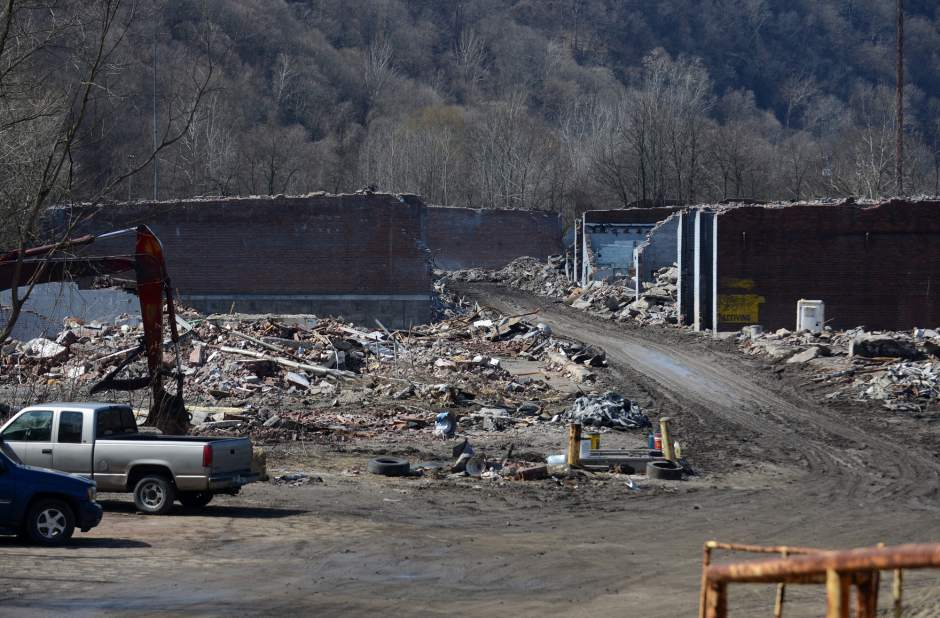
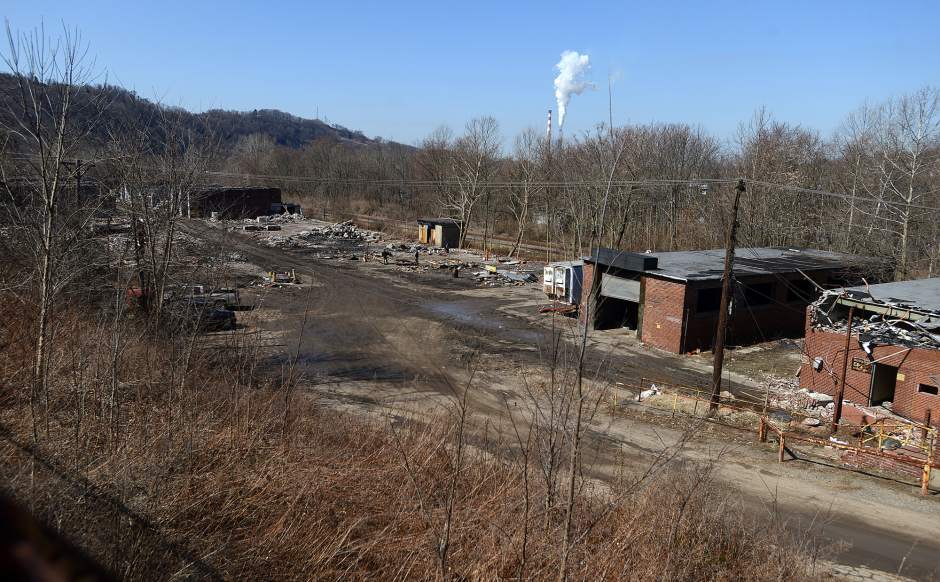
A real estate company that bought the 20-acre industrial site in 1987 when Alcoa idled the plant recently began to raze more than a dozen brick buildings moldering at the base of Coxcomb Hill Road.
Alcoa moved its powder works to Plum in 1918 after the aluminum powder it produced sparked an explosion at the New Kensington Works the prior year. It was the first of three explosions associated with powder production in Alcoa's New Kensington and Plum facilities that killed 17 people, the last in 1979.
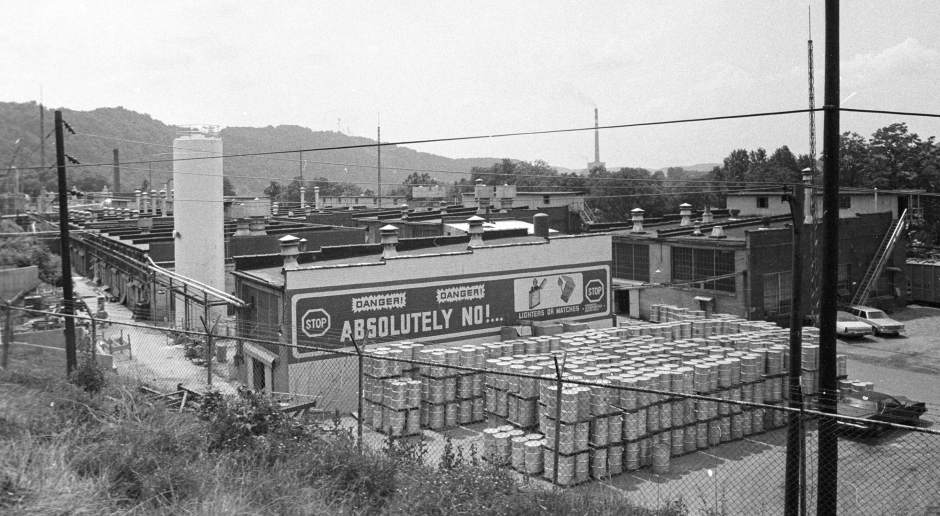
During its 68 years of existence, the plant produced powder that gave automotive paint its sparkle, added durability and cooling properties to roof coatings, and was used as a base in rocket fuel, dynamite and fireworks.
The Logans Ferry Powder Works was the last of Alcoa's manufacturing facilities in the Alle-Kiski Valley to close when, citing several years of a declining markets and foreign competition, the aluminum company in 1986 sold the plant's assets to a competitor and sold the property to Logans Ferry Development Co. a year later.
Noting the property's role in the aluminum industry that helped to shape the communities of Southwestern Pennsylvania, the Allegheny-Kiski Valley Historical Society in 1998 successfully petitioned the National Park Service to include the Powder Works and several Alcoa-related properties in New Kensington on the National Register of Historic Places.
Howard Pollman, a spokesman for the Pennsylvania Historical and Museum Commission, said the loss of the buildings will mean the loss of the historic designation.
He said being on the register does not “trump” property rights — it doesn't impede an owner's use of the property or right to tear down the buildings.
Demolition in progress
On a recent visit to the site at the entrance to Plum's secluded Barking neighborhood, demolition appeared to be well under way. A few pieces of construction equipment marked the only signs of activity among the many roofless, crumbling brick walls.
The Allegheny County Health Department late last year issued an asbestos abatement permit to Logans Ferry Development Co. and inspected the site to confirm the asbestos was properly removed prior to the start of demolition, according to Jim Thompson, the department's deputy director of the Bureau of Environmental Health.
Thompson said the department otherwise isn't involved in the demolition but would respond if any health-related concerns were raised.
Plum Councilman Dave Vento, who leads council's economic development committee, said borough officials inquired about the future of the property when they noticed demolition had begun.
Vento said they were told the owner has no immediate plans for the property but wanted to get it in sale-ready condition if a potential buyer came along.
No one from Logans Ferry Development Co. could be reached for comment. State corporation records still list as president the late Floyd Ganassi Sr. of Fox Chapel, a businessman who once led New Kensington-based Davison Sand and Gravel Co. and FRG Group in RIDC Park before his death in 2013.
An employee at the RIDC offices of Logans Ferry Development and FRG referred a reporter to Mike Asti, who did not respond to an email.
A real estate agent listed on a for-sale sign near the property did not respond to a reporter's message; it was not clear whether the sign was associated with the former Alcoa property or a neighboring parcel.
Development potential
Representatives of Logans Ferry Development in 1986 said the land's $300,000 price tag plus its proximity to major roads, rail lines and the river made it attractive.
According to Allegheny County property records, Logans Ferry Development group not only owns the 20-acre powder works land, but also an adjacent vacant 49-acre parcel on Barking Road. The county puts a combined value of nearly $700,000 on the riverfront land, not including the buildings.
Vento said he's hopeful the demolition will pave the way for new development at what he considers one of Plum's gateways.
“It's pretty much prime riverfront property. I think there's a lot of potential,” Vento said. “I‘d like to see a nice development there, either some homes or nice little shops.”
Vento noted there has been talk of a hiking trail from Barking to Oakmont on the former rail bed. The Allegheny Land Trust also owns land along Barking Road, which ends at the Army Corps of Engineer's Lock and Dam No. 3.
Blair Cessna, who owns Blair Auto Sales and Logans Ferry Marina beside the old powder works, said he always thought the vacant Logans Ferry Development parcel would be ideal for a park.
Cessna has mixed emotions about the property's future.
“My worry would be, those condos they put on the river like that, they could make my taxes go up,” he said.
On the other hand, Cessna said the vacant Alcoa buildings haven't been much to look at for the past 30 years: “It would be nice (to have it cleaned up) because I live in Barking and I've got to drive past that every day.”
Liz Hayes is a staff writer for Trib Total Media.
