

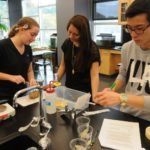
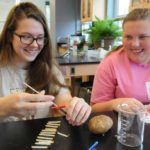
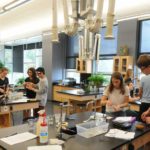
The Mt. Lebanon School District wants its new interconnected classrooms, tech shops and lab spaces to form the foundation of a science, technology, engineering and math program in its renovated high school, starting next year.
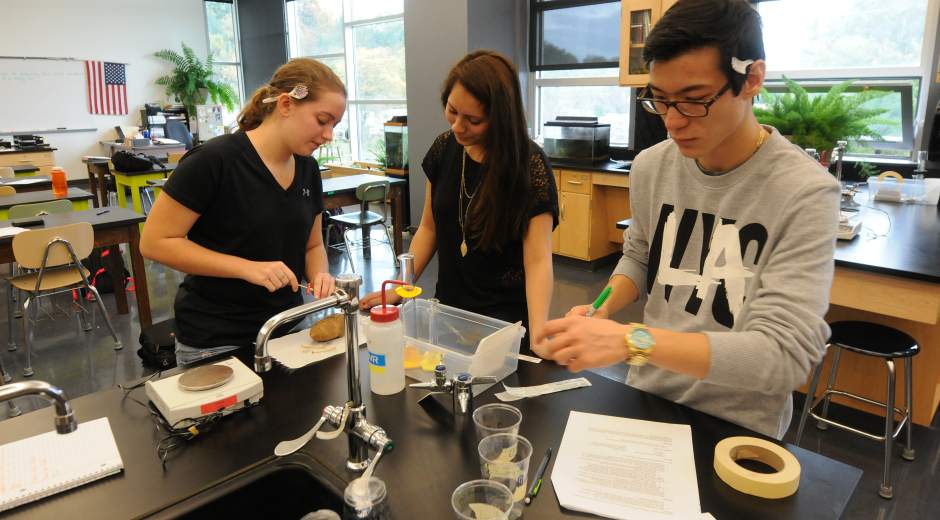
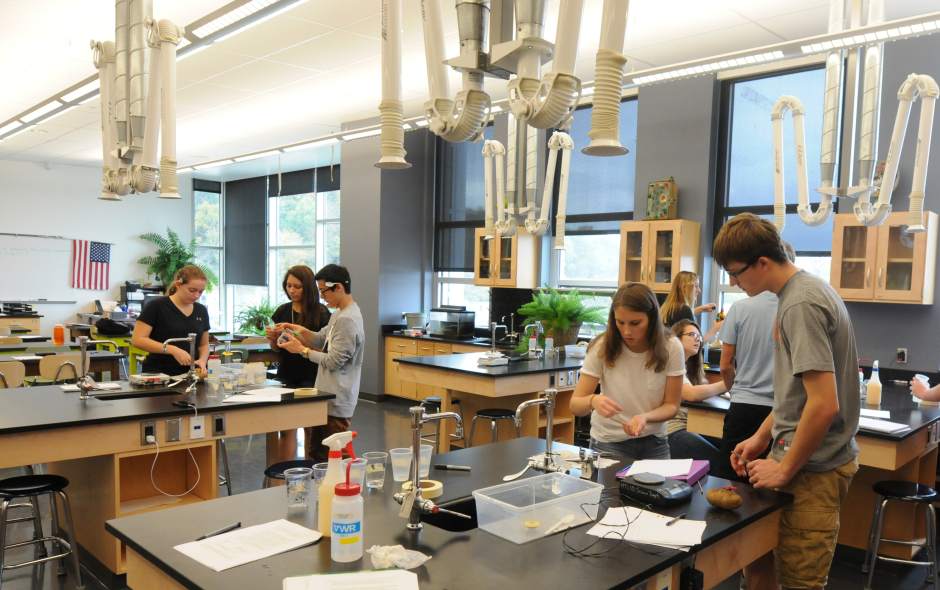
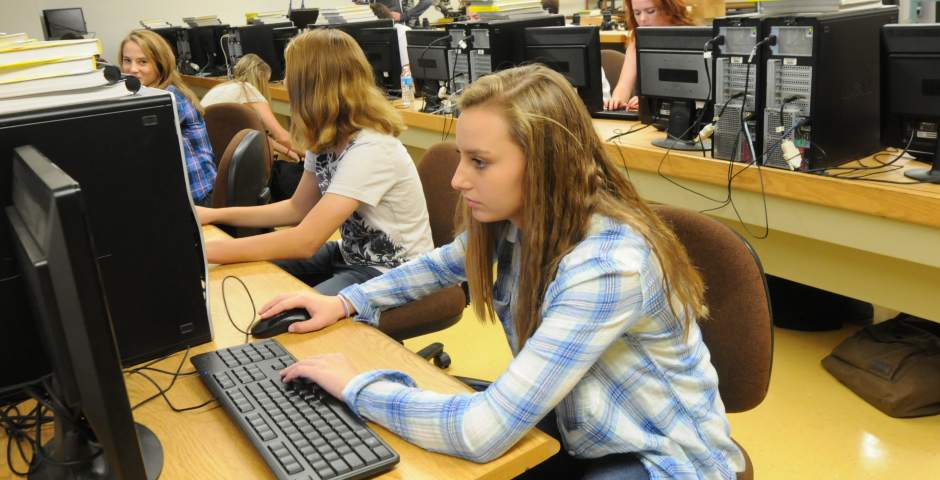
The school's ongoing $109.65 million high school renovation relocated science labs, computer labs and tech shops from across the sprawling school to the new science wing, which fully opened to students at the beginning of the school year.
The STEM Academy would take advantage of the arrangement.
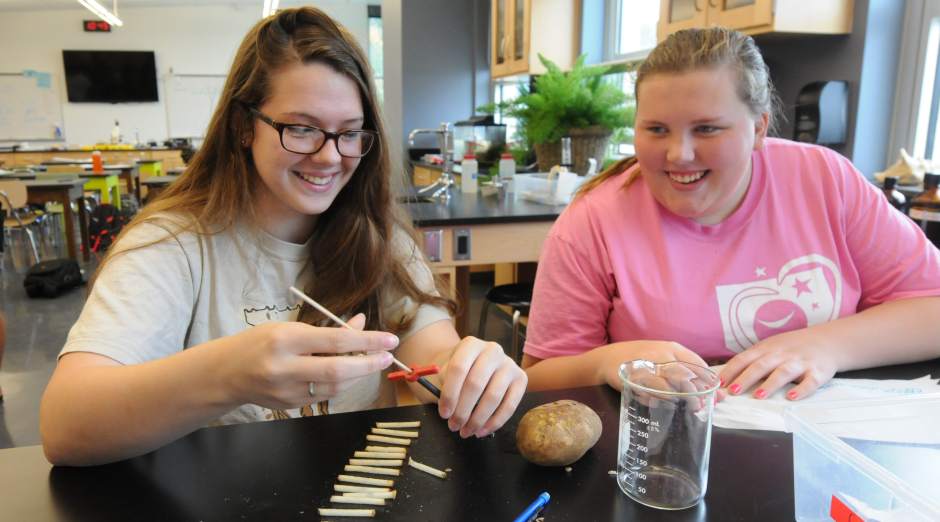
Curriculums will be tweaked so material in one subject area carries over to another. For example, data collected in physics or biology labs will be analyzed in math classes, said Drew Haberberger, a physics teacher and the director of the academy.
“We do lots of data collection in our science classes. Why not use authentic data in math?” he said.
Students could design an apparatus for a physics experiment and use nearby shop classrooms to build and test it. And they could collaborate among physics, chemistry and applied engineering classes to test materials, said Andrew Kuskil, an applied engineering teacher.
“We want them to see all these connections because of this program,” said Mike Hathy, an honors biology teacher.
Project Manager Tom Berkebile told the school board this week that the renovation should be complete by January, though it will take until December of 2015 to demolish two wings of the building that will no longer be used and restore surrounding roads and landscaping. About 1,600 students are enrolled in the high school.
The proximity of all the STEM-related classrooms and labs to one another helps teachers to collaborate more, even if it's just informal meetings in the halls, and allows students to shuffle between classrooms on cooperative projects, Kuskil said.
The school will work with private industries and universities to develop a database of professors and professionals who can be guest speakers or contacts for externships, Haberberger said.
The Carnegie Science Center is consulting with the district to strengthen the STEM curriculum and set up the academy, and the universities and professionals will help the district ensure it's teaching students what they'll need for colleges and careers.
On the other side of the school, a similar process is under way for a Global Studies Academy to promote cooperation among history, social studies and foreign language classes, so that students will be “global citizens,” said Ron Davis, assistant superintendent for secondary education.
“They could be working for an embassy or they could be working for Alcoa,” he said. “The idea is to help the kids be prepared for that global environment.”
Davis said the school district will hold a meeting Oct. 22 to talk to freshmen and their parents about the academies and begin the registration process.
Depending on how many sign up, there could be entire classrooms full of academy students. Students in those concentrations could be scattered through regular classes, with special projects each semester and academic counseling to set them apart, Davis said.
Matthew Santoni is a staff writer for Trib Total Media. He can be reached at 412-380-5625 or msantoni@tribweb.com.
