


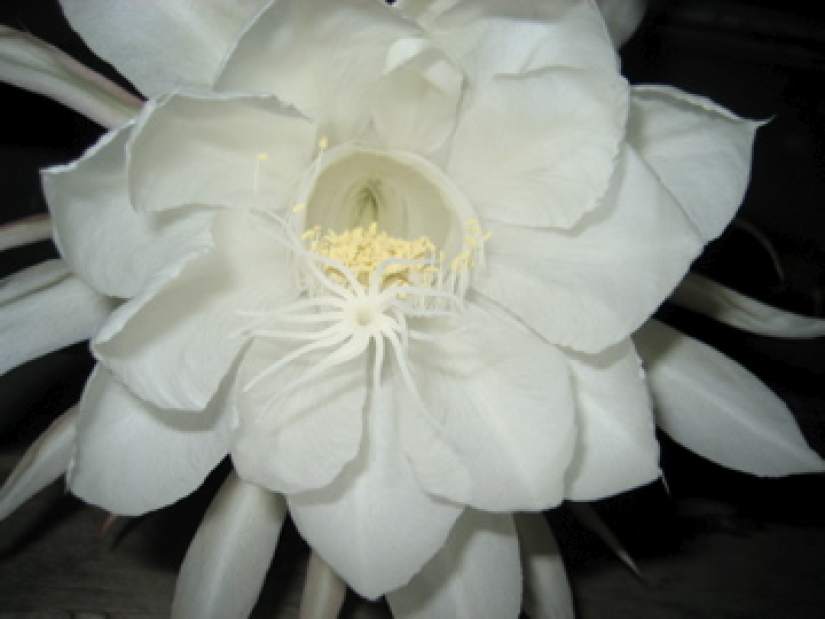
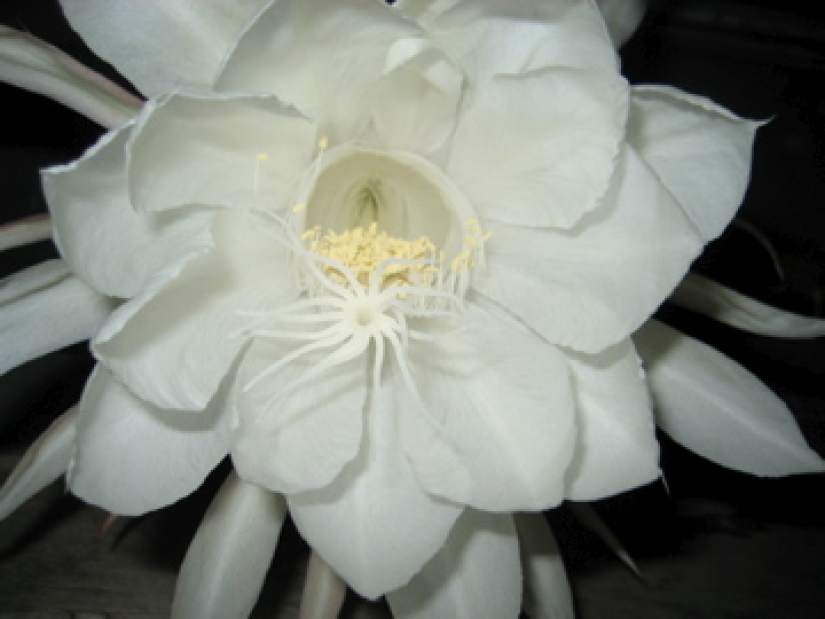
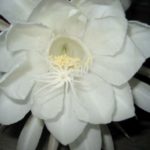
When in flower, night-blooming cereus (Epiphyllum oxypetalum) is among the most stunning plants you'll ever see — or smell.
Though it is in flower for only one or two nights per year (if you're lucky!), this tropical orchid cactus is well worth growing — if you're up for an adventure. The 10-inch-wide flowers have such an amazing fragrance that, once the plant develops mature buds, many growers stay awake all night simply to enjoy the fragrance. Some even have parties to celebrate the occasion. Each blossom is open for only a single night.
Large plants can produce dozens of creamy white, star-like flowers on pipe-shaped flowering stems, but it takes many years for the plant to become mature enough to produce them. The flowers most often occur in late summer and take about two weeks to open from the time of the buds' initial emergence.
Hardy only in USDA zones 10 and 11, night-blooming cereus is grown exclusively as a houseplant here in Western Pennsylvania, though it can be moved outdoors during the summer, as long as nighttime temperatures remain consistently above 50 degrees F. Its long, flat leaves are very lanky, even unattractive, and can reach up to 10 feet in length, so give the plant plenty of room. Many gardeners keep the plant well-staked to support its ambitious growth.
The plant itself actually requires minimal care, needing only weekly waterings during the active growing season between March and August. Be sure to allow the potting soil to dry out completely between waterings. During the winter months, this plant prefers to be even drier. In fact, an extended water-free period during the winter months helps initiate summer blooms.
Use a sandy soil mix formulated specifically for cactus, as it is well-draining, and do not allow the plant to sit in any standing water. Night-blooming cereus also can be fertilized weekly with a weak solution of liquid kelp from March through August. Do not fertilize during the autumn and winter.
If night-blooming cereus is a plant you'd like to try, they are easily started via a cutting from another plant. Simply cut off a terminal section of a leaf, dip the base in powdered rooting hormone (available at many local garden centers), and insert the cutting into a pot of soilless potting mix. Water it in. Keep the potted cutting completely inside a sealed plastic bag until roots form a month or so later. The bag keeps the humidity high until the roots have formed, after which the bag should be removed.
For those who don't know anyone from which to source a cutting, mall plants are available via mail order and may be available at local nurseries.
Horticulturist Jessica Walliser co-hosts “The Organic Gardeners” at 7 a.m. Sundays on KDKA Radio. She is the author of several gardening books, including “Attracting Beneficial Bugs to Your Garden: A Natural Approach to Pest Control” and “Good Bug, Bad Bug.” Her website is www.jessicawalliser.com.
Send your gardening or landscaping questions to tribliving@tribweb.com or The Good Earth, 503 Martindale St., 3rd Floor, D.L. Clark Building, Pittsburgh, PA 15212.
