

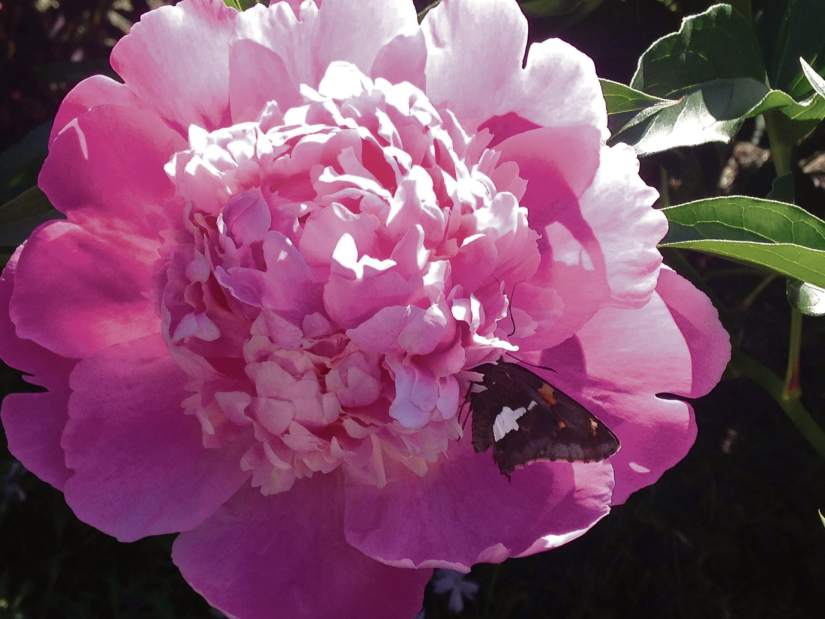
Question: We were given some peony plants by my sister-in-law four years ago. They came from her garden. The plants they came from always bloom so beautifully for her, but mine never flower. There has not been a single bud on them since the day we planted them. What can we do to make them flower?
Answer: Your problem is not uncommon. Fortunately, it's easy to fix.
First and foremost, peonies flower and grow best in full sun. Make sure your plants receive a minimum of six to eight hours of direct sunlight per day. If peony plants are in the shade, the stems may be leggy and flowers may fail to develop. If you need to move them to a sunnier site, wait to do it until September or October. Peonies resent being moved in the spring.
If the plants are in full sun and still fail to bloom, your peonies were probably planted too deeply. Peony stems and flowers develop from “eyes” on their thick, fleshy roots. If these “eyes” are much deeper than an inch beneath the soil surface, they'll be “blind” and the plant will not flower. When planting peonies, the fleshy roots need to be horizontal and their top should be an inch beneath the ground at most.
It's also possible that the roots have become too deep as a result of yearly mulch additions. When mulch is piled on top of the roots, the “eyes” also can go “blind” and fail to develop flowers.
To remedy this, when fall arrives, gently lift the plants out of their current site and replant them, being careful to not bury them too deeply. When relocating the plants, amend the soil with a few inches of compost before planting.
If the plant receives ample sun and it isn't planted too deeply, overfertilization may be the culprit. Contrary to popular belief, more fertilizer is never better, and when excessive nitrogen-rich fertilizers are added to plants such as peonies, it results in lush, green foliage but minimal or nonexistent flowers. Be especially careful if you fertilize your lawn; erect a barrier of some sort to keep lawn fertilizers from migrating into flower and vegetable beds as they're spread.
If your peony were developing small buds, but they failed to grow and open, a fungal disease, such as botrytis, might be the culprit, though this is unusual except during extremely wet springs.
And lastly, do not cut back peony foliage until the foliage has been completely killed by frost. Removing the foliage too early weakens the plant and can reduce flowering the following year.
Horticulturist Jessica Walliser co-hosts “The Organic Gardeners” at 7 a.m. Sundays on KDKA Radio with Doug Oster. She is the author of several gardening books, including “Attracting Beneficial Bugs to Your Garden: A Natural Approach to Pest Control” and “Good Bug, Bad Bug.” Her website is jessicawalliser.com.
Send your gardening or landscaping questions to tribliving@tribweb.com or The Good Earth, 503 Martindale St., Third Floor, Pittsburgh, PA 15212.
