










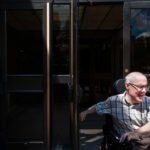
John Grant didn't set out to champion the rights of those with disabilities.
Grant, a doctoral candidate and instructor in the English department at Indiana University of Pennsylvania, just wanted to teach and finish his degree when IUP hired him in 2012.
But the 51-year-old scholar, who has a rare genetic bone disorder, soon found that doing those things would be more complicated than he'd imagined, especially considering it was a quarter-century after President George Bush signed the Americans with Disabilities Act in July 1990.
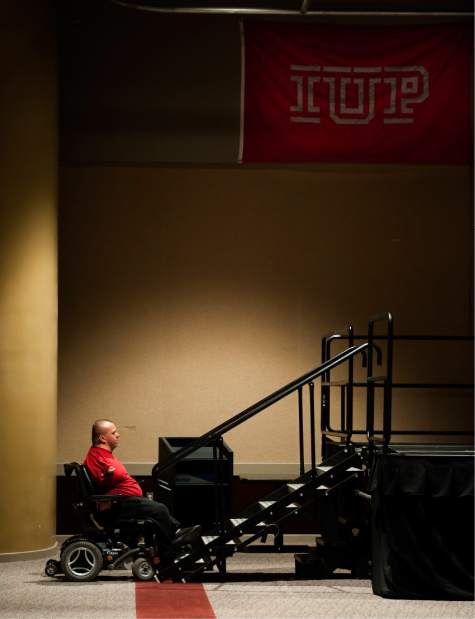
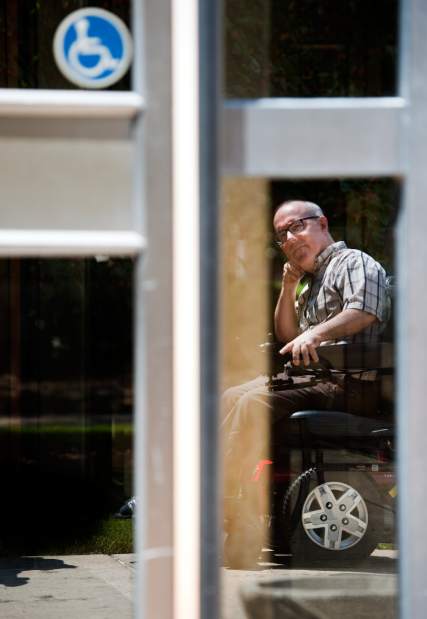
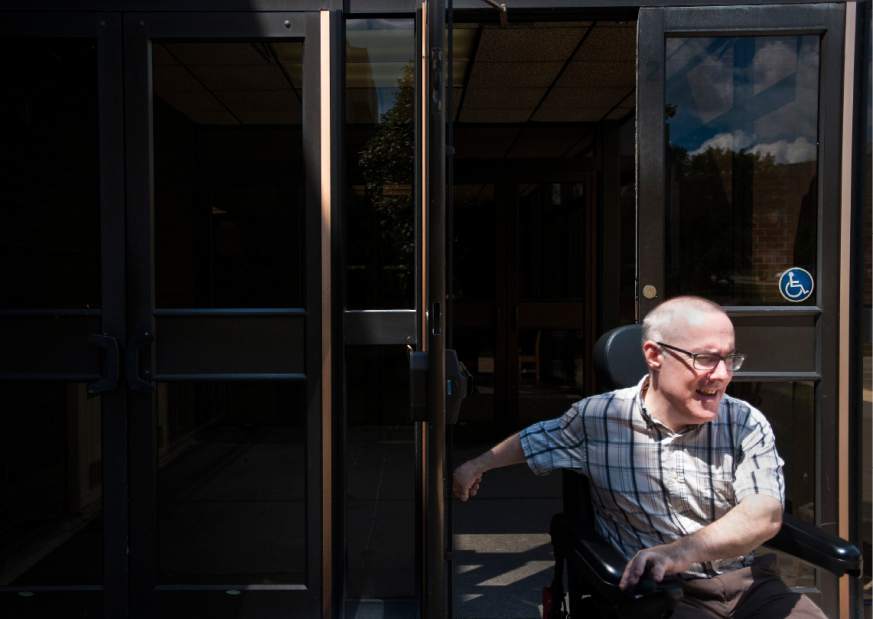
Grant has multiple epiphyseal dysplasia. It hinders his ability to walk great distances, climb stairs or stand for lengthy periods of time. Occasionally, he uses a wheelchair to minimize the effects of his impairments.
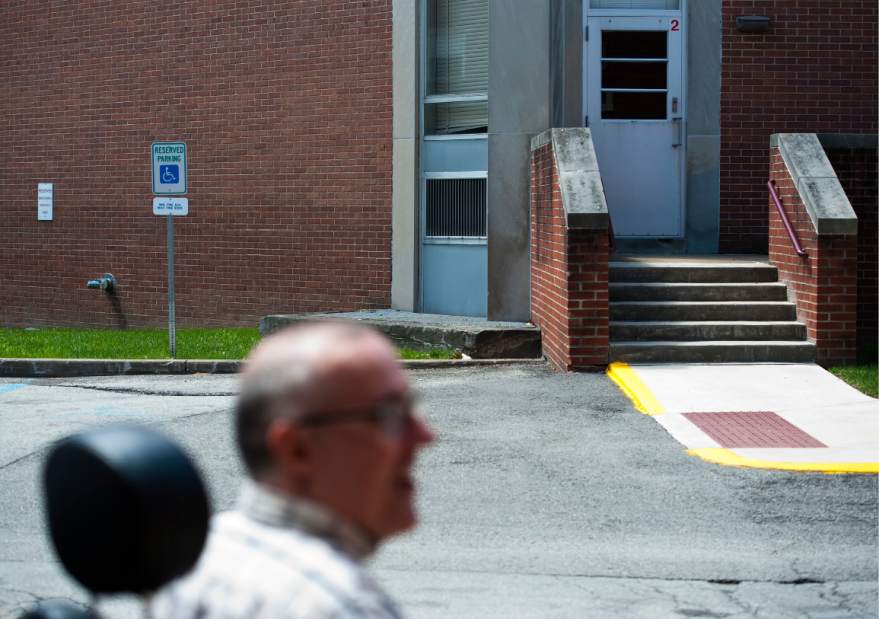
He said his problems began in 2012 when he was hired at IUP and given an office down a flight of stairs in a building with no elevator.
“In a nutshell, I asked for accommodation in August, but it wasn't until November that I eventually got an accessible office,” Grant said.
Year after year, he returned with requests.
Grant had to file a complaint with the federal Equal Employment Opportunity Commission to get IUP officials to increase their efforts to provide accessible parking and training on how to evacuate students with disabilities at the.
He needed a raised chair so he could sit at the podium and minimize time on his feet. He asked the university to look into campus facilities where handicapped parking spaces were far from building entrances. He complained when delays in snow removal made navigating the hilly campus treacherous.
He also sat on the Indiana Borough Planning Commission's subcommittee on bicycling and walking and advocated for safe sidewalks, accessible parking and curb cuts.
In 2014, Grant settled his EEOC complaint with IUP for $10,000 — a figure he said did not cover his legal costs — and promises from the university that it would improve handicapped parking on campus. That year, he was awarded the school's Ray Coppler Disability Awareness Award for disability advocacy.
IUP declined to comment on Grant's complaints, but a spokeswoman said the school is committed to meeting its legal obligations under federal law.
Spokeswoman Michelle Fryling cited the activities of IUP's Disabilities Support Services Offices, which serves 500 to 600 students every year, and the school's response to student concerns about snow removal last winter as illustrative of its commitment.
“We believe that all members of our community — including employees, students and visitors to our campus — should be able to enjoy access to our community, and we work with individuals to develop reasonable and effective accommodations,” she said. “As part of this commitment, we are always willing to listen and to respond to specific and credible concerns related to accessibility.”
Grant said he'd have preferred an apology to a legal battle, which he believes was an egregious waste of taxpayer money by a public university.
“It's beyond frustrating. I don't consider myself to be disabled by my condition. I have impairments, but I can operate and do my business fine in society,” he said.
‘A lot of work to do'
People with disabilities make up America's largest minority group, so some have called the ADA — aimed at protecting the rights of citizens with everything from mobility issues and blindness to mental illness — the most sweeping civil rights legislation of the 20th century.
Because of the law, curb cuts on public roads and sidewalks, buses with wheelchair lifts, handicapped parking spaces and Braille signs have become more commonplace, helping the disabled participate in public life.
The law also helped in the workforce, where employers must make reasonable accommodations for employees with impairments.
But federal statistics suggest a growing number of Americans remain frustrated and have taken Grant's route to get responses to their complaints.
The number of discrimination complaints filed with the Equal Employment Opportunity Commission increased from 14,893 in 2004 to 25,369 in 2014.
Although disability claims made up just 5.2 percent of all EEOC complaints nationally, they made up nearly 32.5 percent of those filed in Pennsylvania last year.
Grant acknowledged that officials at IUP made changes, but he's not sure anything would have happened if he hadn't been persistent.
Peri Jude Radecic, chief executive officer of the Disability Rights Network of PA, said it is not uncommon to hear such complaints.
“I really believe there are two stories about the ADA: one, we've made incredible progress. The second is (that) we've got a long way to go.
“It is still shocking 25 years after the passage of the ADA that we still face architectural barriers,” Radecic said. “Some people may not understand the regulations and some people may not know about them. We still have a lot of work to do.”
Pittsburgh employment lawyer Sam Cordes said the law remains an active area in the courts.
“I brought the first case ever under ADA in 1994 or 1995,” Cordes said. “It involved a person who applied for a job and was blind in one eye. During the whole interview, the boss questioned his eye issues. The way the ADA is written, you are not even allowed to ask those questions during an interview. The jury awarded my client $70,000 in punitive damages.”
Shifting perceptions
Between 1990 and 2009, legal arguments involving the ADA often focused on proving a disability. An amendment to the law six years ago changed the focus to accommodations for impairments, a subtle but important change.
“I think there are myths and misperceptions about the ability of disabled people to do their jobs. A lot of people — whether out of malice or sheer ignorance — act on those kinds of things,” Cordes said. “I'm sure it's a rare employer who is going to say, ‘I disliked disabled people,' but they act on those myths or misperceptions.”
Katherine Seelman, a University of Pittsburgh professor who was director of the National Institute of Disability and Rehabilitation Research during the Clinton administration, is a lifelong disability rights activist.
Seelman said the ADA has helped shift the public conversation away from a disability as a defining characteristic to those with disabilities being people who simply do things differently. Although Seelman has not reviewed Grant's complaints, she fears they are not uncommon.
“I am afraid that it is a somewhat realistic picture,” she said.
“Clearly, continued development of community-based support for people and competitive employment opportunities are pretty important to people and their families,” Seelman said.
That's how Grant views things.
“I was on Social Security disability. I wasn't getting any better, but I went to school. I got my master's degree and now I'm getting my Ph.D. After I graduate, I'll be making a good living and giving back to the community,” he said.
Debra Erdley is a staff writer for Trib Total Media. She can be reached at 412-320-7996 or derdley@tribweb.com
