

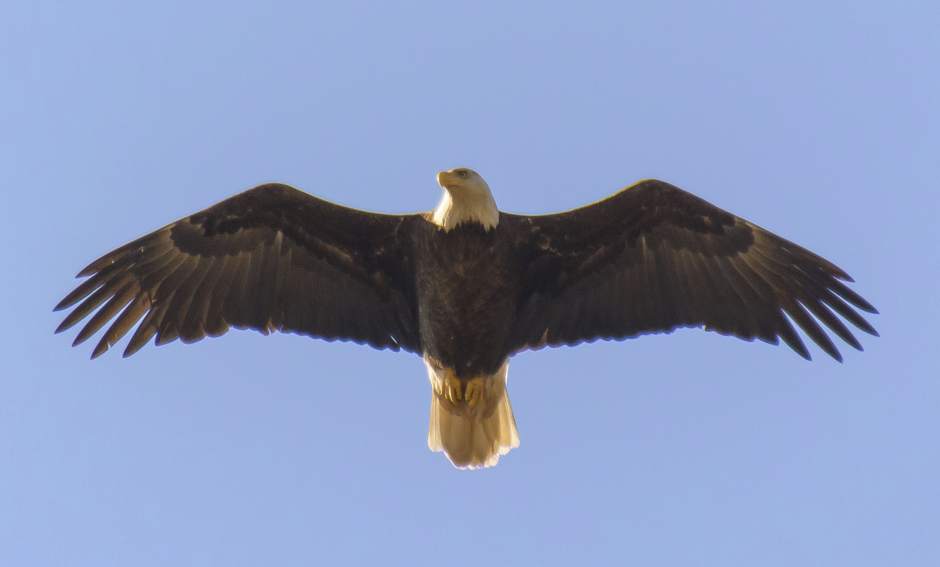
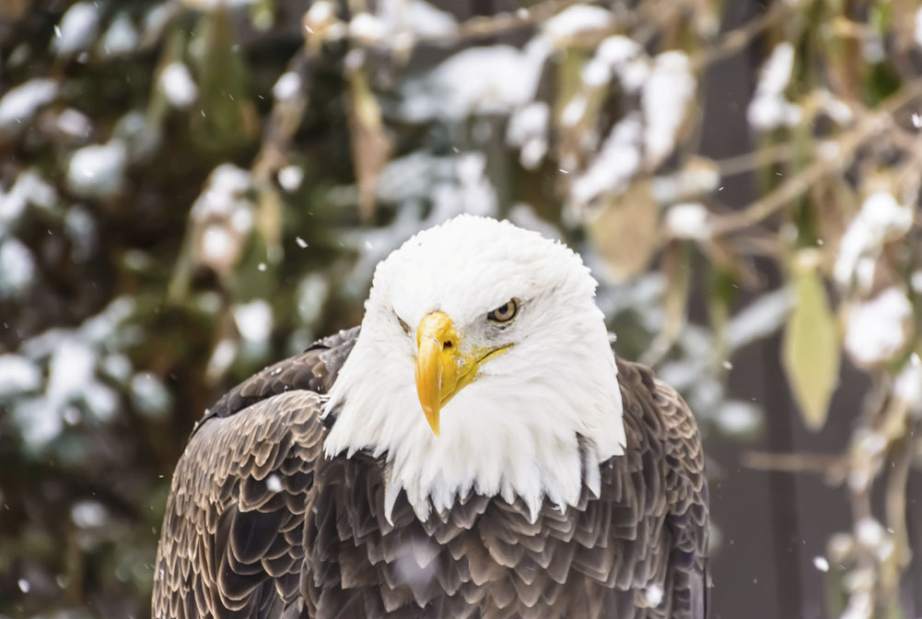
For birdwatchers and fans of the great outdoors, 2014 was a red letter year when a pair of nesting bald eagles along the Monongahela River in Hays successfully hatched and reared three young eagles.
The pair started with two eggs this year but lost one about a week ago when it broke. The remaining egg is expected to hatch sometime this week.
Though it is normal for eagles to hatch one or two eggs each spring, eagle sightings remain something of a novelty in the region. Bald eagle fans regularly flock to the Three Rivers Heritage Trail just west of the Glenwood Bridge to watch the pair on the hillside above Route 837.
Worldwide, millions keep tabs on the eagles, day and night, by way of a video stream on the Pittsburgh Bald Eagles website.
Bob Mulvihill of the National Aviary in Pittsburgh said excitement about the bald eagles has introduced many people to the world of birdwatching and heightened their appreciation of nature.
“It sparks their interest,” said Mulvihill, who last year led a number of formal and informal tours to the Hays nesting site. He said the aviary will start offering tours again this spring, probably toward the middle of May.
Mulvihill said bald eagle populations have been growing in the state for three decades as the result of the Pennsylvania Game Commission's efforts to introduce the species from eggs gathered at Saskatchewan nesting sites. He said initial efforts concentrated on introducing bald eagles to the Susquehanna and Delaware river valleys. The endeavor was successful, he said, and the birds spread out across Pennsylvania but were slow to move into this corner of the state.
“As recent as 2009, there were no eagles in southwestern Pennsylvania,” he said. In the past few years, however, he said, “eagles are sort of filling in that last hole. There's loads of room for expansion.”
Pennsylvania now has an estimated 250 nesting sites, three of which are in Allegheny County.
As the population continues to rebound, more nests could start showing up along local rivers like the Monongahela and Youghiogheny.
Maury Burgwin, president of the Mon Yough Chamber of Commerce and an avid eagle watcher and photographer, said he checks out the nesting site on a weekly basis.
“If I know that it's going to be a nice day I just bring my camera and go after work,” said Burgwin, noting there is a growing community of people like him who gather along the trail to photograph the birds.
Burgwin said his favorite subject of study used to be seaside scenes. Now it is the eagle and other birds.
“It's turned into a passion. I've got hundreds of them,” he said. “I've got some amazing photos of red-tailed hawks. I've got pictures of seagulls that would just blow you away.”
Bald eagles are primarily fish eaters, but they will dine on other animals such as seagulls, ducks, rats and squirrels.
The recovery of the bald eagle is seen as testament to improving water quality of the region's rivers.
Will Prince from the Trail Town program serving communities along the Great Allegheny Passage bike trail said the eagle-watching site along the Three Rivers Heritage Trail has helped increase ridership along that section of the passage.
“It's been very good for Homestead and the South Side,” said Prince, noting the point where the nest is visible is between the two trailheads. Prince said a lot of eagle watchers access the point by bicycle.
Last year, the trail became congested at times because so many people were stopping to look up at the eagle nest. Prince said safety remains a concern. The public is urged to keep the trail clear and cyclists should slow down when they see people stopped along that section of trail.
Eric Slagle is a staff writer for Trib Total Media. He can be reached at 412-664-9161, ext. 1966, or eslagle@tribweb.com.
