
https://archive.triblive.com/news/plant-that-tree-shrub-the-right-way/
Plant that tree, shrub the right way

• |
Jessica Walliser
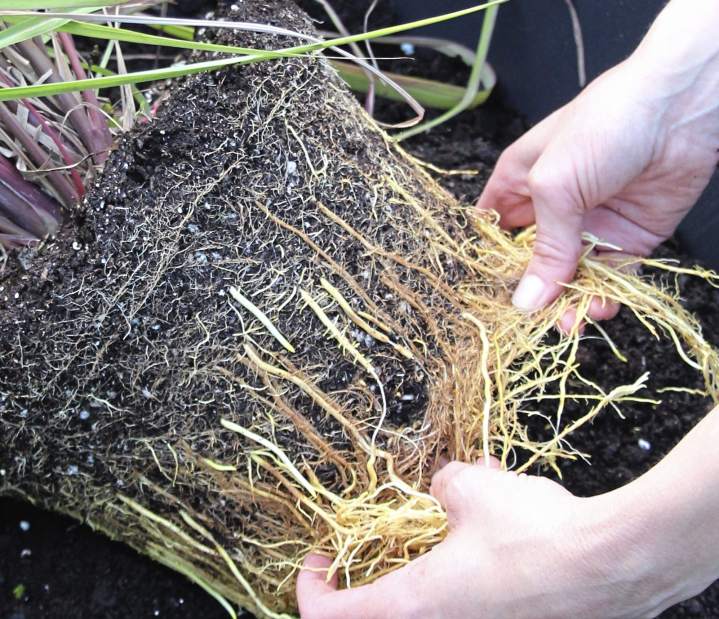
Loosening the roots prior to planting a potted tree, shrub or perennial is important for encouraging the roots to spread.
Though fall has definitely arrived, we still have several weeks during which it’s safe to continue planting trees and shrubs. The air temperatures are dropping but the soil is still warm, and warm soil is excellent for promoting good root growth on newly planted trees and shrubs.
If you’re willing to make sure your new trees are well-watered through the winter months, you can keep planting until the ground freezes.
Success when planting trees and shrubs, however, isn’t just the result of good timing. It also requires the right planting technique. Today, I’d like to give a bit of a planting lesson by walking you through the steps of planting a tree or shrub.
How to plant a shrub
Shrubs are primarily purchased growing in pots or with their root ball wrapped in burlap and twine (called balled-and-burlapped).
Pot-grown shrubs: When planting a shrub grown in a pot, begin by digging a hole two to three times as wide as the pot but no deeper. Shrubs that are planted too deeply or too shallowly have a reduced chance of success. As you’re digging, loosen the soil that comes out of the hole by breaking up any large chunks. Also, be sure to rough-up the sides of the planting hole with a cultivator or shovel, especially if the soil contains a lot of clay. Slick sides in the planting hole make it hard for the roots to penetrate as they grow.
Once the hole is prepared, tip the shrub out of its container and loosen the roots by cutting or sawing through any that were circling around inside the pot. This ensures the roots will spread out of the shape of the pot and into the soil.
Set the plant into the hole, making sure the root ball sits at the proper depth, and backfill with the soil that came out of the hole. While some recommend amending the backfill with compost, most of the existing research indicates that your best bet is to backfill with whatever soil came out of the hole. This helps the shrub better adjust to the existing soil conditions and keeps the roots from circling around in the planting hole. Water the shrub in well and continue to regularly irrigate it for the first year after planting.
Balled-and-burlapped shrubs: If your shrub came balled-and-burlapped, follow the hole-digging instructions above and then set the entire root ball — burlap and all — down in the hole. Once you confirm that the depth of the hole matches the depth of the root ball, untie and remove all the twine from around the plant. Then, use a scissors to cut away all the burlap except for the small circle of it that sits beneath the root ball at the bottom of the hole.
After all the twine and most of the burlap have been removed, it’s time to backfill the hole with the soil that was taken out of it, being sure to break up any large chunks along the way. Step the soil down into the hole to ensure no air pockets are left behind.
Whether your shrub was potted or balled-and-burlapped, after backfilling the planting hole, spread a 1- to 2-inch-thick layer of shredded bark mulch or arborist wood chips around the base, being careful to keep it a few inches away from the bottom of the stems of the shrub. Essentially, create a “doughnut” of mulch around the shrub and over its root zone.
Water the shrub in well by setting the hose on a trickle and leaving it at the base of the plant for a few hours. The water seeps in slowly and thoroughly waters both the root ball and the surrounding soil. Keep the shrub well watered until it’s established, about a year later.
How to plant a tree
Like shrubs, trees are available either in pots or balled-and-burlapped, but there are a few differences between planting shrubs and planting trees.
Pot-grown trees: Trees grown in pots can be a struggle to get established, particularly if they’re very pot-bound. It’s absolutely essential that you dig a big planting hole that’s at least three times the width of the pot, but no deeper.
Be extra sure to loosen or trim off any roots that were circling around inside the pot, and carefully inspect the base of the trunk to make sure no roots have begun to wrap around it. If you find one, simply cut it away with a sharp pair of pruners.
After placing the tree into the hole, backfill with the same soil that was removed, being sure to break up any large clods prior to filling the hole. After planting, the natural flare at the base of the tree’s trunk must remain above soil level.
Make a “doughnut” of shredded bark mulch or arborist wood chips around the base of the tree, extending out to the tree’s outermost branches. Keep the mulch from touching the base of the trunk to deter bark-chewing rodents, insects and rot.
Water the tree in well and continue to water regularly for at least a year.
Balled-and-burlapped trees:
Planting a balled-and-burlapped tree is much the same as planting a balled-and-burlapped shrub, but with two important differences. Yes, the width of the planting hole should be three times the width of the root ball but no deeper, and the twine and burlap should be cut away after the tree is situated in the planting hole, but here’s where the two differences come into play.
• First, if the tree’s root ball was surrounded by a cage of wire, it’s essential that you cut off and remove that cage with a wire cutter before backfilling the planting hole. Failure to do so could lead to strangled roots years after planting.
• Secondly, when you remove the burlap, if soil from the root ball is piled up against the base of the trunk such that the natural flare at the base of the tree’s trunk is covered, clear the soil away with your fingers until the flare is fully exposed.
Then, backfill with the same soil that came out of the hole, mulch the tree and water it in well.
Horticulturist Jessica Walliser co-hosts “The Organic Gardeners” at 7 a.m. Sundays on KDKA Radio with Doug Oster. She is the author of several gardening books, including “Attracting Beneficial Bugs to Your Garden,” “Good Bug, Bad Bug,” and her newest title, “Container Gardening Complete.” Her website is jessicawalliser.com. Send your gardening or landscaping questions to tribliving@tribweb.com or The Good Earth, 622 Cabin Hill Drive, Greensburg, PA 15601.
Copyright ©2026— Trib Total Media, LLC (TribLIVE.com)