

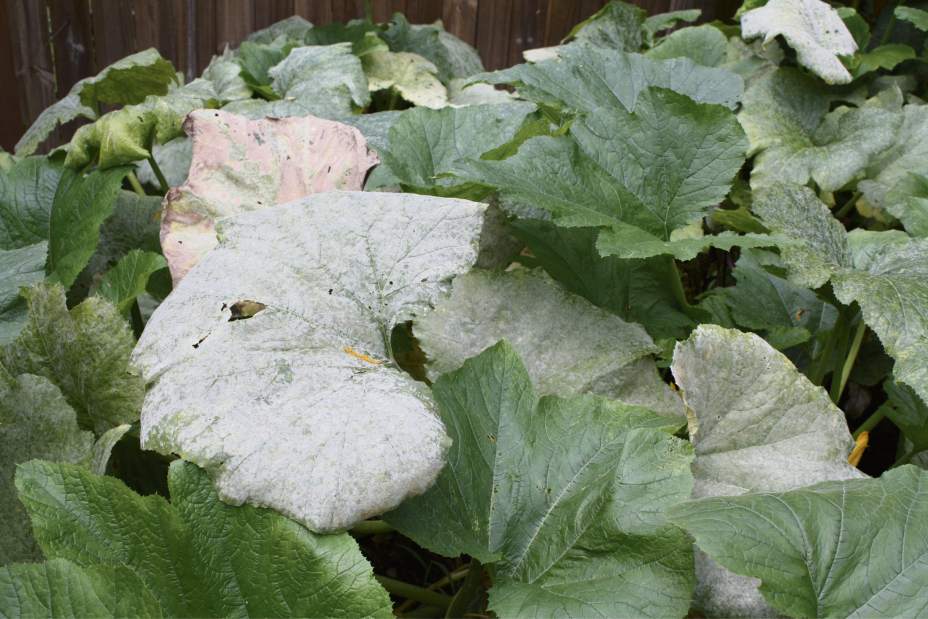
Question: Can you please help with my pumpkins? Every year they do great and get flowers on them, and then all of a sudden something gets them. The leaves start to wilt, turn brown, and completely shrivel up. I can crinkle them in my hand. Then the pumpkin plants end up dying. The garden center says to use a chemical pesticide, but I don't want to. I tried an insecticide soap and an organic bug spray but nothing works. What causes this? Thank you.
Answer: There are two different issues your pumpkin plants could be facing that are likely to cause the type of damage you describe. The first is a fungal pathogen, and the second is an insect. It's also possible that your plants are being affected by both of these issues simultaneously, making the damage even more significant. Let's talk about each issue in turn.
Powdery mildew is a fungal issue that often affects pumpkin plants, though when it's the only ailment the plant is facing, it seldom outright kills the plant; it just makes it look not-so-hot. But, if a plant comes down with powdery mildew and it's left uncontrolled, the infection will weaken the plant and make it more prone to attacks from insects and other pathogens. The primary sign of a powdery mildew infection is a white, dusty covering over the tops of some or all of the leaves. Eventually, infected leaves will turn brown and crunchy and die.
The best way to fight powdery mildew is to plant only naturally resistant pumpkin varieties at the start of the gardening season. Selections like “Early Giant,” “Racer Plus,” Rival,” and “Charisma” show great powdery mildew resistance and are available from some local nurseries as well as from online seed purveyors such as Johnny's Selected Seeds (johnnyseeds.com).
Once a powdery mildew infection settles in, it can be tough to eliminate. But it's perfectly possible to slow the spread of this fungal pathogen with biofungicides, such as Serenade™, and bicarbonate-based fungicides, such as GreenCure™. Both are safe to use on organic gardens.
The insect pest that could also be responsible for your pumpkin plant woes is the squash bug. This half inch to inch-long true bug sucks plant juices from the leaves, leaving them mottled and weakened.
Eventually, the leaves turn brown and die as you describe.
Squash bugs are hard to miss. Bronze-colored eggs are laid in clusters on the undersides of pumpkin and squash leaves. Squash bug nymphs are tiny, sway-backed, gray insects that feed in large groups on leaf undersides, along stems, and at the stem-end of the fruits. As they grow, the nymphs turn brown and increase in size. When squished, they have a distinctive, foul odor.
Controlling squash bugs is a feat that's easier said than done. Because of the way they feed (with a needle-like mouthpart), they are resistant to most pesticides that have to be ingested to be effective. Applying insecticidal soap to the actual insects is effective, but difficult to do. If you can, search the leaf undersides every few days and use a piece of sticky duct tape to lift the egg clusters from the plants and then dispose of them.
You should also cover the plants with a lightweight floating row cover from the time of planting until the plants come into flower. This protects the plants from the insects when they're young and most vulnerable to damage. Remove the row cover when the vines come into flower to allow access to pollinators.
Young squash bugs that are still in the nymph stage can also be targeted with organic pesticides based on Neem oil, but once these insects have reached maturity, they are very difficult to control.
Horticulturist Jessica Walliser co-hosts “The Organic Gardeners” at 7 a.m. Sundays on KDKA Radio with Doug Oster. She is the author of several gardening books, including “Attracting Beneficial Bugs to Your Garden: A Natural Approach to Pest Control” and “Good Bug, Bad Bug.” Her website is jessicawalliser.com. Send your gardening or landscaping questions to tribliving@tribweb.com or The Good Earth, 622 Cabin Hill Drive, Greensburg, PA 15601.
