
Pennsylvania's electors are getting deluged with anti-Trump messages

A last-ditch fight against a Donald Trump presidency is being waged with emails, letters and phone calls as some Americans inundate Electoral College electors with pleas to keep Trump out of the White House.
The Republican Party of Pennsylvania said Friday afternoon it is considering legal action against Pennsylvania's Department of State for publicly releasing home addresses and phone numbers for the state's 20 electors.
"The Department of State's actions are directly responsible for the unprecedented harassment and potential endangering of Pennsylvania's electors by people who want the electors to ignore the will of the people," state GOP spokeswoman Megan Sweeney said in a statement.
Warren County's Ash Khare, one of Pennsylvania's 20 electors, said he has received more than 13,000 such emails since the Nov. 8 election — including 1,000 on Thursday alone.
"My life has been turned upside down because I am an elector. I feel like it is total harassment," said Khare, 68, who also received more than 100 phone calls and 500 letters, including one written in pencil by a 7-year-old. One person sent John F. Kennedy's book "Profiles in Courage" to Khare.
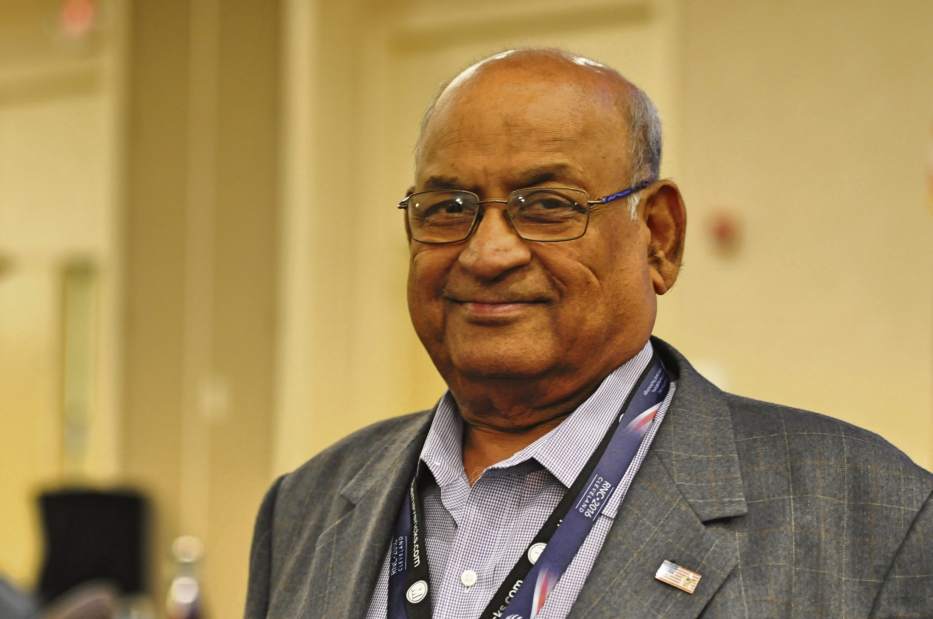
Republican Party elector Ash Khare of Warren County
Regardless, Khare intends to vote for Trump when the Electoral College convenes at noon Dec. 19 in the Pennsylvania State Capitol's House chamber.
Electoral College electors across the country are receiving messages from voters who oppose Trump's election because, among other reasons, they believe Trump is unfit to hold the nation's highest office or that Clinton deserves the presidency because she won the popular vote by more than 2.5 million votes.
"Most of the emails that I read were sincere and respectful, but I don't even bother reading them anymore. Who can read 20,000 emails? If it says, 'Dear Elector,' it gets deleted," said Dick Stewart, 68, of Cumberland County.
History of faithless electors
The writers are urging the electors to become so-called "faithless electors" by not supporting their party's designated candidate, a rarity in American history that has occurred just 157 times, according to the Maryland-based nonpartisan electoral reform group FairVote.
Although such electors can be cited or fined in many states, Pennsylvania is one of 21 states that does not formally require electors to vote for their party's designated candidate.
The biggest example of electors going rogue in Pennsylvania history? In 1832, all 30 of Pennsylvania's Democratic delegates refused to support Democratic vice presidential candidate Martin Van Buren of New York and instead voted for Pittsburgh's William Wilkins. Montgomery County Federalist Samuel Miles became the first faithless elector in American history in 1796 when he cast his ballot for Democratic-Republican Thomas Jefferson instead of Federalist John Adams. Adams won by three electoral votes.
Yet, in Pennsylvania, each party selects a slate of electors before the general election that is typically filled by some of the most active and loyal members.
"We picked good, strong Republicans," said Rob Gleason, an elector and the longtime chairman of the Republican Party of Pennsylvania.
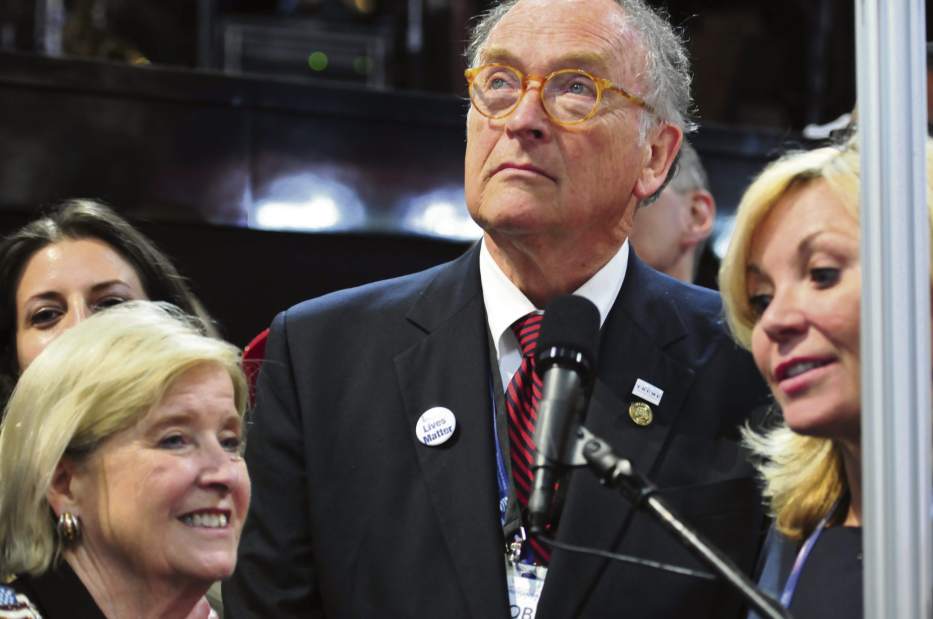
Pennsylvania GOP Chair Rob Gleason (center) and GOP National Committeewoman Christine Toretti (right)
'Chosen by the campaign'
The GOP slate includes officers in the state party, national GOP committee members, a state representative, county GOP chairs, Republican National Convention delegates and Ted Christian, who served as Trump's Pennsylvania campaign director.
Although they are some of the highest-profile Republicans in Pennsylvania, state GOP spokeswoman Sweeney said "these electors were never on the ballot nor were they ever candidates," noting they did not have to fill out an affidavit or place their names and personal information on petitions as political candidates such as delegates do.
"These folks are chosen by the campaign," Sweeney said.
The Department of State's website lists the electors' names and their county of residence. Registered Pennsylvania voters can fill out a form to obtain electors' home addresses and phone numbers, as listed in a letter submitted to the state by Trump's campaign in August.
Department spokeswoman Wanda Murren said the agency received a flurry of requests for the additional information right after the election. About a dozen people filled out request forms and returned them; the department provided the added information to seven people, including a Tribune-Review reporter.
Murren said the information in question is deemed a matter of public record under the state's election code. She said the department did not provide email addresses for any electors — though email addresses for some of the electors can be found in the department's candidate database because they previously sought political office. For example, Khare's email address can be found in the database because he listed it when he ran for Republican State Committee in 2014 and to be a delegate to the Republican National Convention this year.
Sweeney said the Department of State previously "redacted everything except for names for these types of requests."
"Nevertheless, Gov. Tom Wolf's Department of State chose to break with precedent and release the home phone numbers and home addresses of Pennsylvania's 20 electors. ... This episode is a shameful chapter for Gov. Tom Wolf and the Pennsylvania Department of State," Sweeney said.
'They aren't going to change my mind'
The words against Wolf could create awkward moments on Dec. 19, when the governor is scheduled to oversee the Electoral College ceremony and host a luncheon for the electors, according to electors.
Sweeney said the state party's general counsel, Lawrence Tabas, also an elector, and counsel for Trump's campaign are "actively engaged in exploring any legal actions." She pointed to a 2015 state Supreme Court decision concluding that a lower court "erred in ruling that there is no constitutional right to privacy in one's home address in connection with (Right to Know Law) requests," ruling that a right to "informational privacy" is guaranteed in the state constitution unless "outweighed by a public interest favoring disclosure."
The Trib and others did not have file a Right to Know request to obtain the electors' home addresses and phone numbers. Rather, the formal request was described as a "Request for Public Records Pursuant to Pennsylvania Election Code."
Some groups independently tracked down email addresses, social media accounts and other contact information for the electors and published them online. The groups included established organizations such as the League of Women Voters of Central Delaware County to websites such as asktheelectors.org.
Before Friday's statement was issued, neither Gleason nor any other electors with whom the Trib spoke were aware of anyone using contact information they obtained to send threatening letters or emails to Pennsylvania's electors or to go to any of the electors' homes, but Gleason said the state GOP notified the FBI and state police out of concern of potential interference in the electoral process or harassment. Several electors told the Trib they also were advised to notify their local law enforcement agencies.
State police spokesman Ryan Tarkowski said Friday that the department's organized crime unit is investigating, but no criminal charges have been filed. Carrie Adamowski, an FBI spokeswoman in Philadelphia, would neither confirm nor deny that the bureau was investigating the matter.
Asktheelectors.org is one of several websites that provides an automated method for people to send a mass email to electors across the country. It provides a standard email greeting and a closing that reads, "I appreciate and respect the role you serve in our electoral process." The form email includes empty boxes for people to write in their names, where they're from and what their concerns are.
The people behind asktheelectors.org did not return a message from the Trib, but the website said more than 91,000 people had reached out to electors via the website as of Friday afternoon.
They didn't reach elector Patricia Poprik of Doylestown, who serves as the Bucks County GOP chairwoman.
"My email is not public, so I've been fortunate," Poprik said.
Poprik estimates she has received about 200 letters.
"I've read every one. They have been very nice and very polite, but they aren't going to change my mind," said Poprik, who will cast her vote for Trump.
Tom Fontaine is a Tribune-Review staff writer. Reach him at 412-320-7847 or tfontaine@tribweb.com.
Pennsylvania's electors
Rob Gleason, Johnstown, Chairman of the Republican Party of Pennsylvania
Joyce Haas, State College, Vice chairwoman of the Republican Party of Pennsylvania
Christine Toretti, Indiana, Republican National Committeewoman
Robert Asher, Ambler, Republican National Committeeman
Chris Gleason, Johnstown, Finance chairman of the Republican Party of Pennsylvania
Carolyn "Bunny" Welsh, Chadds Ford. Treasurer of the Republican Party of Pennsylvania
Dick Stewart, New Cumberland, Assistant treasurer of the Republican Party of Pennsylvania
Andy Reilly, Media, Secretary of the Republican Party of Pennsylvania
Margaret Ferraro, Nazareth, Assistant secretary of the Republican Party of Pennsylvania
Lawrence Tabas, Philadelphia, General counsel of the Republican Party of Pennsylvania
Robert Bozzuto, Mechanicsburg, Executive director of the Republican Party of Pennsylvania
Michael Downing, Mechanicsburg, Deputy executive director of the Republican Party of Pennsylvania
Theodore Christian, Holland, Pennsylvania state director for Donald Trump's presidential campaign
Mary Barket, Nazareth, President of the Pennsylvania Federation of Republican Women
Tina Pickett, Towanda, State representative
Patricia Poprik, Doylestown, Chairwoman of the Bucks County Republican Committee
Gloria "Lee" Snover, Easton, Chairwoman of the Northampton County Republican Committee
Carol Sides, Williamsport, Delegate to the 2016 Republican National Convention
Ash Khare, Warren, Delegate to the 2016 Republican National Convention
James McErlane, Malvern, At-large delegate to the 2016 Republican National Convention
