
https://archive.triblive.com/news/raspberry-propagation-is-easy-with-these-techniques/
Raspberry propagation is easy with these techniques

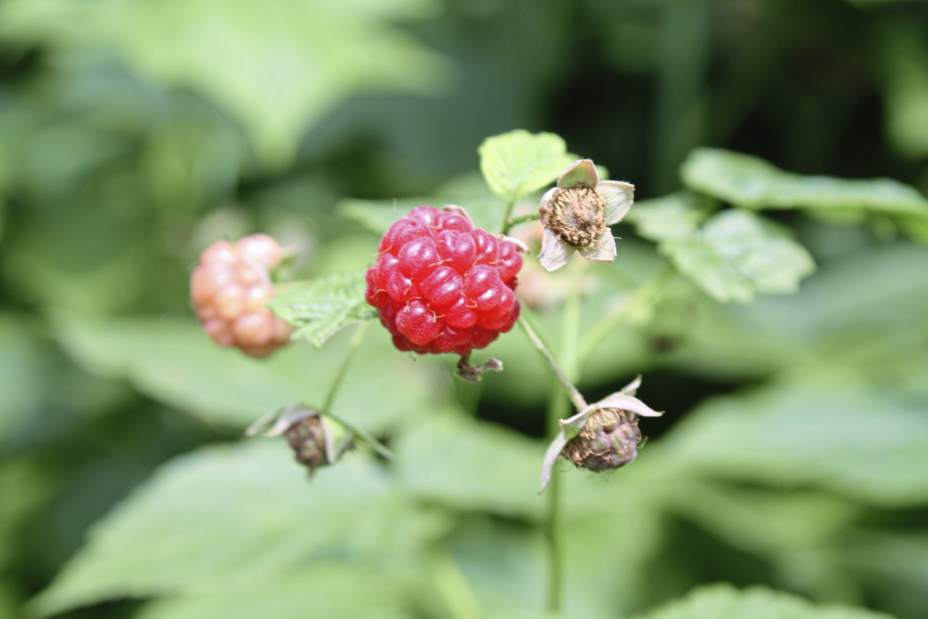
Red raspberry plants can be easily propagated through divisions or a simple process called layering.
Q uestion: I have a patch of red raspberries in my yard that my son has always loved. He’s going to be getting married and moving into his own home next year. I’d like to give him some of the raspberry plants. What’s the easiest way for me to do this?
Answer: There are a number of different ways you can propagate red raspberry canes to pass some along to your son. All of them are fairly easy.
The most common way to do the job would be to dig up and transplant the newly emerging shoots next spring. Though it’s difficult to dig out large existing canes, the new canes that poke out of the ground early in the spring are fairly easy to lift and pot up into a container filled with potting soil. The newly dug sprouts may wilt and look a little weak for a time, but as long as there’s a portion of the root system attached to them, eventually they’ll come around. Keep the pots of raspberry shoots well watered until your son can move them into his own garden later that summer. They’ll survive just fine in their containers for a few months if cared for properly.
Another option that yields more plants and less transplant shock is to propagate the raspberries through an easy process called layering. Layering is a technique in which new plants are grown from a mother raspberry cane while it’s still in the ground.
There are two ways you can layer raspberries. The first involves bending the tip of a cane down to the ground and pinning the tip against the soil, covering it with a mound of soil, or placing a brick or rock on top of it. Within a few weeks, the cane will develop roots where it meets the soil and create a new plant that can easily be cut off of the mother cane and dug up in the spring. The root system will be fibrous and easy to dig out. The flexibility of raspberry canes makes this process simple. In fact, raspberry canes often do this on their own naturally.
Another layering method that yields even more plants is one called serpentine or compound layering. For this method, the mother cane is repeatedly bent to touch the ground in multiple places along the cane. A cane layered in this way has a series of arches along it. Roots and new plants will form at the base of each arch. Before pinning the base of each arch against the ground, nick the bottom side of the cane with a sharp knife and dust it with rooting hormone (available online or at your local garden center). Then pin the base of each arch down or place a brick or stone on it. Within a few weeks you’ll have roots. Come spring, you can cut the cane at the top of each arch and dig up all of the newly developed cane sprouts. With this technique, you can get 5 to 7 new plants from a single raspberry cane.
Raspberries and other brambles are some of the easiest plants to propagate via layering because their stems are so flexible. You can also try it with forsythia, grapes, honeysuckles and clematis.
Horticulturist Jessica Walliser co-hosts “The Organic Gardeners” at 7 a.m. Sundays on KDKA Radio with Doug Oster. She is the author of several gardening books, including “Attracting Beneficial Bugs to Your Garden,” “Good Bug, Bad Bug,” and her newest title, “Container Gardening Complete.” Her website is jessicawalliser.com. Send your gardening or landscaping questions to tribliving@tribweb.com or The Good Earth, 622 Cabin Hill Drive, Greensburg, PA 15601.
Copyright ©2026— Trib Total Media, LLC (TribLIVE.com)