
Send those destructive chipmunks packing


Question: We have chipmunks everywhere in our back and front yards. They're tunneling out behind our retaining wall, forcing the backfill gravel to come out and dump on the driveway. They've eaten all my crocus and tulip bulbs, and I even caught one nibbling on my vegetable seedlings out back. What can we do about them? I don't necessarily want to kill them, but I'm worried they're going to ruin our rock retaining wall and eat the entire garden!
Answer: Though chipmunks can be quite destructive in the yard and garden, I always suggest that, unless you are seeing damage to plants or retaining walls, you let them be. It appears, however, that they are wreaking havoc at your house and you may need to take some action.
Chipmunks feed on flower bulbs, roots, seeds and berries, in addition to mushrooms and even insects. Each chipmunk has a home range of about a half acre, though often several individuals live within the same shared territory. In the spring and then again in the late summer, when young chipmunks begin to separate from their mothers, you'll often see many small chipmunks hanging around in the same area. These little brown animals often take shelter in rock walls, under mulch and beneath patios, sheds and other structures.
Your first control option is using a repellant product to create an unwelcoming environment. Plantskydd Rabbit and Small Critter Repellent and Shake-Away Small Animal Repellent are two effective options.
Both are granular products that are sprinkled in the area where chipmunks are present. They work by introducing the unpleasant scent of a predator. Though your nose won't be able to detect it after the dust settles, the chipmunk's will and it will likely send them packing.
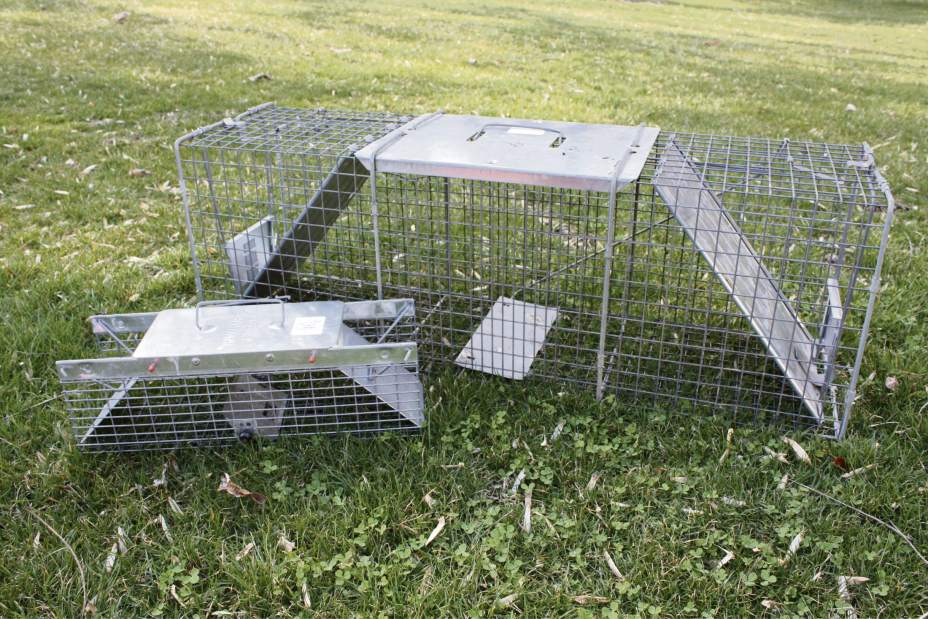
You also might consider using a small, single door, live-trap to trap them, but then you'll be responsible for disposing of or relocating the trapped critter (according to the Pennsylvania Game Commission's website, nuisance chipmunks, rabbits and squirrels can be live trapped and relocated because they are not rabies vectors, though relocation may result in the death of the animal). For greatest success, place the trap along a chipmunk “run.” Put some bait into the trap (birdseed and peanut butter work great) and wire it open for a few days. This teaches the chipmunks that the cage is a free food source and makes it easier to trap them when the door is unwired a few days later. With live traps, it's quite possible to catch several dozen chipmunks over the course of a few weeks. Close the trap at night, though, to prevent trapping untargeted animals like small opossums or young skunks.
Hanging up a screech owl nesting box introduces a natural predator that is likely to help control mice, voles and moles, as well as chipmunks. You can purchase an owl nesting box from various sources or find online instructions for building your own.
Horticulturist Jessica Walliser co-hosts “The Organic Gardeners” at 7 a.m. Sundays on KDKA Radio with Doug Oster. She is the author of several gardening books, including “Attracting Beneficial Bugs to Your Garden,” “Good Bug, Bad Bug,” and her newest title, “Container Gardening Complete.” Her website is jessicawalliser.com. Send your gardening or landscaping questions to tribliving@tribweb.com or The Good Earth, 622 Cabin Hill Drive, Greensburg, PA 15601.
