

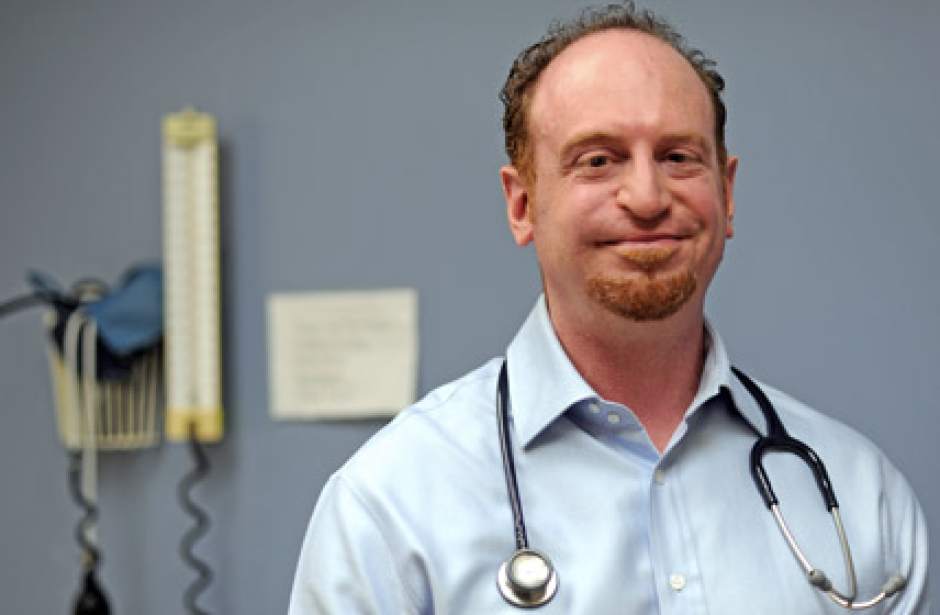
Dr. Stephen Greene, then a medical student, visited Ghana the first time 25 years ago. While there, he delivered 11 babies.
"I love new cultures, getting outside the box and seeing a whole new world," said Greene, 48, of Shadyside. "Ghana and its people are just beautiful. There's something about them that just draws you back to them. There's this enormous need, and that draws you back, too."
Since then, he's been back to the West African country of nearly 25 million people about eight times and will leave for there again on Dec. 27. This time, he plans to start a library and computer center at an orphanage for children who were rescued from enslavement by fishermen.
"My hope is this changes the way they learn," he said.
On a mission -- his mission
Greene visited Ghana the first time under the auspices of Operation Crossroads Africa of New York City, an exchange program that has sent 11,000 people to Africa, 12 Caribbean nations and Brazil. He initially worked at a hospital in the village of Suhum.
Last year, he joined his niece on a trip to Ghana through Disaster Volunteers of Ghana, a group based in that country. She worked at Ryvanz-Mia Orphanage in the village of Kpando, and he did medical work.
"In this orphanage, you see this group of children from 3 or 4 years old to 17 or 18," he said. "It hits you in a very different way. You see where you can impact humanity in many different ways. I was instantly a father figure there."
Greene's humanity has won him the respect of Penn Hills-based Premier Medical Associates, where he works as a pediatrician. The practice, which this fall moved its Mosside location to 4341 Northern Pike Road in Monroeville, has rallied around him by donating $2,500 for the new library.
"By American standards it may not seem like a lot of money, but he can do a lot over there," said Mark DeRubeis, CEO of the practice.
Greene said people in Ghana are so impoverished, they often have only one pair of shoes, which they wear until the shoes fall apart. Then a man from the village tries to glue them together.
Laundry means a bucket, a bar of soap and hours of scrubbing. Water is available if the electricity is working. Children come to school, but performing chores for their families' farms comes first.
"The children have to farm because they have to get the corn that feeds them," Greene said. "It's hand-to-mouth."
People are so poor that parents sometimes give up their children to fishermen, who work them like slaves without sending them to school. Seven or eight of these children were rescued and placed in the orphanage.
"I remember walking to the orphanage one day, and I could not imagine my life without having met these children," he said. "The smile on their faces and the message of hope they gave to me -- I don't see despair. I see opportunity."
'I remember walking to the orphanage one day, and I could not imagine my life without having met these children. The smile on their faces and the message of hope they gave to me -- I don't see despair. I see opportunity.'
Dr. Stephen Greene
