



South Hills light-rail users will have 13 fewer stops in three weeks when Port Authority of Allegheny County eliminates them to speed service, but some riders said on Monday they're worried what the shrinking service will mean for their communities.
An efficiency study in 2009 recommended trimming seldom-used stops, many left from the days of street-running trolleys, as part of systemwide route adjustments. When a slew of sick drivers and heavy crowds led to long delays in the service early last month, Allegheny County Executive Rich Fitzgerald pushed the transit agency to make changes, authority spokesman Jim Ritchie said.
"When the recent issues with T service popped up, they triggered a conversation between us and the county about things we could do to improve service," Ritchie said. "One of the complaints we'd get, and still get, is that it seems clunky to stop so often for so few people."
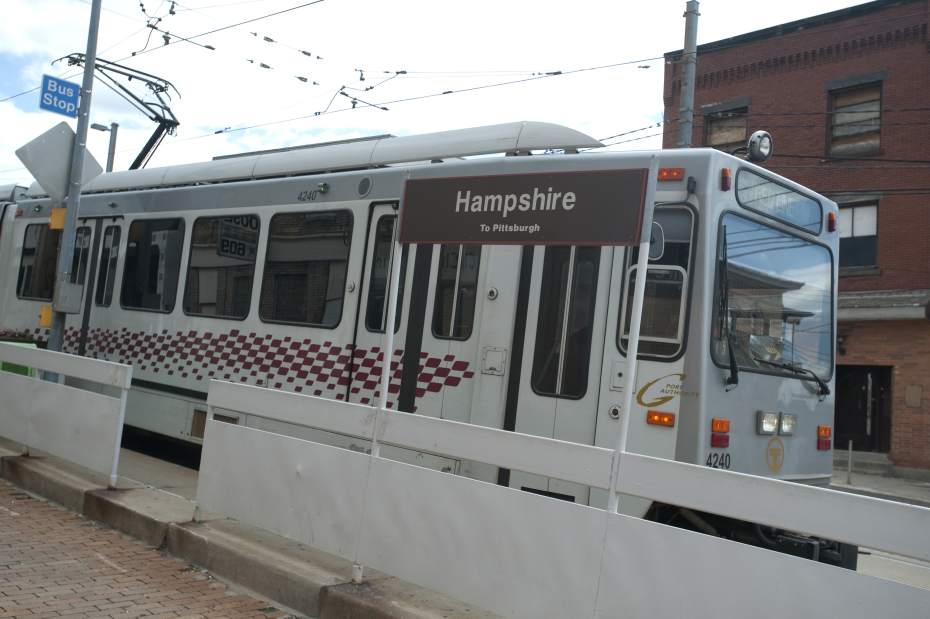
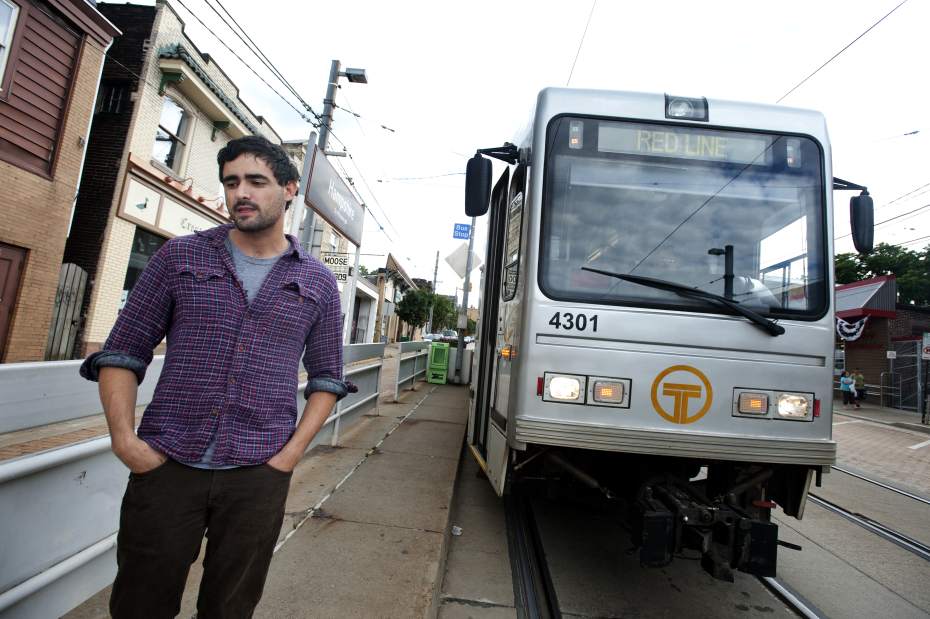
The agency says the little-used T stops it is discontinuing effective June 25 include the Traymore, Hampshire, Boustead, Neeld and Kelton stops along the Red Line; the Martin Villa, Smith Road and Santa Barbara stops along the Blue Line to South Hills Village; and the Mine No. 3, Lindermer, Center, Latimer and Sandy Creek stops along the Blue Line to Library.
All the stops are low-platform stops with no dedicated parking and few shelters. Some get 10 to 20 riders boarding per day. Total ridership from all 13 stops stood between 500 and 1,500 people per weekday — about the same as all the weekday riders that board at the South Hills Village station, Ritchie said.
Three of the seven street-level stops along Broadway Avenue in Beechview are slated to close, stirring a mix of anger and disappointment among residents who fear light-rail reductions will worsen crowding on buses, dampen economic development and create hardships for passengers with medical limitations.
"They treat the people who ride the Red Line like some second-class citizens," Stoorm Mansfield, 45, said of the Port Authority. She said mass-transit users are "cutting down on the air pollution; we're the ones cutting down on the consumption of fossil fuels.
"They should be treating us better," said Mansfield, sitting outside the Brew on Broadway coffee shop at Hampshire Avenue.
Shop manager Andre Costello, 25, said the neighborhood has experienced a spurt of economic revitalization in the past eight months, including new grocery stores and eateries. A couple of vacant properties near Hampshire and Broadway were thought to be next in line for redevelopment, but closing the station or reducing service could stifle that prospect, he said.
"It's kind of a hit for us," said Costello, whose nonprofit coffee shop advertises the light-rail schedules. He fears a drop-off in foot traffic, he said.
Costello questioned how much Port Authority will save from the changes. A local observer estimated rail lines in the neighborhood pause 40 seconds for each stop, he said.
The agency had no official estimates of cost savings or reductions in travel time along the T, but Ritchie said the authority would study those after making the cuts.
"When transit lines appear slow and inconvenient, people are less likely to try them. So this also has hindered our ability to serve more people," said authority CEO Steve Bland in a statement announcing the cuts.
For J.C. Ciesielski, 31, of Beechview, the service supplies a critical path to his frequent medical appointments. A medical condition keeps him from driving, and cutting stops will force him to walk farther for food staples, he said.
He may need to lighten his grocery loads to prevent lightheadedness on the longer walk home, Ciesielski said.
Workers will post notices at the affected stops on Monday, noting the pending closures and directing riders to the closest stops, sometimes within sight of one that's closing. The farthest passengers will have to walk to reach an active stop from a closed one will be about 650 yards, or a little more than one-third of a mile.
Workers will "decommission" the closed stops, removing any signs, shelters and concrete pads, Ritchie said.
