



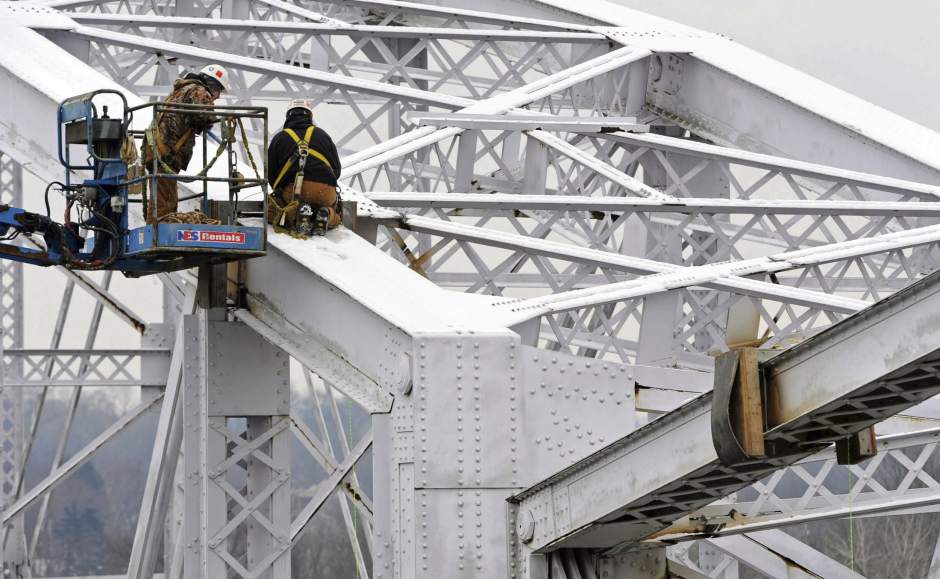
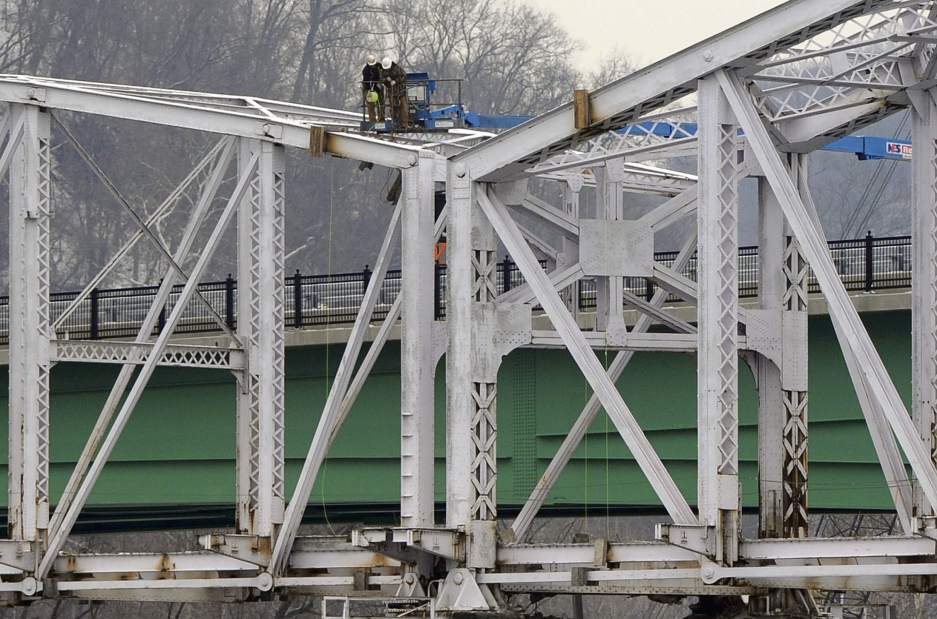


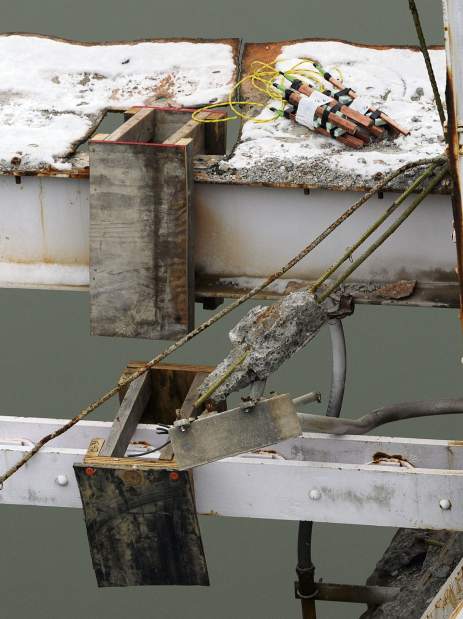
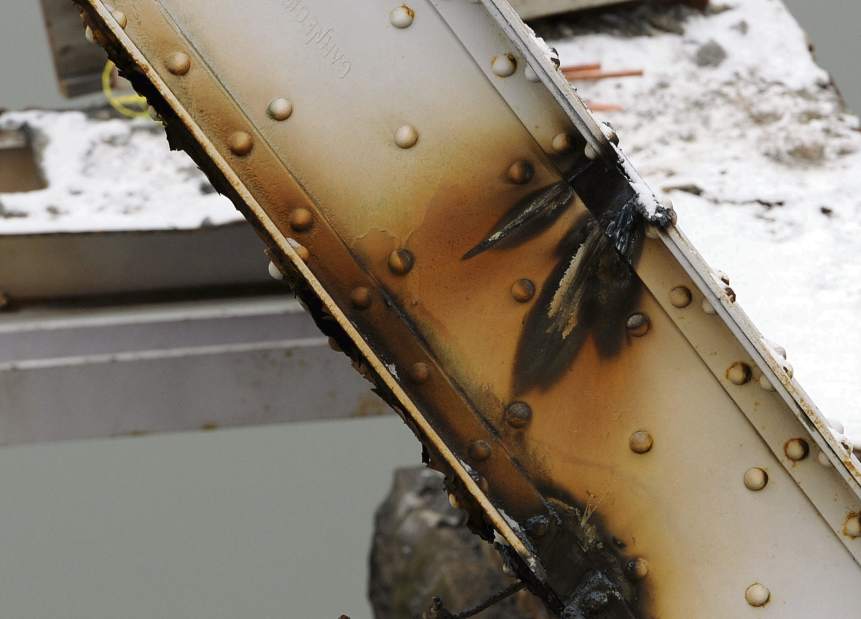


Toppling the aging Hulton Bridge on Tuesday will take more than 500 explosive charges to shear the truss structure off its piers, blowing 2,200 tons of steel into pieces into the Allegheny River.
The implosion of the bridge, which connects Harmar and Oakmont, is scheduled for around 10 a.m. on Tuesday.
It will briefly close the Route 28 Expressway in both directions and other roadways.
It's one of the final steps of completing the replacement of the new $66 million Hulton Bridge just yards away upriver.
A controlled orchestration of explosions, the implosion is designed to drop the 107-year-old bridge straight down into the Allegheny.
An exact science, the shaped charges direct the explosive force into the steel, turning it into a molten state, then blows through and cuts the steel, according to Albert Godfrey, owner and chief executive officer of Demtech of Saxonburg, the demolition contractor on the project.
“It looks just like you took a knife and cut butter,” he said. “It's that clean.”
Although the lead blaster on this project has more than 40 miles of imploded bridges under his belt, according to Godfrey, every job requires a customized plan due to the bridge's size, shape and style.
“Every shot is a new experience,” he said.
The bridge project's main contractor, Brayman Construction Corp. of Clinton Township, has been preparing for the implosion for more than a month.
They stripped the bridge of its concrete, sidewalks and some steel to lighten the load, according to Karlene Durso, a project engineer for Brayman.
“When we blast, we wanted just to have steel to recover,” she said. “Anything else is harder to get out of the river.”
Godfrey, as per Brayman's instructions, engineered the implosion to break apart the bridge in reasonably sized bits that wont be too large for a crane to lift, but not so small they become “spaghetti” that can't be removed.
Protecting buildings
Preparations have also been underway to protect buildings from the blast.
Plywood and fabric have been or will soon be wrapped around windows at Riverview Junior-Senior High School, the Oakmont Harbor condominiums, some Freeport Road residences and Twelve Mile Island buildings, and the new Hulton Bridge to protect them from flying projectiles.
“For us, it's all about safety,” Godfrey said. “Safety of the new bridge and the people around it.”
PennDOT says about 19,000 vehicles cross the bridge daily.
Brayman will have at least two tugboats and another boat in the water on both sides of the bridge and a back channel to secure the river, which will be closed to navigation for up to three days.
The Coast Guard has been coordinating with the Army Corps of Engineers the closure of the river to all boat traffic, which is mostly coal barges at this time of year.
The Federal Aviation Administration has designated the bridge area as a no-fly zone during the demolition, according to Durso. However, the contractor and PennDOT secured permission for a drone to help with security.
Demolition work is still pending to remove the end portion of the bridge on the Harmar side that runs above active Norfolk Southern railroad tracks. Brayman is working with the railroad on those plans, according to Durso.
Also, Brayman will dismantle the old Hulton Bridge piers manually, she said.
Godfrey said high winds or lightning could possibly delay the project, but the explosives are functional up to subzero temperatures. A snowstorm on implosion day could delay the project, Godfrey said, due to the safety of the workers.
Mary Ann Thomas and Melissa Daniels are Tribune-Review staff writers. Reach Thomas at 724-226-4691 or mthomas@tribweb.com . Reach Daniels at 412-380-8511 or mdaniels@tribweb.com.
