

Question: I have some shrubs I'd like to prune, and I heard it's best to do it in the late winter or early spring. Are there any shrubs that should not be pruned right now? And, is there a best way to go about the job? Any advice would be appreciated.
Answer: Deciduous shrubs are currently in a dormant state (meaning they are not in a period of active growth). Dormant pruning for these types of shrubs usually takes place in late winter.
Minor pruning of most shrubs should take place annually, especially if you want to keep them from growing too large and requiring more drastic pruning techniques down the line.
Shrubs can be pruned for two different reasons. First, to remove damaged or dead plant growth, and secondly, to maintain or create a special shape or form. Though a plant's natural shape is always best, sometimes it's necessary to control its size or form. Just keep in mind that, unless you are growing a formal topiary, a well-pruned plant shouldn't look like it has been pruned at all.
Arborvitae, junipers, boxwood, yews and most other evergreen shrubs prefer to be pruned in early spring, just before active growth begins. Hold off until late March or early April to prune these plants.
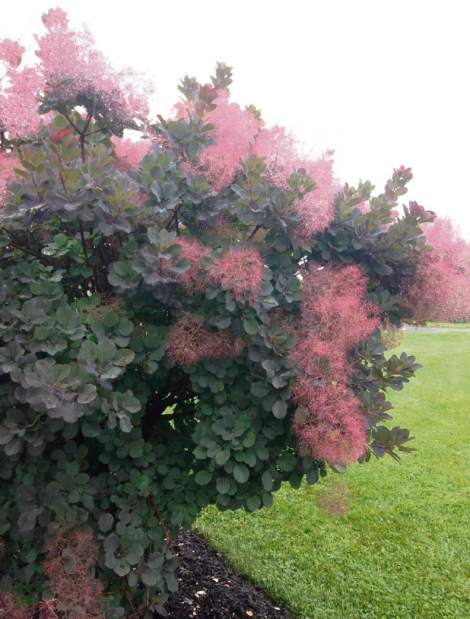
But, any flowering shrubs that produce their blooms in the summer on new wood, such as rose of Sharon, smoke tree, butterfly bushes, beautyberry and glossy abelia, can be pruned right now. So can shrubs that are not grown primarily for their flowers, such as bayberry, barberry, burning bush and the like.
What you shouldn't prune this time of year are spring-flowering shrubs that have already developed their flower buds for this coming season. This list includes azaleas, lilacs, mock orange, rhododendrons, laurels, flowering quince, forsythia and spirea. Hold off on pruning these plants until just after they flower.
Here are a few tips for successful pruning:
1. Begin by removing dead and diseased growth. Then remove crossed branches and those growing toward the plant's center.
2. Use a clean, sharp pair of pruners to judiciously remove branches one-by-one by following the tip of the stem down into the shrub and snipping the branch off just above where it joins another branch. Clean the clippers with a 10 percent bleach solution when moving to a new plant to prevent the spread of disease.
3. Ideally, you should never remove more than one-third of the total height and volume of a shrub in any single pruning. Unless, of course, you're hoping for a complete rejuvenation and plan to cut the entire shrub all the way back to the ground to let it resprout.
Horticulturist Jessica Walliser co-hosts “The Organic Gardeners” at 7 a.m. Sundays on KDKA Radio with Doug Oster. She is the author of several gardening books, including “Attracting Beneficial Bugs to Your Garden: A Natural Approach to Pest Control” and “Good Bug, Bad Bug.” Her website is jessicawalliser.com.
Send your gardening or landscaping questions to tribliving@tribweb.com or The Good Earth, 503 Martindale St., Third Floor, Pittsburgh, PA 15212.
