
https://archive.triblive.com/news/upmc-mckeesport-to-host-diabetes-update/
UPMC McKeesport to host diabetes update

• |
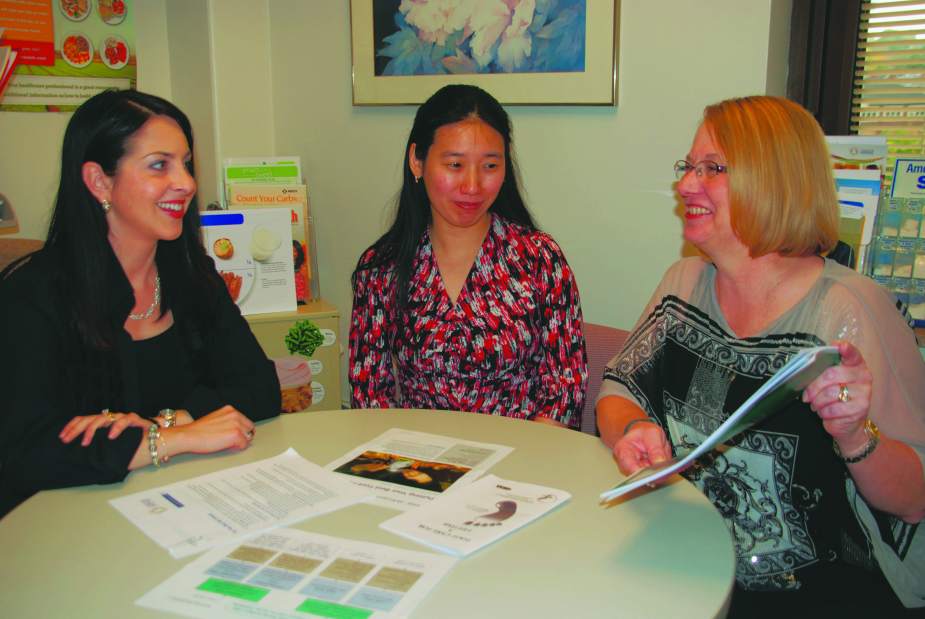
Carol Waterloo Frazier | Trib Total Media
Reviewing information for the Ahmad Memorial Diabetes Update at UPMC McKeesport (from left) are diabetes specialist and dietician Carla DeJesus, endocrinologist Dr. Sann Yu Moon and diabetes program manager Janice L. Koshinsky.
An estimated 29.1 million Americans — 9.3 percent of the population — have diabetes. Another 86 million have prediabetes.
An estimated 8.1 million people with the condition have not been diagnosed.
While those statistics from the American Diabetes Association may be startling, there is good news. According to the Centers for Disease Control and Prevention, the five major diabetes-related complications — including lower-limb amputation — have declined in the last two decades.
“I think part of that is because we are doing a better job at treatment,” UPMC McKeesport diabetes program director Janice L. Koshinsky said.
The Ahmad Memorial Diabetes Update will be Nov. 5 at 5 p.m. in the Kelly Conference Center at UPMC McKeesport, on the ground floor of the Kelly Building. It will begin with a tour of the UPMC Wound Center at 5 p.m., screenings and exhibits at 5:30, a diabetes-friendly dinner and program at 6:15 and a panel question-and-answer session at 7:30.
Screenings for blood pressure, bone density, pulse oximetry, pulmonary function, vision and feet will be offered, and flu shots will be available.
Exhibitors will include the YMCA, UPMC Wound Center, Soluble Systems and others.
There is no cost for admission or parking. Reservations are required and can be made by calling 412-664-3055. The annual update is sponsored by the UPMC McKeesport Lions Diabetes Center.
Medical co-director Dr. Marc Cordero will provide an overview of services at the Wound Center.
Dr. Jessica Sciulli, a podiatry, foot and ankle surgeon at UPMC McKeesport, will discuss how diabetes affects the body, types of diabetes and the importance of early detection for proper management and treatment.
Sciulli credits awareness for the decline in complications.
“I think there are more programs that raise awareness about diabetes,” she said. “More primary care physicians are referring their patients to specialists, and that's important.”
Sciulli said the services at UPMC McKeesport have had a positive impact on patients.
“The wound care center has been important for patients, especially the hyperbaric oxygen chamber. It's a good team effort there,” she said.
Attendees will learn about exercises, risk factors of a diabetic foot condition known as neuropathy (damage to nerves that impede the ability to feel pain), and the importance of annual foot checks.
“The foot is where things start, like a wound not healing, numbness and diminished sensation,” Sciulli said. “Those problems could be compounded with poor blood flow.”
As with other health conditions, early diagnosis is key to treating diabetes and reducing the incidence of complications. There are some general symptoms, but some people with type 2 diabetes have mild symptoms that go unnoticed.
Carol Waterloo Frazier is an editor for Trib Total Media. She can be reached at 412-664-9161 ext. 1916.,or cfrazier@tribweb.com.
Copyright ©2026— Trib Total Media, LLC (TribLIVE.com)