





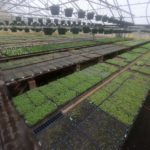

There are more than tulips and daffodils trying to come up.
Regional growers are cultivating and harvesting a bounty of spring offerings from locally grown floral arrangements to wild mushrooms to baby arugula and greens that are already showing up at market.
It may not feel like it, but spring has been in motion for months. Through snow, subzero temperatures and the gray days of March, local growers have been busy.
• Professional foragers are scouting for invasive plants, Japanese knotweed and garlic mustard, soon to show up in local markets and gourmet entrees at local restaurants.
• More small farms are using high tunnel, hoop portable greenhouses to grow cold-tolerant plants to sell early in the season.
• Local farmers are calling for more canning of local produce so restaurants and residents can have local food year-round. Although that's not such a novel idea, as any grandparent could tell you, it's coming around again.
Grow local, buy local continues to trend, according to Bob Pollock, educator for Penn State Extension for horticultural crops covering southwestern Pennsylvania.
“People would like to buy as locally as soon as they can,” Pollock said. “Part of that has to do with freshness. When things are shipped long distances, sometimes the fruits and vegetables are harvested before the optimum harvest date,” he said.
Growers are responding.
“People are starting to grow earlier in the year because they may have markets for fresh produce,” Pollock said. “Whether these growers are marketing to a restaurant or a market — chefs need a fresh supply on a regular basis. Also, some farm markets are already open.”
To make it happen, more growers are using “high tunnels” — low-tech green houses that don't require heat and are suitable for early greens, according to Pollock.
Local produce comes early
With its high tunnel greenhouse, Blackberry Meadows organic farm in Fawn is growing spinach, scallions, onions, Asian greens, kale and lettuce. There are already markets for the produce, according to Greg Boulos, who owns Blackberry Meadows with his wife, Jen Montgomery.
They are growing seedlings for its garden packages: We know about CSAs — community-supported agriculture, where people buy shares of a farm's harvest to receive fresh vegetables during the growing season — but Blackberry Meadows certified organic farm in Fawn is trying to get residents to grow their own gardens with their seedlings.
For $150, Blackberry Meadows is offering 130 varieties of vegetables, most of the rare and tasty heirlooms that can be planted in a garden that's at least 10 square feet.
With just reaching the public with CSA shares, the most Blackberry Meadows can serve is 250 families, according to Boulos.
If they sell their seedling package, then they can reach 2,000 families, he said.
This year, some of the offerings are a dry bean — denti di morto, a rare, Italian white kidney bean with a skin that disappears when cooked, according to Boulos.
“It's great for soups and complements kale, which we grow a lot of,” he said.
Looking to sell more produce, Blackberry Meadows and other farmers are promoting canning of local produce, especially at local restaurants.
Canning local produce is certainly not new, but preserving local food is another way to keep food local.
“Once production season starts, I can't sell tomatoes to restaurants,” said Boulos. “It's a totally flooded market during the height of the season.”
Now for something different
Brothers Cavan and Thomas Patterson of Indiana Township are professional foragers. They scour wooded acreage in Allegheny, Armstrong, Butler and Westmoreland counties for wild mushrooms, ramps and invasive plants such a Japanese knotweed and garlic mustard.
They own Wild Purveyors in Pittsburgh's Lawrenceville neighborhood, which sells much of its finds to restaurants and markets.
Baby arugula, sweet and spicy greens mix and cultivated mushrooms are on the shelves now as well as fresh Pennsylvania cheeses, such as fromage blanc, and the Korean delicacy kimchi made from local Japanese knotweed.
“With the rain and some more sun, we'll be looking to forage garlic mustard, Japanese knotweed and ramps,” said Cavan Patterson. Ramps are native wild onions.
The Japanese knotweed sounds unpalatable — with those huge, bamboo-like stems that devour entire river banks, wiping out native plants along many waterways.
But it's the young and tender knotweed plants that the Pattersons scout.
While the invasive plant is easy to find, the brothers harvest at wooded and pristine sites.
“We would suggest that people not harvest at roadways and waterways where the plants will be picking up pollutants.”
Young knotweed tastes similar to wild asparagus, according to Patterson. It has a lemony flavor, and tastes good with fish and makes fantastic kimchi, he added.
Local flower power
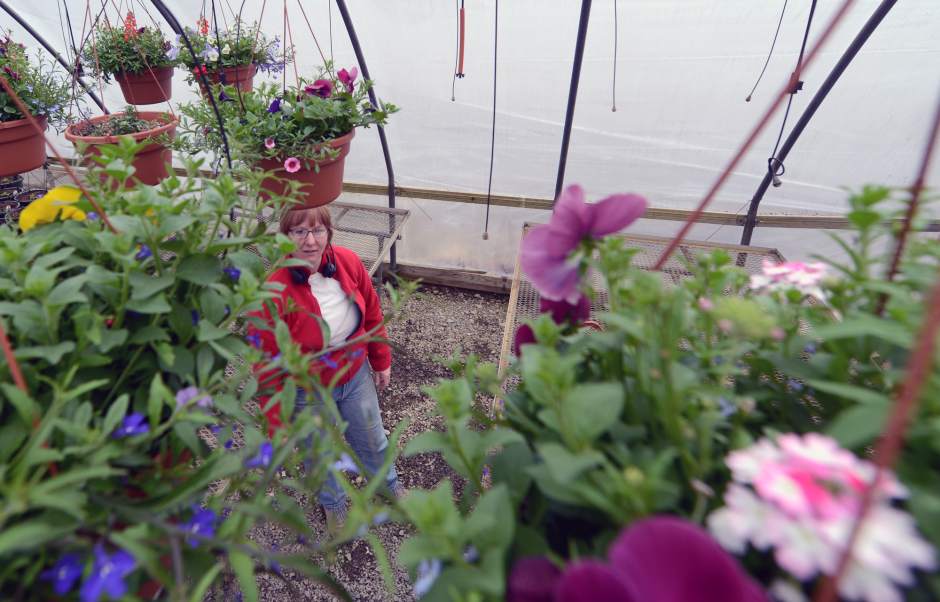
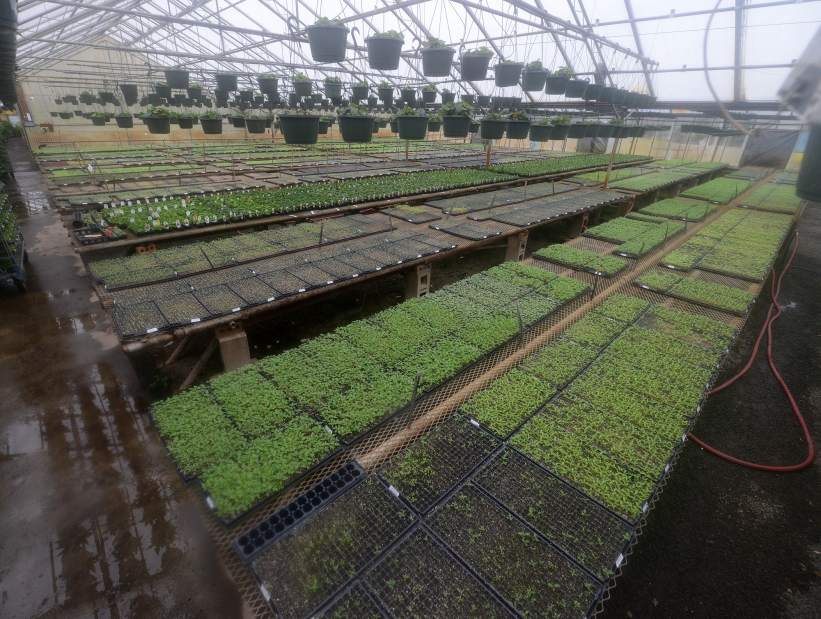
Local flower growers have been busy in their greenhouses in February and March to start growing the flats of summer beauties.
“The big box stores get their stuff from Canada and elsewhere,” said Raylene Gumto, one of the owners of Gumto greenhouse in Penn Township, Butler County, a family-owned business, since 1906.
Gumto's nurseries grows seedlings and plants wholesale that are sold to nurseries throughout the Alle-Kiski Valley.
“I think locally grown stuff is tempered to the weather we have, and I think the plants do better. It's acclimated to our environment.”
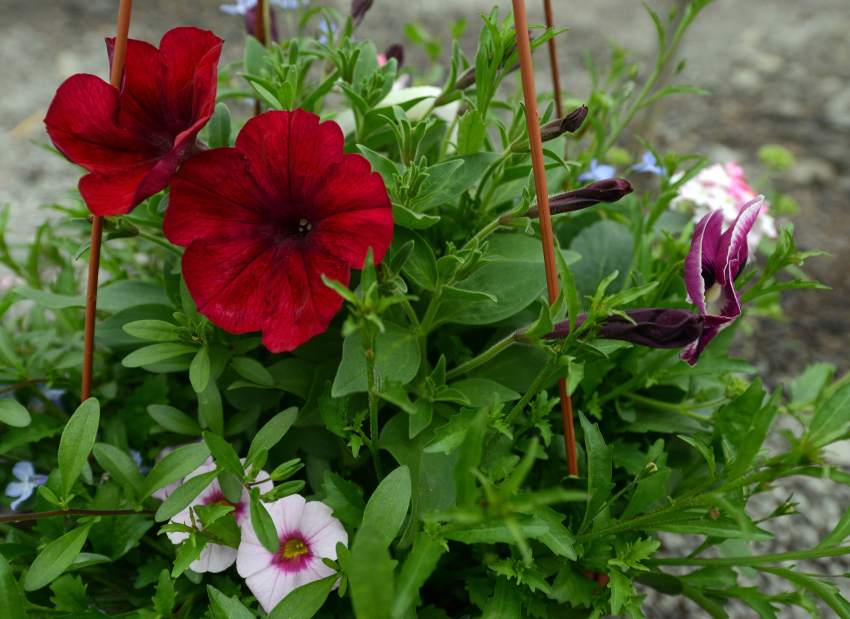
Showing up at local stores now is their “Frost Chaser” flower arrangement featuring cascading petunias, violas and pansies, which can take a chill.
The greenhouses are full of promise for spring with a million or so plant seedlings well under way.
Newer varieties showing up at local nurseries this spring will offer new twists on old reliable plants such as the shade-loving coleus. Newer varieties include the King Kong coleus with leaves the size of your hand, and the fishnet stockings coleus, which is heavily lined with purple veins in lime green leaves.
Mary Ann Thomas is a staff writer for Trib Total Media. She can be reached at 724-226-4691 or mthomas@tribweb.com.
