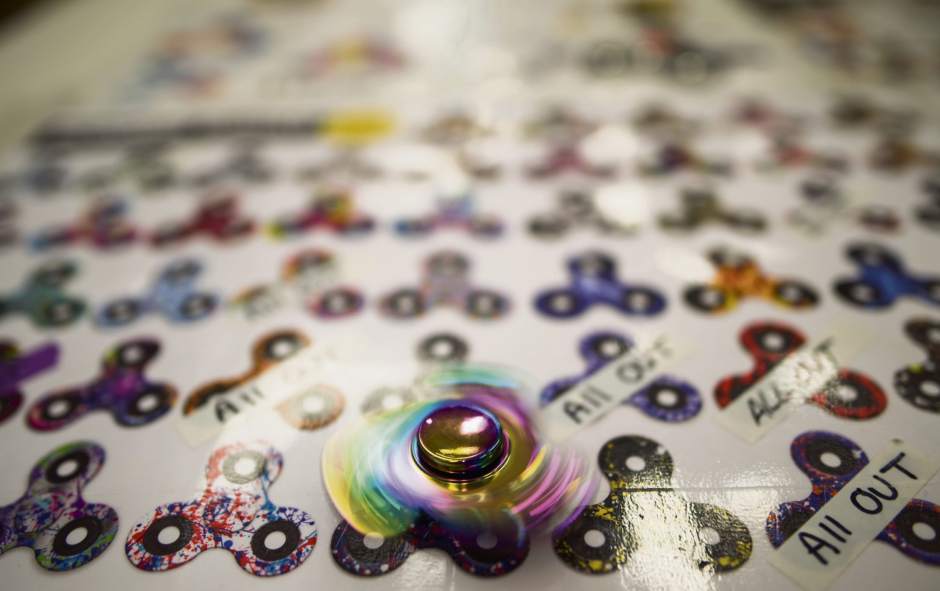
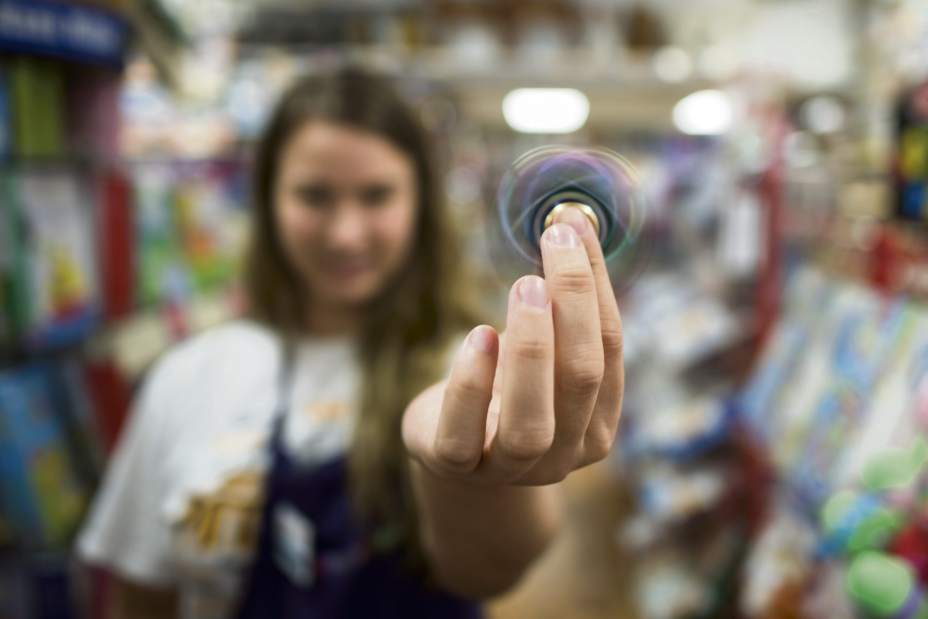
The federal government issued new guidelines Thursday for the manufacture and use of fidget spinners, the tiny twirlers that have become 2017's biggest schoolyard fad .
“Fidget spinners can be fun to use but consumers and companies should be aware of some of the safety concerns associated with this product,” U.S. Consumer Product Safety Commission Acting Chairman Ann Marie Buerkle said in a statement .
The CPSC is investigating reports that pieces can break off spinners, posing a choking hazard, and that battery-operated spinners potentially can spark fires.
The guidelines were issued at the behest of the fidget-spinner manufacturers who were unsure whether their product was subject to the same regulations that govern many other toys, said CPSC spokeswoman Patty Davis.
The key point is whether spinners are “general use products,” designed primarily for anyone over the edge of 12, or “children's products” meant for younger kids.
Most spinners are considered general use, according to the CPSC, which means they are not subject to many regulations, although those with electronic components must follow existing rules for battery-operated toys.
However, if a spinner is designed and marketed primarily for children under the age of 12, then it is considered a “children's product” and is held to a much higher regulatory standard.
Children's products must be tested in a laboratory to make sure they're under the limit for lead and other dangerous substances, they must be labelled with information about their manufacture, and the maker must provide sellers with a certificate assuring the toys have been made according to the rules.
If they do not comply, the CPSC can recall them.
For consumers, the CPSC has set up an online “Fidget Spinners Information Center,” with warnings about choking hazards and potential fire risks from battery-powered spinners.
Jacob Tierney is a Tribune-Review staff writer. Reach him at 724-836-6646 or jtierney@tribweb.com.