




WASHINGTON — The victims vary: fast-food colossus McDonald's, technology giant Oracle, medical device maker Cooper Cos.
The culprit's the same: a surging American dollar.
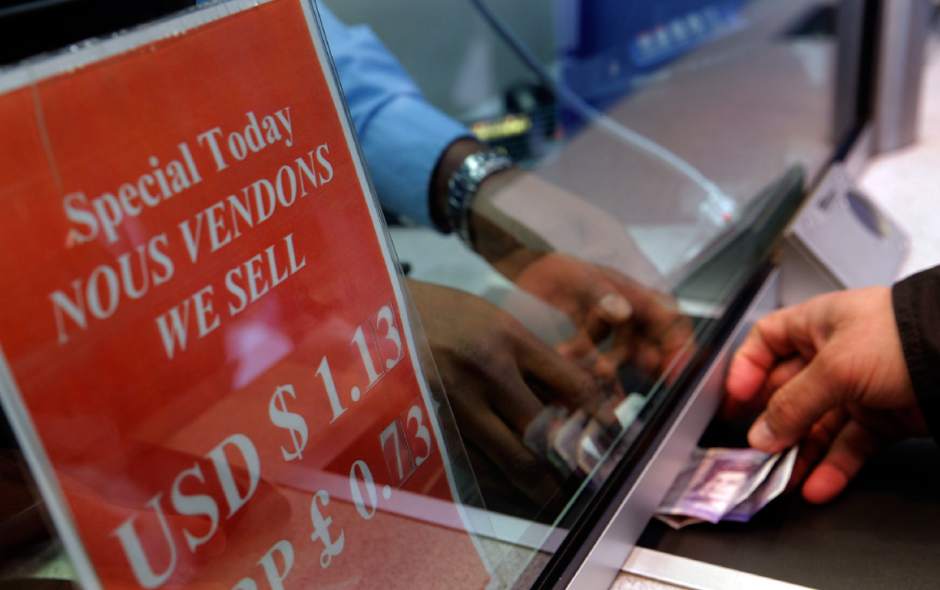
A symbol of the nation's economic might, the rising dollar is denting the earnings of American companies that operate overseas. The damage started showing up in results for the July-September period, and the picture likely will be uglier as companies report earnings for the final three months of 2014.
“It's clearly a drag on corporate profits,” said David Kelly, chief market strategist at J.P. Morgan Funds.
A few months ago, Kelly notes, analysts had expected a double-digit annual rise in corporate profits in the fourth quarter. Now, in part because the dollar is carving into earnings, they're forecasting just 4.6 percent overall earnings growth for companies in the Standard & Poor's 500 index.
A prolonged drop in profits risks rattling investors and pressuring stocks.
Among major industries, technology companies and producers of energy and raw materials generally derive the highest percentage of revenue from abroad, according to S&P Dow Jones Indices.
Since June 30, the dollar has jumped 16 percent against the Japanese yen. Against the euro, it's up 18 percent. Against the Brazilian real, nearly 20 percent.
Investors are buying dollars and driving it higher largely because the American economy is humming while other economies are sputtering. In Europe and Japan, growth has flat-lined. In China, it has slowed.
Investors are seizing on higher interest rates in the United States: The super-safe 10-year Treasury note yields 1.74 percent — miserly by historical standards but richer than the 0.46 percent yield on 10-year German government bonds or the 1.59 percent yield on 10-year Spanish bonds.
A higher-valued dollar delivers a double blow to American exporters: It makes American products costlier — and therefore less competitive — in foreign countries. And it means the revenue that American companies collect in, say, euros is worth fewer dollars once they bring the money home. In that way, the strong dollar shrinks profits, too.
Across the S&P 500 index, nearly half of total revenue comes from outside the United States.
American companies are hardly alone in suffering from currency swings. Swiss companies are hurting because their currency, the franc, is much stronger than the euro. Their plight worsened Thursday, when the Swiss central bank suddenly abandoned its effort to cap the value of the franc against the euro. The news sent the franc soaring against the euro. The Swiss National Bank abandoned the cap because it had proved too costly, requiring ever-larger purchases of euros.
FiREaPPS, a consulting firm that advises clients on managing currency fluctuations, said 202 North American companies have said currency swings would reduce revenue from July through September — up 53 percent from the previous quarter.
“It's started to bite,” said Ralph Hardt, president of Jagemann Stamping Co. in Manitowoc, Wis., where exports account for about one-fifth of revenue. “You risk having a (foreign) competitor getting between you and your customer.”
The dollar's surge is “going to be a large source of disappointment,” said Margie Patel, who manages $1.4 billion in stocks and bonds at Wells Fargo Asset Management. She said the stronger dollar could reduce companies' fourth-quarter earnings 5 percent or more, depending on how much business they do abroad.
Consider McDonald's, which has locations in more than 100 countries. Revenue fell 6 percent in November from a year earlier at its company-owned and franchise restaurants, and the drop was largely caused by the rising dollar.
If currency values had remained flat, revenue would have inched up 0.1 percent. McDonald's warned last month that the higher dollar could shave up to 9 cents off its fourth-quarter earnings per share, which analysts expect to be $1.23.
