
https://archive.triblive.com/opinion/editorials/keep-the-kiski-river-watershed-clean/
Keep the Kiski River watershed clean

• |
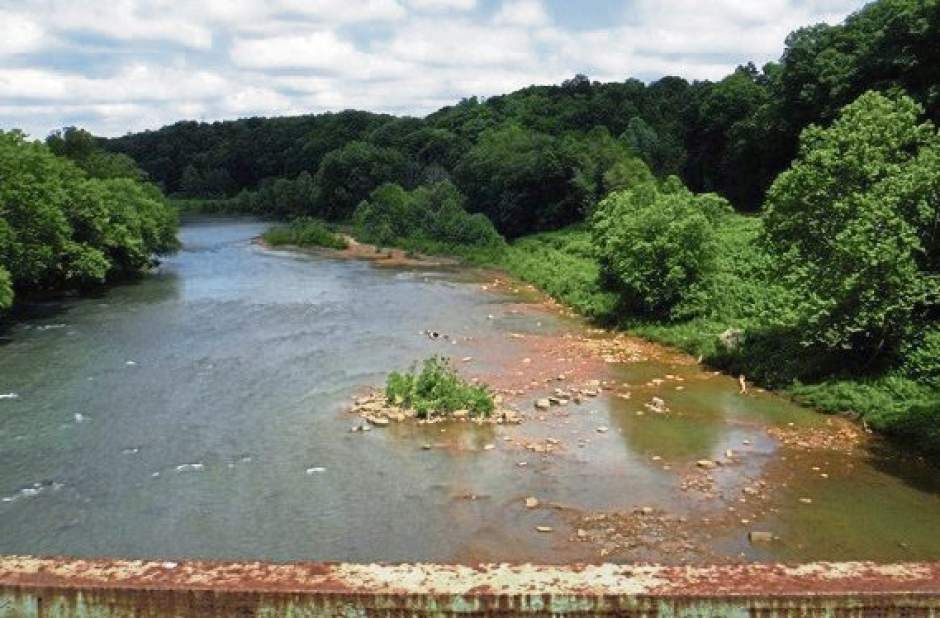
Courtesy of Conemaugh Valley Conservancy, Inc.
The acid mine drainage treatment system for Wilford Run, which enters the Kiski River in Bell Township, is not working properly.
years of success in cleaning up the Kiski and Conemaugh rivers and other waterways is in danger. Rivers that have been kept clean of acid mine drainage are starting to show signs of reverting back to their former, polluted state.
That’s according to an expansive four-year study of the Kiski-Conemaugh River watershed by the Conemaugh Valley Conservancy.
The problem is that pollution treatment systems built some 20 years are failing.
In addition, fewer volunteers are working to maintain them.
It’s a concern for the entire region. The Kiski-Conemaugh River watershed covers parts of Armstrong, Cambria, Indiana, Somerset and Westmoreland counties. And the Kiski flows into the Allegheny River at Freeport.
“No doubt we have come a long way, but we are at a tipping point if we don’t maintain the existing (acid mine drainage) treatment systems,” said Melissa Reckner, author of the study.
As one example, treatment ponds in Parks Township that channels water to Carnahan Run and then to the Kiski River, are clogged with iron-laden sediment.
Even though underground coal mines were shuttered decades ago, they continue to release iron and other contaminants into waterways, changing the water’s pH levels and killing aquatic life.
In the 1990s, state environmental agencies teamed with volunteers to build and maintain acid mine treatment systems that allow metals to settle out of mine water by diverting it to a series of ponds. The cleaner water then is released into the river.
Benefit of treatment ponds
It’s clear that the treatment ponds work.
Only one frog and no fish were found at the mouth of the Kiski River in Gilpin in a 1980 state survey, for example. A repeat of the survey in 2015 tallied 386 fish of 28 species. They included at least two pollution-sensitive fish species never seen before in the Kiski. Water quality improvement is evident for the Conemaugh River, too, which in 1993 was too acidic for aquatic life to survive. But last year, the pH of the Conemaugh in Blairsville was well within the healthy range.
Fish species have rebounded in the Conemaugh. Just before the confluence of the Conemaugh River and Loyalhanna Creek that forms the Kiski River near Saltsburg, 13 fish species were documented in 2015, compared to eight found in 1997.
Environmental maintenance
But some two-thirds of the 60 acid mine drainage water treatment systems need maintenance ranging from minor items to complete rehabilitations or expansions, according to Tim Danehy, a scientist who studies the rivers.
“This is environmental infrastructure, just like roads and bridges,” Danehy said. “It requires ongoing upkeep.”
It’s a statewide issue that involves some of the 300 government-financed systems, the state Department of Environmental Protection says. The DEP has grants available to update them.
Kiski-Conemaugh watershed volunteer groups have been awarded more than $1 million in the last several years for various rehabilitations of those systems.
But getting that money can still be a problem.
John Linkes of Leechburg, a volunteer with a Kiski River watershed group, says it no longer has a member who knows the involved process of writing grant applications.
And, at 66, he’s worried about whether young people will come forward to continue the work.
He’s seeking people who “want to do something for their community, even if they give a little bit.”
It’s our hope that the state continues to provide adequate funding and volunteers step forward to prevent the threatened backslide that’s looming.
Copyright ©2026— Trib Total Media, LLC (TribLIVE.com)