
https://archive.triblive.com/opinion/featured-commentary/a-letter-home-from-mexico/
A letter home from Mexico

• |
caglecartoons.com
CUERNAVACA, MORELOS, MEXICO
Take a look past the coastal resorts of Mexico and you’ll find places like Cuernavaca, high in the interior mountains and as different from the tourist enclaves as Erie is from Malibu. In many ways, it’s conservative territory. I’ve never been in a home here that didn’t have at least one image of the Catholic Virgin de Guadalupe hanging on the wall, usually oversized, and, without much of a safety net, families here actually take care of their own instead of expecting the government to do it.
Life is tough for the Mexican middle class and tragic for the truly poor. One of my friends, an educated woman, teaches Spanish to visiting foreigners, takes in laundry and owns a rental property, all of which barely allow a modest standard of living. Her story is common. If I needed it, she’d share her last peso.
There are two booming industries here that we don’t see so much in the United States: private security and private education. People understandably place a premium on personal safety and they take personal responsibility for it. Fences, walls and security services are everywhere.
More remarkable is the emphasis on private education. The astounding number of children in private school here reflects both a fierce devotion to family and a healthy skepticism about the country’s government schools. Many Mexicans have a low opinion of their public schools and believe them to be run largely by the teachers unions and ineffective.
Private schools are everywhere — religious and secular — and struggling families make incredible sacrifices to access them. A check of the Cuernavaca yellow pages discloses 16 full pages of ads for private schools in a town about twice the size of my hometown of Erie. These kids all learn English and they’re good at it. I’ve talked to 12-year-olds who make my years of adult Spanish study seem pathetic. Someday these kids will make a difference.
Mexicans love their country the way we used to love ours. And while they complain, you’ll rarely hear them condemning Mexico’s fundamental values, as parts of our political culture do with ours. I was in the center of Mexico City the day Mexico won the last Olympic gold medal in soccer and witnessed tens of thousands of demonstrators wrapped in national flags, celebrating being Mexicans. I can’t imagine that happening in Washington. Sadly, my people now march only for grievances.
What do Mexicans think of us? Taking us one at a time, they’re the most welcoming people I’ve ever known. Warm and friendly, they don’t resent our prosperity as long as we don’t display arrogance.
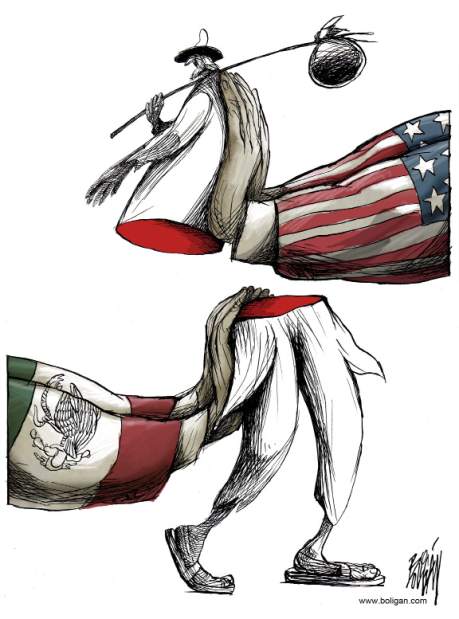
Yet they ask why we agonize so over the migration of their countrymen looking for an opportunity better than Mexico can offer. They’ve asked me about my ancestors, eastern Europeans in the early 20th century who found their way to the mills of Pittsburgh. Why isn’t it the same for our people, they ask, as it was for yours?
They have a point, although, of course, it’s complicated. We have concerns about terrorists and criminals and the increasingly unaffordable cost of social services that didn’t exist a century ago, I explain, and there was no risk then that people simply wanted free “stuff” at the expense of others and not assimilation. Many Mexicans still struggle with that distinction as they read and hear about what we think of them, filtered through the lens of a decidedly hostile Mexican media.
The truth can be hard to find on both sides of the border.
Richard Perhacs practices law in Erie and frequently visits Mexico.
Copyright ©2026— Trib Total Media, LLC (TribLIVE.com)