https://archive.triblive.com/opinion/featured-commentary/here-comes-the-bill-for-that-no-interest-free-lunch/
Here comes the bill for that no-interest ‘free lunch’

• |
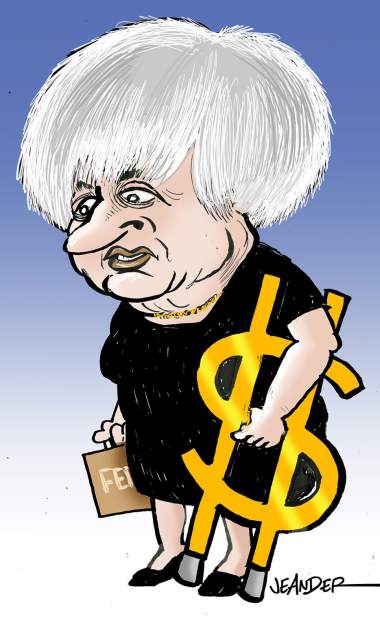
Governments and financial markets around the world held their breath as the Federal Reserve debated whether to raise interest rates a whopping one-quarter of one percentage point. To put that in perspective, on a 20-year $100,000 mortgage, that small of an increase would cost you $13 per month — just a bit more than a Netflix subscription.
Why so much concern over something so trifling? The answer isn’t in the economics but the psychology. As far as the economics goes, such a small interest rate bump is indistinguishable from background noise. But for market psychology, it’s a thunderclap. The federal funds rate — the interest rate banks charge each other — has been at zero for nearly a decade. When the Fed finally raises the rate, it will signal to the world that the Fed is as afraid as the rest of us of the inflation time bomb it has created.
Contrary to political opinion, there really is no such thing as a free lunch. To hold interest rates so low, the Fed has had to pump up monetary reserves by nearly 1,400 percent, which sets the stage for serious inflation. But to hear politicians tell it, there is only an upside where low interest rates are concerned.
The reality is a mixed bag. Low interest rates are good for borrowers but devastating for savers. Students benefit from low interest college loans but they have to compete for jobs with retirees who have re-entered the workforce to supplement the paltry return on their savings. Young families benefit from low mortgage rates but their retirement nest eggs grow more slowly.
Low interest rates simply encourage us to consume more now in exchange for consuming less later. And the longer the Fed holds interest rates low, the less we’re going to be able to afford when “later” finally arrives.
Who benefits the most from low interest rates? The federal government. With a debt of more than $18 trillion, a one-quarter of one percentage point rise in interest rates will cost the federal government an additional $45 billion annually. That’s more than half of what the government spends on the entire Department of Education.
By holding interest rates at zero for so long, the Federal Reserve has painted itself into a corner. We’ve raised a generation of students who don’t blink at borrowing tens of thousands of dollars for college because the money is so cheap. We’ve forced our elderly back into the workforce because they can’t earn a decent return on their savings. We’ve required our middle-age workers to shift their retirement portfolios into higher risk stocks and bonds because safe investment vehicles pay almost nothing. And our debt-addicted government literally can’t afford to pay higher rates.
Eventually the inflation threat will loom large enough that the Fed will be forced to raise rates. And when it does, the federal government will push back hard. Decades of spending money it doesn’t have has left the government with interest expenses it can’t afford. If Washington doesn’t get its financial house in order — now — the rest of us will be paying the price. We will pay in inflation or the government will pay in interest. This is what the interest rate debate is really about. And we all know the government’s position on the matter.
Antony Davies is associate professor of economics at Duquesne University. James R. Harrigan is director of academic programs at Strata in Logan, Utah.
Copyright ©2026— Trib Total Media, LLC (TribLIVE.com)