

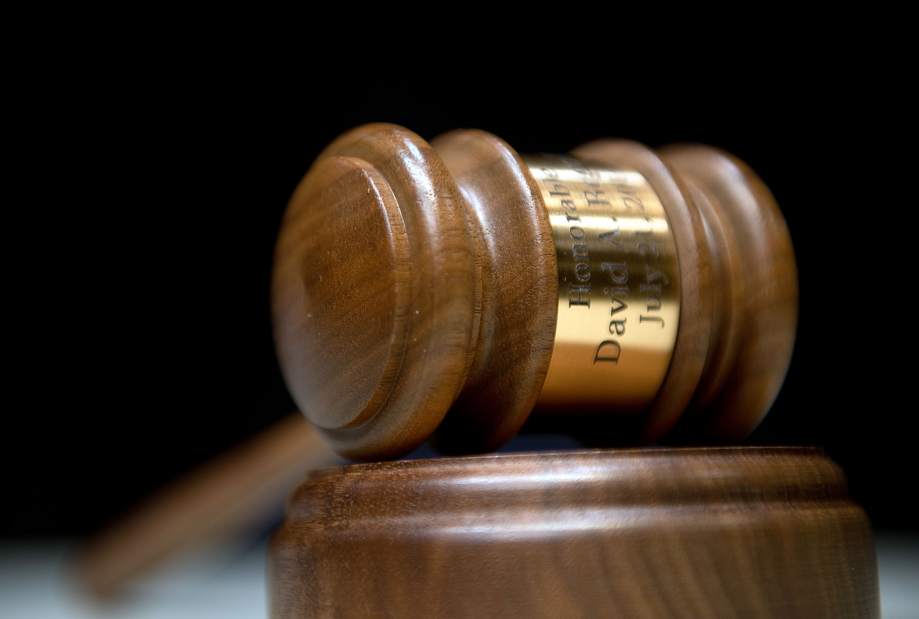
If you ever wonder how far off track the judicial branch of government can stray, cast your eyes to the Sunshine State, where a county court judge actually struck down a law on the basis that it was rewritten by legislators, not by the judiciary.
Activist judges who legislate from the bench are nothing new. But Miami-Dade Circuit Court Judge Milton Hirsch apparently slept through Political Science 101. He maintains that the courts, not lawmakers, should rewrite the state's so-called “stand your ground” law.
That law, passed in 2005, was strengthened earlier this year. Pennsylvania has a similar law, known here as the “castle doctrine,” which recognizes the right of an individual to protect himself or herself when under threat. The Florida law is broader than the Pennsylvania statute and generally absolves a person under threat from being required to retreat before using force.
In the wake of the highly publicized shooting of Trayvon Martin, Black Lives Matter and other left-wing groups have agitated for repeal of Florida's law. The dispute landed in Hirsch's courtroom, where he confused the roles of the legislative and judicial branches. He ruled the recent changes to the law are unconstitutional by arguing the Legislature overstepped its bounds by changing the law; he asserted that power belongs to the courts.
The situation in Florida is, unfortunately, not unique. Starting with the U.S. Supreme Court, activist jurists can be found at all levels of the judiciary.
The importance of the judiciary is not lost on President Donald Trump, who has depended on conservative organizations like The Heritage Foundation and The Federalist Society to help him vet potential nominees. And he will get the chance to reshape the federal judiciary. At present, 136 federal district judges and circuit court judicial positions are vacant. This is out of 890 total seats on the various federal benches.
Trump has this opportunity because the U.S. Senate, inept at passing actual legislation, effectively exercised its confirmation powers to prevent late-term Obama nominees from being voted upon. That strategy resulted in giving the new president more initial vacancies to fill than any recent president except for Bill Clinton.
Meanwhile, here in Penn's Wood, we the people have the power to elect judges. This year, in addition to seats on most county-level Common Pleas courts, voters statewide in the November election will select a justice of the Pennsylvania Supreme Court, four Superior Court and two Commonwealth Court judges.
While the resumes of candidates for these seats are undoubtedly not on the summer reading list of most Pennsylvanians, these are races voters should pay close attention to as the leaves begin to turn in October. As witnessed by the actions of Florida's Hirsch, judges and justices have the power to undo — or at least temporarily suspend — laws duly passed by the state Legislature and signed by the governor.
Like presidents, governors and legislators, there are times where judges and justices overstep their constitutional bounds. We voters should pay as much attention to their actions as we do to those of the other two branches of government.
Lowman Henry is chairman and CEO of the Lincoln Institute and host of the weekly Lincoln Radio Journal.
