
Heyl: Former Syria Mosque site in Oakland gets second chance for — what?

A mistake stands corrected – or does it?
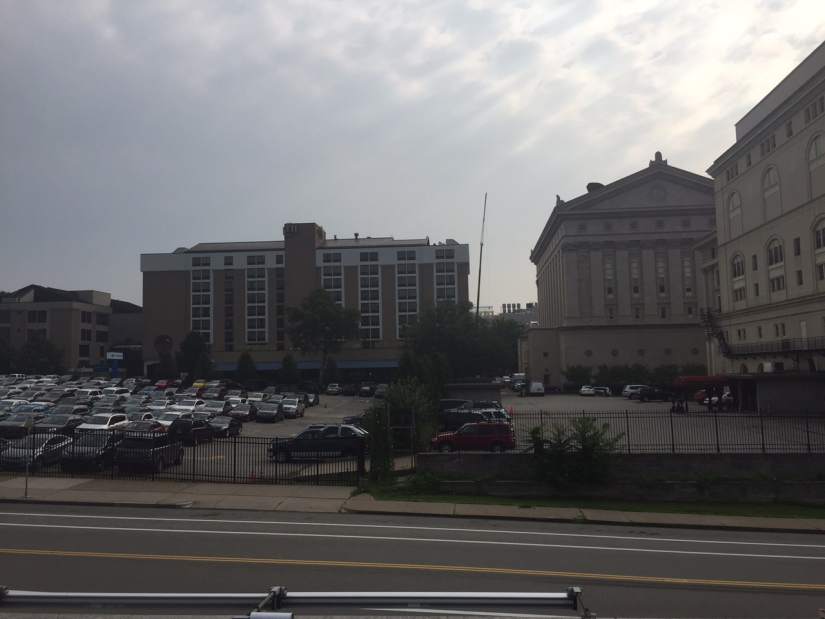
UPMC appears to have tacitly admitted it erred a quarter of a century ago when the gargantuan medical conglomerate purchased the late, lamented Syria Mosque in Oakland. The acknowledgment came with Wednesday's announcement that the 2-acre mosque site is being sold to the University of Pittsburgh.
UPMC bought the property in 1991 and announced plans to build a $40 million office complex where the historic 4,000-seat theater once stood. Groundbreaking for the ambitious project has yet to occur, although UPMC's “temporary” parking lot on the property has done nice business since the first Bush administration.
Pitt has announced the university will do ... er ... something with one of Oakland's largest parcels of undeveloped land. At some point. Probably. That's the skinny from Art Ramicone, Pitt senior vice chancellor, chief financial officer, interim senior executive vice chancellor for business and development and a guy whose business card undoubtedly doesn't have much blank space.
In discussing Pitt's plans, Ramicone told the Trib that the mosque site could be developed “as innovative space to support collaborations among faculty, students and partners inside and outside the region.” For those not fluent in the language of academic administrativese, that roughly translates to: “What are we going to do with it? Beats the heck out of us. Got any ideas?”
The mosque's demolition has rankled locals for years and not just because the Psychedelic Furs played there circa the “Pretty in Pink”-era. The sale is being applauded. But hopes the property finally will be developed should be accompanied with a disturbing sense of déjà vu.
In 1991, the mosque was sold for $10 million. In 2016, it's being sold for $10 million.
In 1991, the mosque sold to a nonprofit, removing the property from the tax rolls. In 2016, the mosque is being sold to a nonprofit, so it will continue to remain off the tax rolls.
What has changed? Is this transaction really an improvement?
Yes, according to former state Sen. Jim Ferlo, who was a city councilman and one of four people arrested in 1991 for trying to prevent the mosque's demolition. Since then, he has watched with frustration as the property remained a parking lot for a generation.
“I'm elated,” Ferlo said Thursday. “This has been a squandered development site for far too long. Given the University of Pittsburgh's expansive nature and capital needs, I think it will be far more attuned (than UPMC was) to not seeing the property remain empty.”
Ferlo's optimism aside, does the sale finally correct UPMC's decades-old mistake in buying the mosque?
That ultimately depends on how long it takes Pitt to build on the blacktop.
Eric Heyl is a Tribune-Review staff writer. Reach him at 412-320-7857 or eheyl@tribweb.com.
