
History of Penguins, Flyers franchises joined like twin brothers

On Feb. 9, 1966, NHL president Clarence Campbell leaned into a microphone and announced Pittsburgh and Philadelphia would be two of the cities included in the league's first round of expansion.
Twenty months later, on Oct. 11, 1967, the Penguins and Flyers played their first games.
In other words, they were born at the same time, which, in a sense, makes them twin brothers.
And sometimes, brothers fight.
“There was always a rivalry with the Flyers,” said “Battleship” Bob Kelly, who picked up 15 fighting majors while playing for the Penguins from 1974-76 and is considered by some to be the franchise's toughest player ever.
“The Broad Street Bullies, they were bullies. There was always a gang mentality,” Kelly continued. “Get them individually, they weren't that tough. And I proved that fact a number of times. Wish I could have done it a few more times, honestly. There's a few other scores I would have loved to settle with some of those guys.”
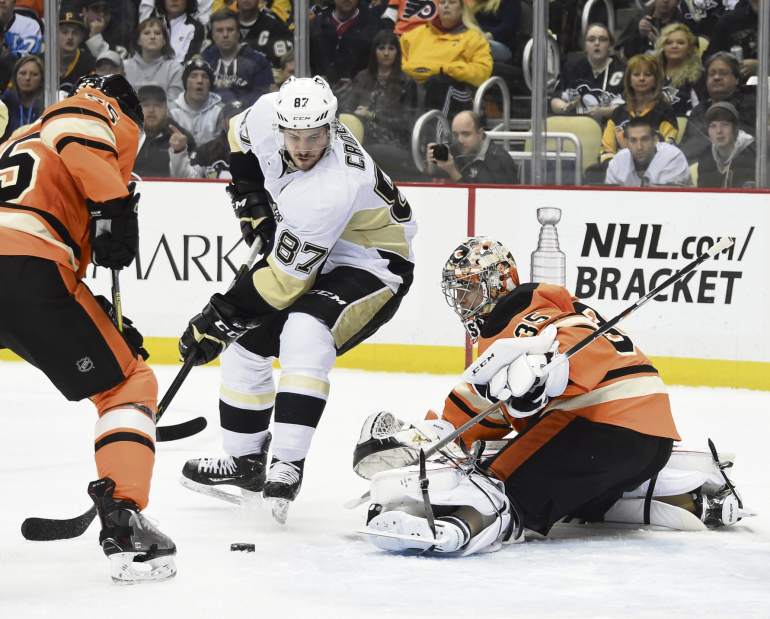
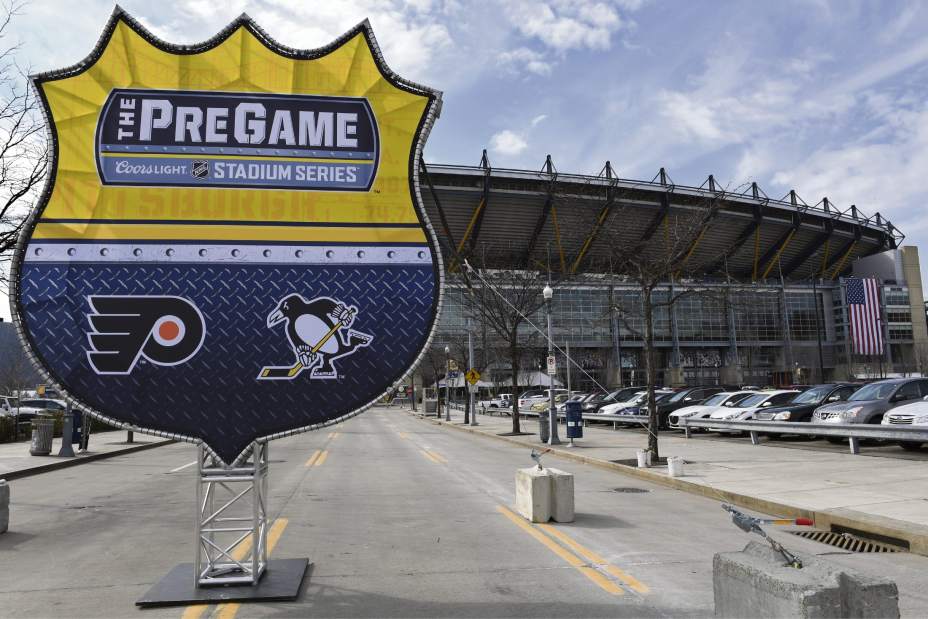
The fights on the ice between the two Pennsylvania teams have become the stuff of legend. They will meet Saturday night in a Stadium Series game at Heinz Field as part of the celebration of their 50th anniversaries.
The road they took from Point A to Point B couldn't have been more different. For five decades, they've duked it out in the arena of ideas.
The rise of the Flyers
In spring 1969, the second season in Flyers history ended with the team being dominated and physically intimidated by the St. Louis Blues in a first-round playoff sweep. They were outscored 17-3.
Two months later, with the 17th pick in the draft, the Flyers selected a young forward from Flin Flon, Manitoba, by the name of Bobby Clarke.
The franchise's path was set.
“The Flyers really got manhandled and beat up. Noel Picard, Plager brothers, the whole bit,” recalled forward Orest Kindrachuk, who was a cornerstone of the Broad Street Bullies before being traded to the Penguins in 1978 and becoming the team's captain for three seasons.
“And I think from that point forward, (Flyers owner Ed Snider) said, ‘We cannot tolerate that in our own building.' The team itself, we had 20 guys that wanted to win at all costs. I thought that was the difference. We would do whatever it takes to win. With Clarkie as the captain, every guy just wanted to win so badly, and (coach) Freddie Shero let us play that way. We were not going to be pushed around.”
The strategy, of course, proved wildly successful. The Flyers bullied their way to great heights, culminating in back-to-back championships in 1974-75.
The Penguins had their moments during the first two decades of franchise history. Sometimes they rode a high-scoring offense to moderate heights. Sometimes, like during Kelly's day, they fought the Flyers toe-to-toe. Overall, though, there was no question which Pennsylvania franchise was superior.
“We just wanted to win, especially at home,” Kindrachuk said. “That was our building. You're not going to take our mortgage from us.”
The Penguins strike back
Like the Flyers did when they drafted Clarke in 1969, the Penguins set the course for their franchise when they picked Mario Lemieux with the first choice of the 1984 draft.
From that point forward, it's been a team built on speed, skill and goal scoring. The 15 Art Ross trophies they've won since 1988 are proof.
“When I got here in '88, it was Mario's fourth or fifth year,” center John Cullen said. “He was coming into his own. That turned us into a more offensive team than a defensive team.”
The turning point in the rivalry with the Flyers couldn't have been more obvious. On Feb. 2, 1989, after going 0-39-3 in 42 trips over the previous 15 years, the Penguins finally won a game at The Spectrum.
“It was a heck of a win for us,” said Cullen, who had a goal and an assist in the 5-3 victory. “It was a big monkey off our back. When we were playing them, they were very physical. It was almost like an intimidating type deal, and they used that to their advantage. It was a tough place to win.”
The Penguins went on to claim back-to-back championships in 1991-92. The era of Lemieux and Jaromir Jagr gave way to the era of Sidney Crosby and Evgeni Malkin, but the song remained the same. The Penguins would beat opponents with speed and skill, as their subsequent championships in 2009 and '16 attest.
The Flyers have had their moments in the last 25 years, too. Eric Lindros and the Legion of Doom provided plenty of highlights. They beat the Penguins in memorable playoff matchups in 2000 and '12.
But again, these days, there's no question which Pennsylvania franchise is dominant.
“I think the bottom line is to win a Stanley Cup,” Cullen said. “Four Stanley Cups (since 1991) and they got none? I think that's a pretty good statement.”
The road ahead
When the Penguins and Flyers square off Saturday night at Heinz Field, it will barely resemble the bloody battles the teams had in the 1970s — and not just because the game will be played under the stars.
“The NHL game has evolved to a point today where it's a straight pace, skating, speed, skill, north-south game,” former Penguins winger and current NHL analyst Colby Armstrong said. “I really think if you put a game tape of even just four, five years ago and a game tape of today side-by-side, the difference is just crazy. Every year, we see some new technique change or idea change. The Penguins last year, I believe, changed the league with the way they built their team.”
Even the Flyers, one of the last teams to embrace the change, recognize the fundamental differences between the modern game and its bare-knuckle predecessor. This season, they're tied for 16th in the league with 18 fighting majors.
After five decades of taking wildly different paths, the 1967 expansion brothers are in essentially the same place. They both know the game, for the foreseeable future, will be won with finesse more than it will be won with fists.
“You look at their team — skating, speed, youth. It's a team we've known so long, over 50 year of being the Broad Street Bullies. It isn't that anymore,” Armstrong said. “Nobody is.”
Jonathan Bombulie is a Tribune-Review staff writer. Reach him at jbombulie@tribweb.com or via Twitter at @BombulieTrib.
