
U.N. report says 90 percent of plastic never recycled

Either don’t use plastic bags or be far more cautious about how you dispose of them.
That’s the upshot from a United Nations’ report out this year on the future of plastics recycling and, indeed, the future of recycling itself.
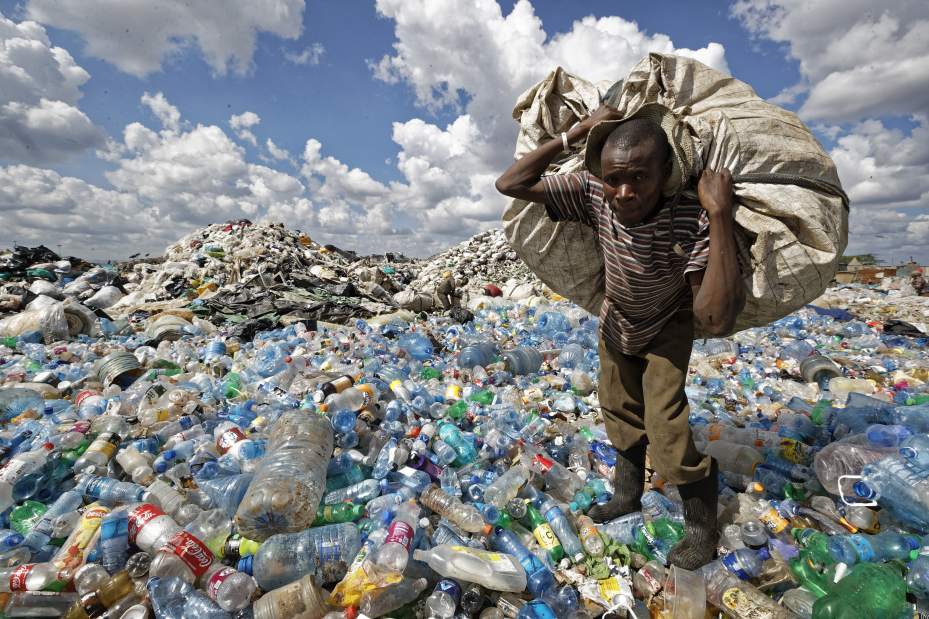
The 2018 report, “ Single-Use Plastics: A Roadmap for Sustainability ,” paints a bleak picture of the future for curbside recycling in the U.S. if steps can’t be taken to remove plastic bags from the curbside recycling stream. And the current track record for plastics recycling highlighted in the report is even worse: according to the report, 90.5 percent of the plastic waste generated in the world has not been recycled.
That percentage was dubbed the “International Statistic of the Year” by the London-based Royal Statistical Society.
Just one example from the U.N. report: Each year consumers world-wide use an estimated 5 trillion plastic bags. That’s a rate of about 10 million per minute. If all of those bags were tied together, a single year’s worth would wrap around the Earth seven times.
In real-world terms, that 90.5 percent statistic adds up to about 6.3 trillion metric tons of plastic that has either been incinerated or dumped into a landfill somewhere in the world.
“It’s very concerning that such a large proportion of plastic waste has never been recycled,” said RSS President Sir David Spiegelhalter, who chaired the Stats of the Year judging panel. “This statistic helps to show the scale of the challenge we all face.”
Plastic bags, in particular, pose a challenge both in terms of reducing their overall use as well as reducing their impact on recyclers and the environment.
Waste Management Spokeswoman Erika DeYarmin-Young said plastic bags are the top source of contamination for the company.
It isn’t that the bags aren’t recyclable; they are. But they require a different collection system and different processing equipment than most curbside recyclers use. As a result, Waste Management workers spend massive amounts of time untangling the bags from their recycling sorters.
“We are really trying to move away from the (recycling) numbers (printed on plastics), which are the resin codes, to looking at the shape of plastic containers,” DeYarmin-Young said. “Recycling plastic bottles, jugs and jars are the direction we ask customers to follow when deciding what to put in their recycling bins.”
The shift in many communities to single-stream recycling has exacerbated problems for plastics recyclers, and the convenience of tossing all recyclables into one container has come at a great cost, according to Justin Stockdale, regional director for the Pennsylvania Resources Council.
“A mixed pile of rubbish is impossible to unscramble and commodities markets that consume the old newspapers and plastic bottles have been pushed to the brink,” Stockdale said when discussing the current state of recycling in Pennsylvania.
2018 marked the 30th anniversary of Act 101, the state’s landmark recycling law, but, instead of celebrating something that has gone from the cultural fringe to deeply embedded cultural behavior, there is concern about the very future of recycling.
Stockdale said he thinks both attitudes and methods of recycling in the U.S. will have to change to be successful.
“Single-stream recycling attracts contamination by its very nature,” Stockdale said. “I think we will see a shift back to a hybrid system where there will be some curbside drop-off and other things will go to a recycling center.”
Erik Solheim, who heads U.N. Environment, put it concisely in his foreword for the U.N.’s single-use plastics report.
“Plastic isn’t the problem,” he wrote. “It’s what we do with it. And that means the onus is on us to be far smarter in how we use this miracle material.”
Patrick Varine is a Tribune-Review staff writer. You can contact Patrick at 724-850-2862, pvarine@tribweb.com or via Twitter @MurrysvilleStar.
